Understanding the Importance of Speed Limiter Exemption for Public Service Vehicles
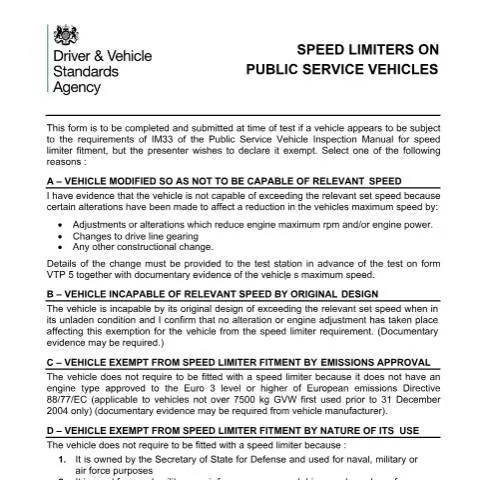
In the realm of public transport and service vehicles, the compliance with speed limiter regulations is crucial for safety and operational efficiency. Many vehicle operators find themselves needing to demonstrate that their public service vehicle (PSV) does not require a speed limiter, a task that involves submitting a specific declaration form to the Driver and Vehicle Standards Agency (DVSA). This form is vital for ensuring that vehicles adhering to exemptions are appropriately documented and assessed.
The Circumstances Leading to the Need for Exemption
Before submitting the declaration, it is essential to understand the circumstances that may lead to the necessity of this documentation. Various reasons can justify a PSV’s exemption from the speed limiter requirement:
- Vehicle Modifications: If the vehicle has been modified in such a way that it can no longer reach the relevant speed limit.
- Original Design Limitations: Some vehicles, by their original design, are incapable of exceeding required speeds.
- Emissions Approval: Vehicles with engines not meeting Euro 3 standards or higher may qualify for an exemption based on their emissions approval.
- Nature of Use: Vehicles utilized for specific purposes such as military, emergency services, or public safety may also be exempt.
Who Needs to Fill Out This Declaration?
The declaration is primarily aimed at individuals or businesses operating PSVs, especially those intending to modify or prove their vehicles' compliance. Here are some typical profiles of individuals who might be required to fill out this declaration:
- Fleet Managers: Those managing multiple public service vehicles needing to ensure compliance across their fleet.
- Vehicle Modifiers: Companies or individuals who modify vehicles for enhanced performance and need to declare modifications.
- Specialized Operators: Operators of vehicles used in specific sectors such as military or emergency services.
A Step-by-Step Guide to Completing the Declaration
Completing the declaration form effectively requires attention to detail. Each section of the form asks for specific information that must be accurately filled out to avoid delays. Below is a streamlined process to guide you through filling out the form:
Step 1: Gather Necessary Documentation
Before starting the form, ensure you have all necessary documents ready, which may include:
- Evidence of vehicle modifications (if applicable).
- Documentation confirming the original design capabilities.
- Emission approval certificates if claiming exemption based on emissions.
Step 2: Complete the Form
Fill in the details required by the form:
- Registration Mark: Clearly write the vehicle registration number.
- Exemption Reason: Select the appropriate reason (A, B, C, or D) and provide an explanation if necessary.
Step 3: Submit the Form
After completing the form, choose your submission method. This can be done:
- Online: If your test station allows for electronic submissions, follow their specific process.
- By Post: Ensure the form is sent to the correct address, allowing adequate time for processing.
- In Person: Hand the form to the test station directly for immediate consideration.
What Happens After Submission?
Once the declaration has been submitted, the DVSA will process the request. The timeline for processing can vary depending on the method of submission:
| Submission Method | Approximate Processing Time |
|---|---|
| Online | 1-3 working days |
| By Post | 7-10 working days |
| In Person | Immediate (depends on queue) |
Keep a record of your submission, including any reference numbers provided, in case you need to follow up.
Handling Issues or Concerns Post-Submission
If your declaration is rejected or if there are mistakes in your submission, it is crucial to know how to manage these situations:
Error Corrections
If you realize there is an error after submission, contact the DVSA as soon as possible. You may need to resubmit the form with the corrected information.
What to Do If the Declaration is Refused
In cases where your exemption is denied, you have the right to request a review of the decision. Prepare to provide additional documentation or clarification regarding your vehicle’s specifications or intended use.
Comparing This Declaration with Other Forms
The PSV speed limiter exemption declaration can often be confused with other similar forms. Understanding the distinctions can prevent unnecessary complications:
| Form Name | Purpose | Key Differences |
|---|---|---|
| PSV Speed Limiter Declaration | To declare an exemption from speed limiter requirements | Specific to PSVs and their speed capabilities |
| VTP 5 Form | Documents modifications affecting speed capability | Used in conjunction with the PSV declaration for modified vehicles |
| PSV Application Form | Application for PSV license/renewal | Focuses on licensing and operational compliance |
Recognizing Special Cases and Exceptions
While most vehicles will fit standard criteria for exemptions, certain unique situations may require tailored approaches:
Foreign Operators
Foreign operators may face specific regulations regarding speed limiter exemptions. Be sure to check local DVSA guidance to ensure compliance.
Emergency Services
Vehicles used for emergency services such as ambulances and fire engines enjoy broader exemptions but must still complete the declaration to document their status officially.
Decoding the Declaration Form Sections
Each part of the declaration form serves a purpose, and understanding these can help avoid common pitfalls:
Section A: Vehicle Modifications
This section requires details of any modifications that impact speed. Be thorough when describing the changes made, as incomplete information could lead to rejection.
Section B: Original Design Capacities
If this applies, ensure you clearly state the unladen condition of the vehicle, as any alterations can disqualify the exemption.
Section C: Emissions Approval
Documentation proving your vehicle's emissions status is vital here. Referencing specific standards helps solidify your case.
Section D: Nature of Use
When declaring usage by military or emergency services, include any relevant identification or documentation affirming the vehicle's role.
Final Thoughts on the PSV Speed Limiter Exemption Declaration
Understanding and navigating the PSV speed limiter exemption declaration is not merely a procedural task but a critical component of ensuring safety and compliance in public transport. By following the outlined steps, preparing the necessary documentation, and being aware of potential challenges, operators can facilitate a smoother process. This declaration serves as a testament to the operational capabilities of a vehicle while upholding the standards set forth by the DVSA.
Understanding the Exemptions for Speed Limiters in PSVs
Declaring that a public service vehicle (PSV) does not require a speed limiter is contingent upon specific exemptions outlined by the Department for Transport (DfT). Generally, PSVs are subjected to regulations necessitating the installation of a speed limiter to enhance road safety and ensure compliance with the EU directive on the management of road traffic. However, certain categories of vehicles may qualify for exemption under specific conditions.
One key exemption applies to PSVs that operate solely for specific purposes, such as emergency services vehicles, including ambulances and fire engines. These vehicles are often required to respond quickly to emergencies, and the speed limiter requirement could hinder their operational efficiency. Another relevant exemption might pertain to vehicles used in a public service capacity, such as those providing specialized transport for individuals with disabilities or medical needs, provided that they meet specific safety and operational standards.
To successfully declare an exemption, the PSV owner must ensure that the vehicle is appropriately categorized and that there is clear documentation to justify the exemption claim. This includes maintaining records of the vehicle’s use, purpose, and any certification proving its eligibility for the exemption. It is crucial to refer to the DfT's guidance and possibly consult with legal professionals to ensure compliance with all applicable regulations to avoid penalties.
The Practical Steps for Declaring Exemption from a Speed Limiter Requirement
If you believe your PSV qualifies for exemption from the speed limiter requirement, it's vital to follow a systematic approach to declare this to the relevant authorities. Here’s a step-by-step guide to navigate the declaration process:
Verification of Eligibility: First, you must establish that your PSV meets the criteria for exemption as specified by the DfT. This involves verifying that your vehicle serves a specific purpose that justifies operating without a speed limiter.
Documentation Compilation: Gather necessary documentation, which may include vehicle registration papers, operational permits, and any relevant certificates that substantiate your claim for exemption. Ensure that all documents are current and accurately reflect the vehicle's usage.
Complete the Declaration Form: You will likely need to fill out a specific form to officially declare the exemption. This form typically requires details about the vehicle, its registration, the nature of your operations, and the reason for seeking exemption. Check the DfT website for the correct form and any accompanying instructions.
Submission to the Appropriate Authority: Submit your completed declaration form along with the documentation to the appropriate government authority. This could be the DVLA or your local council, depending on where you operate. Ensure you keep copies of all submitted materials for your records.
Await Confirmation: After submission, you will receive a confirmation from the authority regarding your exemption status. It’s crucial to follow up if you do not receive confirmation within the specified timeframe.
Compliance Monitoring: Even if granted an exemption, ongoing compliance with operational standards remains essential. Regular checks on your vehicle, driver training, and operational policies can help ensure that all safety regulations are consistently met.
By adhering to these steps, you can streamline the declaration of an exemption from a speed limiter requirement, ensuring both compliance and operational efficiency.
Long-term Implications of Operating Without a Speed Limiter
While operating a PSV without a speed limiter can provide increased flexibility and efficiency, it’s important to weigh the long-term implications of this decision. Here are some key considerations:
Insurance Concerns: Vehicles operating without speed limiters may face higher insurance premiums, or in some cases, issues securing coverage altogether. Insurance providers may consider the absence of a speed limiter as a potential risk factor, impacting the overall cost of operating a PSV. Engaging with an insurance advisor who understands the nuances of PSV operations can help mitigate this risk.
Safety and Liability Issues: Operating without a speed limiter can raise safety concerns, both for the driver and the passengers. Increased speeds can lead to higher risks of accidents, which can have severe consequences. In the unfortunate event of an accident, the liability may fall more heavily on the operator if the vehicle is not equipped with a speed limiter, potentially leading to significant legal ramifications.
Regulatory Scrutiny: PSVs operating under exemptions may attract more scrutiny from regulatory bodies. This means additional inspections and audits to ensure compliance with safety regulations. Being proactive in maintenance and operational procedures can help mitigate the likelihood of issues arising during these inspections.
Public Perception and Trust: Operating a PSV without a speed limiter may impact public perception. Passengers often associate speed limiters with safety and reliability. Building a reputation as a responsible operator who prioritizes passenger safety can be beneficial in the long run. Transparent communication with passengers about safety measures taken can foster trust and confidence in your services.
In summary, while there may be operational advantages to declaring that a PSV does not require a speed limiter, it's essential to consider the broader consequences this decision may have on safety, compliance, and public perception. Thoughtful consideration and planning can help navigate these complexities while ensuring that your PSV operations remain efficient and responsible.