Guide on How to Appeal a PSV Annual Test Decision in the UK
If your public service vehicle (PSV) has been refused an annual test certificate by the Driver and Vehicle Standards Agency (DVSA), it is important to understand the process for lodging an appeal. This guide provides detailed information on the steps to challenge such a decision, ensuring your rights are protected and that you can take the necessary actions to have the matter reviewed.
Understanding the Purpose of the Appeal
The appeal process is designed for operators or owners of PSVs who believe that the DVSA’s decision to refuse an annual test certificate was incorrect. This might be due to issues related to the vehicle's condition, equipment, or procedural errors during the testing process. The purpose of the appeal is to request a formal review by the Secretary of State, which may include a re-inspection of the vehicle at a DVSA-approved location.
Eligibility and Grounds for Appeal
To be eligible to appeal, the vehicle must have been refused an annual test certificate under the provisions of the Road Traffic Act 1988, section 45. Common grounds for appeal include:
- The vehicle was in a different condition at the time of the appeal than when it was tested.
- The vehicle has undergone repairs, modifications, or adjustments since the refusal.
- You believe there was an error or unfairness in the testing or decision process.
Key Steps to Lodge an Appeal
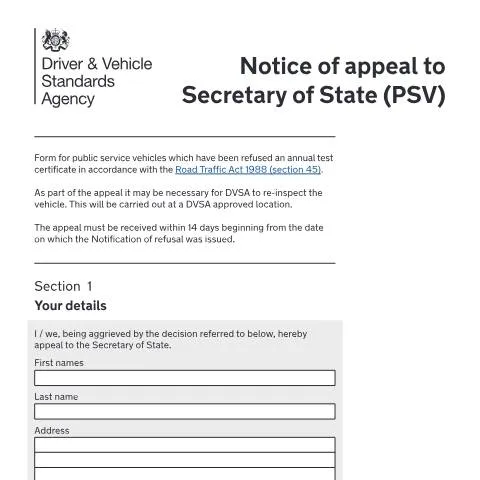
1. Complete the Notice of Appeal Form
The appeal must be made using the official form, which is available from the DVSA. You need to provide detailed information including:
- Your personal details: first names, last name, address, contact number, and email address.
- Vehicle details: registration mark, chassis or serial number, and the type of test (first examination, periodic test, or re-test).
- The reason for the appeal, referencing the specific reasons outlined in the notification of refusal.
2. Attach Supporting Documents
If available, include a copy of the notification of refusal and any evidence supporting your case, such as repair receipts or photographs showing vehicle condition.
3. Pay the Applicable Fee
The current fees for appealing are specified by the DVSA and can be paid via several methods:
- Over the counter by cash
- By cheque or postal order payable to the Driver and Vehicle Standards Agency
- Pre-funded account (if applicable)
- By credit or debit card (DVSA will contact you for payment details)
Ensure the correct fee is enclosed or arranged before submitting your appeal.
4. Submit the Appeal
The completed appeal form, along with payment and supporting documents, should be sent to the following address or email:
- Postal Address: PSV Approvals Section, Technical Officers, DVSA, The Ellipse, Padley Road, Swansea, SA1 8AN
- Email: [email protected]
Important Deadlines and Considerations
The appeal must be received within 14 days from the date the notification of refusal was issued. Timely submission is crucial to ensure your case is considered and that a re-inspection can be scheduled if necessary.
Re-inspection and Further Action
As part of the appeal process, the DVSA may conduct a re-inspection of the vehicle at an approved location. If repairs or modifications are made since the initial refusal, you should specify these details in your appeal form. You can also request a specific date and time for re-examination, subject to availability.
Data Protection and Privacy
The DVSA collects and processes your personal data in accordance with the Data Protection Act 2018 and UK GDPR. Your information is used solely for the purpose of handling your appeal and may be shared with other authorities if required for legal or investigative reasons. For more details, refer to the privacy notice on the official government website.
Conclusion
Appealing a PSV annual test refusal is a formal process that provides operators with a fair opportunity to challenge decisions they believe are incorrect. By carefully completing the official appeal form, providing supporting evidence, and submitting within the specified timeframe, you can ensure your case is properly considered. Remember to keep copies of all correspondence and documentation related to your appeal for future reference.