Understanding the Part II Fishing Vessel Registration Framework
When commercial fishing operators acquire a vessel for UK waters, they enter a specialised regulatory environment governed by the Maritime and Coastguard Agency's Part II register. Unlike recreational craft or commercial vessels carrying passengers, fishing vessels operate under distinct ownership and operational requirements that reflect both their economic importance and the complexity of managing fishing rights within UK territorial waters.
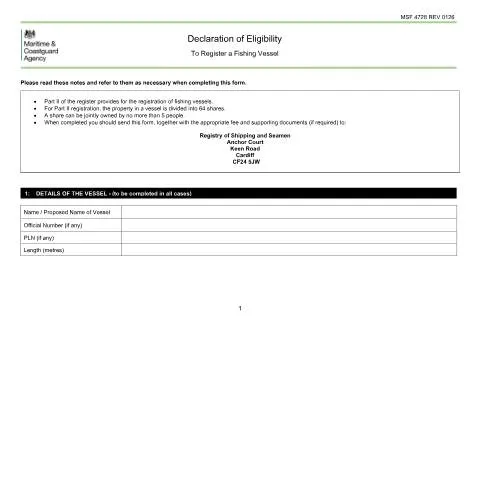
The Declaration of Eligibility to Register a Fishing Vessel represents a critical gateway document that determines whether a vessel can legitimately operate in UK commercial fisheries. This declaration system emerged from the need to maintain strict control over fishing capacity whilst ensuring that only qualified entities can benefit from access to UK fishing grounds and quotas.
Part II registration divides vessel ownership into exactly 64 shares, a unique structure that allows for flexible ownership arrangements whilst maintaining clear legal boundaries. Each share can be jointly owned by up to five individuals, creating possibilities for complex ownership structures that might include family members, business partners, or fishing cooperatives working together to finance and operate expensive fishing equipment.
Eligibility Criteria and Ownership Qualifications
The eligibility requirements for Part II registration reflect post-Brexit fishing policy priorities, focusing on ensuring that UK fishing capacity remains under qualified control. All legal and beneficial owners must fall within specific categories that demonstrate genuine UK connections.
British citizens automatically qualify as owners, regardless of their residence status. However, the definition extends beyond individual citizenship to encompass various corporate structures. Bodies corporate incorporated within the United Kingdom qualify directly, whilst those incorporated in European Economic Area states must demonstrate a substantive UK presence through a place of business within UK territory.
UK Economic Interest Groupings registered under the European Economic Interest Grouping Regulations 1989 also qualify, reflecting the continuing relevance of certain European legal structures in post-Brexit maritime law. Local authorities throughout the UK can own fishing vessels, though this typically occurs in specific circumstances such as harbour authorities managing port-based fishing operations or councils involved in maritime heritage projects.
| Owner Category | Primary Requirement | Additional Conditions |
|---|---|---|
| British Citizens | Valid British citizenship | No residence requirements |
| UK Incorporated Bodies | UK incorporation | Must maintain registered office |
| EEA Bodies Corporate | EEA incorporation | Must have UK place of business |
| UK Local Authorities | Statutory local authority status | Within UK jurisdiction |
Vessel Specification Requirements and Technical Documentation
The declaration demands comprehensive technical information about the vessel, reflecting the MCA's need to maintain accurate records of fishing capacity and ensure vessels comply with safety and operational standards. The official number and Port Letters and Number (PLN) provide unique identifiers that link the vessel to existing registry systems and local port authorities.
Engine specifications require particular attention, as these directly relate to vessel capability and fishing capacity calculations. Applicants must provide detailed information about engine type, manufacturer, model, and crucially, the maximum continuous engine power measured in both kilowatts and horsepower. This dual measurement requirement reflects international standards whilst accommodating traditional UK maritime practices.
When engines have been permanently de-rated to reduce power output, the declaration requires specific details about the method used. Options include limiting fuel rack movement, changing governor settings, removing turbochargers, reprogramming electronic governors, changing fuel pumps, or other specified methods. This information proves essential for determining the vessel's actual operational capacity rather than its theoretical maximum power.
Applicants uncertain about maximum continuous engine power should consult the MCA website or contact their local Marine Office before completing the declaration. Incorrect power specifications can lead to registration delays or complications with fishing licence applications that depend on accurate vessel capacity data.
Ownership Structure Documentation and Share Allocation
Section 3B of the declaration requires detailed mapping of legal ownership across the vessel's 64 shares. Each owner must be numbered consecutively and provide comprehensive information including full names, addresses, nationality, and the precise number of shares held both outright and jointly with other parties.
The distinction between legal ownership and beneficial ownership reflects sophisticated property law principles applied to maritime assets. Legal owners hold title to shares and appear on official registers, whilst beneficial owners enjoy the economic benefits of ownership such as fishing income or vessel sale proceeds. This separation commonly occurs when vessels are held in trust, owned through complex corporate structures, or subject to financing arrangements.
When beneficial owners differ from legal owners, Section 4 requires complete disclosure including names, addresses, telephone numbers, email addresses, and principal places of business. This transparency requirement helps prevent the use of fishing vessels for money laundering or to circumvent fishing quota restrictions.
Joint ownership arrangements must specify which other owners share each holding, creating clear audit trails for regulatory compliance and commercial disputes. The five-person limit on joint share ownership prevents excessively fragmented ownership that could complicate vessel operations or regulatory enforcement.
Operational Control and Management Declarations
Section 5 addresses the critical question of who actually controls vessel operations, recognising that legal ownership may not reflect operational reality. The declaration requires separate identification of parties responsible for management, direction and control, and chartering arrangements.
Management typically involves day-to-day operational decisions such as crew selection, maintenance scheduling, and port selection. Direction and control encompasses strategic decisions about fishing areas, quota utilisation, and major operational changes. Chartering arrangements may involve leasing the vessel to other operators whilst retaining ownership.
These distinctions prove crucial for regulatory compliance, as different aspects of vessel operation may trigger different licensing requirements or quota allocations. For instance, the party directing and controlling fishing operations may need specific fishing licences even if they do not own the vessel.
Each operational role requires complete address information including principal place of business for corporate entities and nationality or country of incorporation details. Changes to operational arrangements must be reported to the Registry within seven days, reflecting the dynamic nature of commercial fishing operations and the need for current regulatory oversight.
Representative Person and Managing Owner Appointments
UK residence requirements for vessel management create specific obligations depending on ownership structures. When owners comprising the majority interest are not UK residents, they must appoint a representative person who is either an individual resident in the UK or a body corporate incorporated in an EEA country with a UK place of business.
Conversely, when multiple owners are UK residents, one must be designated as the managing owner, and this person must hold shares within the majority interest. This ensures that vessels registered in the UK maintain meaningful connections to UK jurisdiction and can be effectively regulated by UK authorities.
The appointed representative person or managing owner becomes the primary contact for all Registry correspondence unless alternative arrangements are specified in a covering letter. This centralised communication system streamlines regulatory interactions whilst ensuring that responsible parties remain accessible to UK authorities.
Corporate owners must ensure that authorised officers sign declarations on behalf of companies or European Economic Interest Groupings, demonstrating proper corporate governance and legal authority to commit the entity to regulatory obligations.
Declaration Process and Supporting Documentation
The declaration requires signatures from all named owners in Section 3, creating personal accountability for the accuracy of submitted information. Each signatory must provide their signature, date, telephone number (preferably mobile), and email address, facilitating rapid communication during the registration process.
Supporting documentation requirements vary depending on the specific circumstances of each application. New registrations typically require engine specification sheets that provide technical verification of declared engine details. These documents should come directly from manufacturers or authorised dealers to ensure accuracy and prevent disputes about vessel capabilities.
Applications involving engine changes must include specifications for the new engine, allowing the MCA to update vessel records and ensure continued compliance with safety and operational requirements. This documentation proves particularly important when engine modifications affect vessel classification or fishing capacity calculations.
The completed declaration, supporting documents, and appropriate fees must be submitted to the Registry of Shipping and Seamen at Anchor Court, Keen Road, Cardiff CF24 5JW. This centralised processing system ensures consistent application of registration standards whilst maintaining secure handling of sensitive ownership and operational information.
Legal Implications and Compliance Obligations
The declaration concludes with a formal statement acknowledging that knowingly making false statements to obtain registration constitutes a criminal offence. This legal warning reflects the serious regulatory consequences of inaccurate or misleading information in fishing vessel registration.
Successful completion of the declaration process grants access to UK commercial fishing opportunities, but also creates ongoing obligations for regulatory compliance. Owners must maintain current information with the Registry, report operational changes within specified timeframes, and ensure that vessel operations remain consistent with registration conditions.
The 64-share ownership structure creates flexibility for commercial arrangements whilst maintaining clear legal boundaries that facilitate regulatory oversight. Understanding these requirements proves essential for fishing operators seeking to establish or modify their vessel ownership arrangements within the UK's post-Brexit maritime regulatory framework.
Changes to vessel ownership, operational control, or technical specifications may require additional declarations or formal notifications to maintain registration validity. The initial declaration thus represents the beginning of an ongoing relationship with the MCA's regulatory system rather than a one-time administrative requirement.
Vessel Documentation and Evidence Requirements
The declaration of eligibility forms just one component of the comprehensive documentation package required for fishing vessel registration. Applicants must provide substantial evidence to support their eligibility claims, with requirements varying significantly based on vessel characteristics and operational circumstances.
For newly constructed vessels, the Maritime and Coastguard Agency requires original builder's certificates, detailed construction specifications, and compliance documentation with applicable safety standards. These documents must demonstrate that the vessel meets UK construction standards or equivalent international requirements. Foreign-built vessels present additional complexities, requiring importation certificates, customs clearance documentation, and often independent surveyor reports confirming structural integrity and safety compliance.
Vessel ownership documentation demands particular attention to detail. Clear title documentation must trace ownership history without gaps or ambiguities. Joint ownership arrangements require specific legal structures, with partnership agreements or company documentation clearly defining each party's interest and responsibilities. Leasing arrangements introduce additional documentation requirements, including comprehensive lease agreements that specify maintenance responsibilities, operational restrictions, and insurance obligations.
The National Insurance number serves as a crucial identifier throughout the registration process, linking vessel ownership to individual eligibility status. However, corporate ownership structures require company registration numbers and detailed directorship information. Foreign nationals or companies face additional scrutiny, with residency documentation and business registration certificates required to establish legitimate UK connections.
Technical specifications must align with declared operational intentions. Vessels intended for commercial fishing require different documentation compared to recreational craft occasionally used for fishing activities. Engine specifications, fish hold capacity, and processing equipment installation all influence registration categories and associated obligations. Modifications to existing vessels trigger re-evaluation of eligibility status, particularly when alterations affect operational capacity or safety characteristics.
Insurance documentation plays an increasingly important role in the registration process. Comprehensive marine insurance coverage demonstrates financial responsibility and operational legitimacy. Insurance providers often require detailed vessel surveys before providing coverage, creating a documentation trail that supports registration applications. However, insurance requirements vary based on vessel size, operational area, and commercial versus recreational use patterns.
Regional Variations and Devolved Administration
The UK's devolved administrative structure creates significant regional variations in fishing vessel registration processes, with Scotland, Wales, and Northern Ireland maintaining distinct regulatory frameworks alongside English provisions. These differences extend beyond mere procedural variations to encompass fundamental eligibility criteria and operational restrictions.
Scottish fishing vessel registration operates under Marine Scotland's jurisdiction, incorporating unique historical fishing rights and quota allocations tied to specific geographical areas. The Scottish system places particular emphasis on community connections and traditional fishing practices, with eligibility assessments considering multi-generational family involvement in fishing activities. Vessels seeking registration in Scottish waters must often demonstrate connections to specific fishing communities, with local authority endorsements sometimes required for registration approval.
Welsh fishing vessel registration involves Natural Resources Wales and reflects the principality's distinct coastal management approach. Welsh regulations often incorporate environmental considerations more prominently than other UK regions, with habitat protection measures influencing operational permissions. The Welsh language receives official recognition in registration documentation, with bilingual forms available and Welsh-language submissions accepted for processing.
Northern Ireland's fishing vessel registration system operates under the Department of Agriculture, Environment and Rural Affairs, incorporating unique cross-border considerations with the Republic of Ireland. Brexit arrangements have created additional complexity for Northern Ireland-registered vessels, with potential access to both UK and EU waters under specific circumstances. These arrangements require additional documentation and periodic reviews of eligibility status.
Inter-regional vessel transfers present particular challenges within the UK's devolved system. Vessels changing their primary operating base between different UK regions must navigate varying regulatory requirements and may face different eligibility assessments. Some regions maintain waiting lists for registration slots, particularly in areas with limited fishing quotas or environmentally sensitive waters.
Local fishing port authorities often maintain additional registration requirements beyond national standards. Major fishing ports like Peterhead, Newlyn, or Fleetwood may impose specific operational standards, safety requirements, or community contribution expectations for vessels using their facilities. These local requirements don't override national eligibility criteria but can significantly influence practical vessel operations.
Cross-border fishing operations, particularly relevant for vessels operating in shared waters with Ireland, France, or other European nations, require careful navigation of international agreements and bilateral arrangements. Post-Brexit fishing agreements have created new documentation requirements and operational restrictions that directly impact vessel registration eligibility and ongoing compliance obligations.
Compliance Monitoring and Ongoing Obligations
Registration approval marks the beginning rather than the conclusion of ongoing compliance obligations for fishing vessel operators. The Maritime and Coastguard Agency maintains continuous monitoring systems that can trigger registration reviews, modifications, or revocations based on operational conduct and regulatory compliance.
Vessel tracking systems, including Automatic Identification System (AIS) transponders and Vessel Monitoring Systems (VMS), generate continuous data streams that regulatory authorities use to verify compliance with operational restrictions and fishing quota allocations. Unexplained deviations from declared operational patterns can trigger eligibility reviews, particularly when vessels operate outside their registered fishing areas or exceed permitted activity levels.
Annual registration renewals require updated declarations of eligibility, with operators confirming continued compliance with all registration criteria. These renewals aren't merely administrative formalities but involve substantive review of operational records, safety compliance, and any changes to vessel ownership or operational characteristics. Failure to submit renewal documentation by specified deadlines can result in automatic registration suspension, preventing legal fishing operations until compliance restoration.
Safety inspection schedules vary based on vessel size and operational profile, with commercial fishing vessels subject to more frequent and comprehensive examinations than recreational craft. Safety certificate validity directly impacts registration status, with expired certificates automatically triggering registration suspension until remedial action completion. The Maritime and Coastguard Agency coordinates these inspections with registration renewal cycles where possible, but emergency safety issues can prompt immediate registration review regardless of renewal schedules.
Environmental compliance monitoring has expanded significantly in recent years, with vessel operations subject to scrutiny regarding protected species interactions, habitat damage, and waste management practices. Serious environmental violations can result in registration revocation, particularly for repeat offenders or incidents involving significant ecological damage. Climate change adaptation measures increasingly influence registration criteria, with new vessels expected to meet enhanced environmental standards.
Financial compliance extends beyond initial registration fees to encompass ongoing taxation obligations, quota lease payments, and insurance maintenance. HMRC coordinates with maritime authorities to ensure fishing vessel operators meet their tax obligations, with serious tax compliance failures potentially affecting vessel registration status. Self Assessment requirements for fishing operators often involve complex calculations of fishing income, vessel depreciation, and operational expenses.
Crew certification and training requirements create additional compliance obligations for commercial fishing vessel operators. Skipper licenses, crew competency certificates, and safety training documentation must remain current throughout the vessel's operational life. Changes to crew certification requirements can trigger registration updates, particularly when new safety standards mandate additional training or qualifications for specific vessel types or operational areas.