When Inherited Property Values Drop: The IHT38 Relief Mechanism
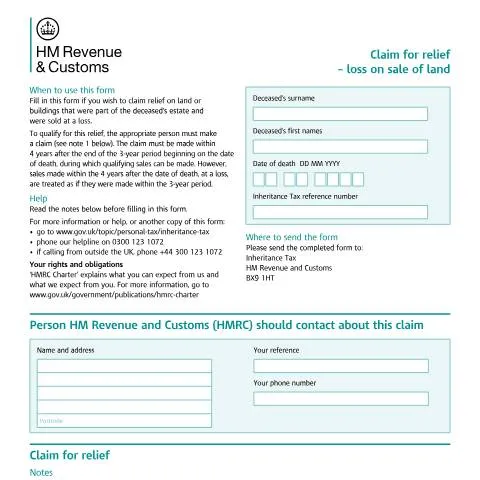
The death of a loved one brings enough emotional burden without the added complexity of inheritance tax calculations. Yet for many executors and administrators, a particularly challenging situation arises when property values in the deceased's estate fall after death but before sale. The IHT38 form exists precisely to address this scenario, offering relief when land and buildings are sold at a loss compared to their probate valuation.
This relief mechanism recognises a fundamental fairness principle: if inheritance tax was calculated on property values at death, but those same properties subsequently sell for less, the estate should not bear the full burden of tax on an inflated valuation. However, accessing this relief requires navigating specific conditions, tight deadlines, and detailed documentation that can trip up even experienced estate administrators.
The Critical Four-Year Window and Its Complexities
The timing rules surrounding IHT38 claims create a framework that appears straightforward but contains several nuanced elements. Claims must be submitted within four years of the end of the three-year period following death, during which qualifying sales can occur. This effectively creates a seven-year maximum window from death to claim submission.
However, the legislation includes a crucial exception: sales made within four years of death at a loss are treated as if they occurred within the initial three-year period. This means executors have greater flexibility than the basic rule suggests, but it also requires careful tracking of all property transactions throughout the extended period.
Strategic Timing Considerations
The guidance strongly advises against making premature claims. Once submitted, an IHT38 claim cannot be withdrawn if it proves disadvantageous. This creates a strategic dilemma for executors who may have sold some properties at a loss but still hold others that could potentially recover value. The form's notes explicitly warn that any discount for jointly owned property at death does not apply to the share of proceeds, which could result in an unexpectedly unfavourable outcome.
Provisional relief offers a partial solution, available within four months of the last qualifying sale, provided no further land purchases are intended during that period. This mechanism allows estates to secure immediate tax benefits while preserving options for future property transactions.
Qualifying for Relief: The "Appropriate Person" Framework
The concept of the "appropriate person" lies at the heart of IHT38 eligibility, yet it represents more than a simple administrative designation. Only those actually liable for inheritance tax on the property values can claim relief. This typically includes executors, administrators, trustees, or donees, but the critical factor is actual tax liability, not merely legal responsibility for the estate.
A significant restriction emerges here: if no inheritance tax was due on the estate's IHT account submission, no relief can be claimed. This creates an apparent paradox where estates that might benefit most from relief—those with modest values—are excluded from the mechanism entirely.
Multi-Party Complications
When multiple parties share inheritance tax liability, all appropriate persons must sign the IHT38 form. HMRC explicitly states that agent signatures are not acceptable, requiring personal involvement from each liable party. This requirement can create practical challenges in complex estates with multiple beneficiaries or when trustees are involved across different jurisdictions.
| Capacity | Signing Requirements | Common Complications |
|---|---|---|
| Sole Executor | Single signature required | None typically |
| Joint Executors | All executors must sign | Coordinating multiple parties |
| Trustees | All trustees with liability | Identifying liable vs non-liable trustees |
| Mixed Liability | Only those actually paying tax | Determining precise liability allocation |
Property Transactions: What Counts and What Doesn't
The IHT38 form requires comprehensive disclosure of all land and building sales within the four-year period, regardless of whether they generated profits or losses. This total transparency approach allows HMRC to assess the overall pattern of property disposals and prevents selective claiming on loss-making sales alone.
The £1,000 or 5% threshold creates an important filter: relief cannot be claimed if the sale price differs from the death valuation by less than £1,000 or 5% of the death value, whichever is lower. This prevents administrative burden from trivial variations while focusing relief on genuinely significant losses.
Sales to Beneficiaries: A Complex Restriction
Transactions with beneficiaries or their relatives face special scrutiny. Relief may be unavailable on such sales, and any profits from these transactions can reduce relief available on other qualifying sales. This anti-avoidance measure prevents families from manipulating property values through artificial transactions, but it can create unexpected complications in legitimate estate planning scenarios.
The restriction extends beyond direct sales to include exchanges and other property transactions. Executors must carefully consider whether proposed transactions with beneficiaries might inadvertently compromise relief claims on other properties.
Navigating the Documentation Requirements
The form's structure reflects HMRC's need for comprehensive property transaction data while accommodating various estate complexities. Section 1 requires detailed information for every property sale, including addresses, tenure details, death valuations, sale dates, gross proceeds, and purchaser names.
Completion statements for every property represent a critical documentation requirement. These statements provide HMRC with the detailed transaction information needed to verify relief calculations and ensure compliance with the gross sale price methodology.
Scottish Considerations
The form acknowledges differences in property law across UK jurisdictions, particularly noting that sale dates in Scotland are determined when terms of the offer and qualified acceptance have been agreed in writing. This reflects the distinct Scottish conveyancing process and ensures consistent application of timing rules across different legal systems.
Purchase Restrictions and Their Strategic Implications
The four-month purchase restriction following the last qualifying sale creates a significant strategic consideration for estates. If executors intend to purchase any interest in land within four months of their final property sale, they cannot claim relief during this period. This rule prevents estates from claiming losses while simultaneously acquiring replacement properties that might offset those losses.
The restriction applies to purchases made "in the same capacity" as the original appropriate person. This means personal property purchases by executors in their individual capacity would not trigger the restriction, but purchases for the estate or trust would.
Lease Complications
Properties with leases having less than 50 years remaining at death face special rules requiring disclosure of the unexpired term. These short leases present unique valuation challenges, as their declining terms affect both death valuations and subsequent sale prices in complex ways.
Post-Distribution Limitations and Estate Administration
The timing of property distribution from the estate creates another potential barrier to relief. If claims are made after interests in land have been distributed to beneficiaries, relief may become unavailable. This underscores the importance of coordinating IHT38 submissions with overall estate administration timelines.
This restriction reflects the underlying principle that relief should benefit the estate bearing the original inheritance tax burden, not subsequent property owners who acquired interests without corresponding tax liability.
Practical Coordination Challenges
Estate administrators must balance multiple competing pressures: beneficiaries seeking prompt distribution, property market conditions affecting sale timing, and IHT38 relief eligibility requirements. The inability to withdraw disadvantageous claims adds another layer of complexity to these decisions.
The form's emphasis on gross sale prices, excluding expenses like commission and legal fees, means relief calculations may not reflect the net financial impact on estates. This methodology ensures consistency but can create surprises for executors expecting relief based on net proceeds.
Submission Process and HMRC Interaction
The completed IHT38 form must be sent to the dedicated Inheritance Tax unit at HMRC's BX9 1HT address. This centralised processing approach ensures specialist handling but removes the option for local office submission or immediate clarification of complex issues.
HMRC's helpline (0300 123 1072) provides support for form completion, though complex cases may require written correspondence or professional advice. The international number (+44 300 123 1072) acknowledges that inheritance tax issues often involve overseas executors or beneficiaries.
The provisional relief mechanism allows estates to secure immediate tax adjustments while preserving HMRC's right to later review. This balanced approach provides cash flow benefits to estates while maintaining tax compliance oversight. However, executors should prepare for potential future adjustments if circumstances change or additional information emerges during HMRC's review process.
Common Scenarios and Qualifying Circumstances
The IHT38 form addresses specific situations where inherited land has suffered a genuine market decline after the death. Understanding qualifying circumstances helps determine whether your claim meets HMRC's criteria for relief.
Qualifying sales typically include: Properties sold within the four-year window where market conditions have deteriorated since the valuation date. This might involve agricultural land affected by regulatory changes, development land where planning permission has been refused, or residential property in areas experiencing economic decline.
Commercial property presents particular complexities. If you've inherited retail premises that subsequently lose major tenants, or industrial units affected by local economic changes, the loss may qualify provided the decline isn't attributable to poor management decisions post-death.
Non-qualifying scenarios include: Sales where the loss results from your actions rather than market forces. If you've failed to maintain the property adequately, rejected reasonable offers, or delayed marketing without justification, HMRC may reject the claim. Similarly, losses from improvements or alterations you've made typically don't qualify, as these represent your investment decisions rather than inheritance tax relief matters.
Agricultural land requires careful consideration of the reason for value decline. Changes in agricultural policy, environmental designations, or local infrastructure projects may support valid claims. However, losses from poor farming decisions or inadequate land management after inheritance typically fall outside relief provisions.
Development potential changes present complex scenarios. If land valued for development potential subsequently loses planning permission or faces new restrictions, this may qualify for relief. Conversely, if development potential was speculative and the 'loss' reflects a more realistic valuation, HMRC may question whether genuine loss has occurred.
Documentation Requirements and Evidence Standards
Successful IHT38 claims depend heavily on comprehensive documentation that demonstrates both the original valuation's validity and the subsequent genuine loss. HMRC applies strict evidence standards, requiring clear proof that market forces, not personal decisions, caused the decline.
Valuation evidence forms the foundation of your claim. You'll need the original probate valuation, ideally supported by professional surveys or estate agent assessments from the date of death. If the original valuation was contested or revised, include all correspondence and supporting documentation. Market analysis from the valuation date helps establish the baseline against which loss is measured.
Sale documentation must be thorough and contemporaneous. Estate agent marketing particulars, viewing records, and offer details demonstrate genuine marketing efforts. If multiple offers were received, document why you accepted a particular bid. Price negotiations should be evidenced through written correspondence, showing market-driven pricing rather than distressed sale conditions.
Market analysis requires professional insight. Estate agents' market appraisals, surveyor reports identifying property defects, or economic analyses of local market conditions strengthen your position. For commercial property, tenant departures, lease renewals, or rent review outcomes provide relevant market indicators.
Agricultural land claims benefit from specialist agricultural valuers' reports. Changes in commodity prices, agricultural support schemes, or environmental regulations affecting land use should be documented through official sources and professional agricultural advice.
Legal complications require careful documentation. Planning applications, appeal decisions, environmental assessments, or legal disputes affecting property value should be comprehensively recorded. If legal issues contributed to value decline, solicitors' opinions on the impact help support your claim.
Timeline documentation proves compliance with the four-year deadline. Property marketing commencement, sale completion, and form submission dates must be clearly evidenced. If delays occurred, explain circumstances beyond your control that affected the timeline.
Potential Pitfalls and HMRC Challenges
HMRC scrutinises IHT38 claims carefully, applying rigorous tests to distinguish genuine market losses from situations where taxpayers might be manipulating circumstances to reduce inheritance tax liability. Understanding common challenge areas helps prepare robust applications.
Valuation disputes frequently arise when HMRC questions whether the original probate valuation was accurate. If the property sold significantly below the probate figure, HMRC may argue the original valuation was inflated rather than accepting that genuine loss occurred. This challenge intensifies when similar properties haven't experienced comparable declines, suggesting the loss might reflect specific circumstances rather than general market movement.
Marketing period scrutiny examines whether adequate efforts were made to achieve market value. HMRC expects reasonable marketing duration and appropriate advertising. Rushed sales, limited marketing, or rejection of higher offers without valid justification may trigger challenges. Conversely, excessive delays in marketing might suggest the loss resulted from your decisions rather than market conditions.
Related party transactions face particular scrutiny. Sales to family members, connected companies, or parties with existing relationships require exceptional documentation to prove arm's length dealing. HMRC may challenge whether the sale price reflects genuine market value or represents a convenient method to reduce inheritance tax liability.
Partial disposal claims require careful handling. If you've sold part of inherited land, HMRC examines whether the retention strategy affected achievable values. Splitting land parcels, retaining development potential, or creating access issues might be viewed as artificial arrangements rather than genuine market-driven decisions.
Agricultural land faces specific challenges around management decisions. HMRC distinguishes between value declines from external factors (qualifying) and those from poor husbandry or management decisions (non-qualifying). Changes in farming methods, crop choices, or maintenance standards after inheritance may undermine relief claims.
Commercial property challenges often focus on management decisions. If rental income declined due to tenant selection, lease terms, or property management choices made after inheritance, HMRC may argue the loss isn't eligible for relief. Demonstrating that external market forces, not your decisions, drove value decline becomes crucial.
Professional fees and improvement costs complicate loss calculations. HMRC expects clear separation between genuine market loss and costs incurred through your choices. Legal fees for unnecessary procedures, improvement costs that failed to add value, or excessive professional fees may be excluded from relief calculations.
Evidence quality frequently determines claim success. Inadequate documentation, missing correspondence, or unclear timelines provide grounds for HMRC challenges. Professional valuations that lack proper market analysis or fail to consider comparable sales may be rejected, undermining the entire claim.