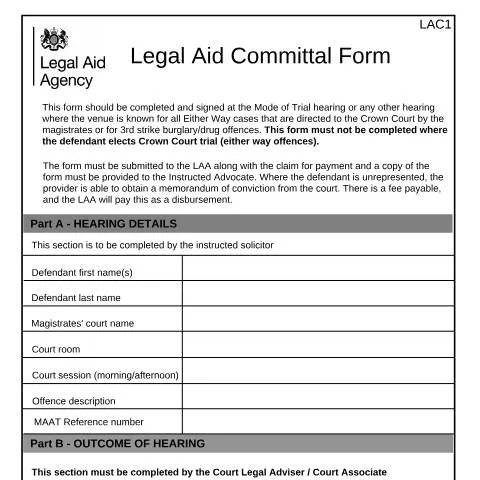
Navigating the LAC1: The Committal Form for Directed Crown Court Cases
In the landscape of legal proceedings, understanding the role of various forms is crucial for defendants and legal representatives alike. The LAC1 form, specifically designed for committal in directed Crown Court cases, may often feel daunting. However, grasping its purpose and the steps involved in its completion is vital for ensuring a smooth judicial process.
Unpacking the Purpose of the LAC1 Form
The LAC1 form serves as a key administrative document within the UK legal framework for certain criminal proceedings. Primarily, it is utilized during the Mode of Trial hearing or any other session where the venue for either way offences is determined. This form is essential for cases referred to the Crown Court by magistrates, particularly for serious offences such as 3rd strike burglary or drug-related crimes.
By submitting the LAC1 form, solicitors provide crucial information to the Legal Aid Agency (LAA) and ensure that the necessary legal aid claims can be processed. It’s important to remember that the LAC1 must not be used if the defendant opts for a Crown Court trial from the outset. Instead, this form is strictly for cases that are directed to the Crown Court following a magistrates' court hearing.
The Legal Framework Surrounding the LAC1 Form
The backdrop for the LAC1 form lies within the broader context of the Legal Aid, Sentencing and Punishment of Offenders Act 2012. This legislative framework was established to transform the legal aid landscape in the UK, aiming to ensure that individuals facing serious criminal charges can access legal representation, thereby upholding the principles of justice. The LAC1, as part of this framework, facilitates the transition from magistrates’ courts to the Crown Court, ensuring that all procedural requirements are met.
Who Completes the LAC1 and When?
Completion of the LAC1 form is the responsibility of the instructed solicitor representing the defendant. This obligation arises during the Mode of Trial hearing, which is pivotal in determining the court venue for the case. It is crucial that the form is filled out correctly and submitted promptly to avoid any delays in the legal process.
The timing is also critical: the form must be completed and submitted at the hearing when the venue is established. If the details are not accurately reported, the consequences could hinder the legal aid process or delay proceedings, impacting the defendant's rights and representation.
Key Information Required in the LAC1 Form
When completing the LAC1, solicitors must furnish various details, including:
- Magistrates' court name: The court where the initial proceedings took place.
- Court room: The specific courtroom where the hearing was held.
- Court session: Indicating whether the session was in the morning or afternoon.
- Offence description: Clear articulation of the charges against the defendant.
This information is essential for the accurate processing of the form, and omissions or errors can lead to potential issues down the line.
Following the Submission: What Comes Next?
Once the LAC1 form has been completed and submitted, several post-submission steps take place. The form must be sent to the LAA together with the claim for payment, underlining the importance of accurate and timely submission. A copy of the form must also be provided to the instructed advocate, ensuring that all parties involved are kept informed.
If the defendant is unrepresented, the legal provider has the option to obtain a memorandum of conviction from the court, which serves as a critical component of the legal aid application process. It’s important to remember that there are associated fees for obtaining this memorandum, and the LAA will cover these costs as a disbursement.
What Happens If the LAC1 Form Is Not Submitted Properly?
Failure to submit the LAC1 form correctly can have significant ramifications. For instance, if the form is omitted or contains inaccuracies, it may lead to delays in legal aid funding, impacting the defendant’s ability to secure adequate representation. Furthermore, it can also affect the overall timeline of the case, prolonging the judicial process and potentially compromising the defence.
Understanding the Specifics: Who Is Affected by the LAC1 Process?
The LAC1 form primarily concerns defendants facing serious criminal charges that fall under the jurisdiction of the Crown Court. However, various factors influence who is involved in this process:
- Defendants charged with either way offences: These are cases where the defendant may choose to be tried either in a magistrates' court or a Crown Court.
- Repeat offenders: Those facing 3rd strike charges, particularly in drug-related offences or burglary, have specific processes associated with their trials.
- Unrepresented defendants: Individuals without legal representation may require different procedures concerning the LAC1, as they might need to rely heavily on their legal providers to navigate the complexities.
Variations and Exceptions in the LAC1 Usage
There are exceptions to when the LAC1 form is appropriate. Notably, if a defendant chooses to elect a Crown Court trial from the outset, the LAC1 is not applicable. Instead, different forms and processes come into play, illustrating the importance of understanding the nuances of legal documentation.
The LAC1 in Context: Distinguishing It from Other Forms
The LAC1 form is often compared to other legal forms associated with criminal proceedings. Understanding these distinctions is critical for legal practitioners and defendants. Here’s a brief comparison:
| Form | Purpose | Key Differences |
|---|---|---|
| LAC1 | Used for committal to Crown Court in directed cases. | Specific to either way offences directed from magistrates’ courts. |
| MAGISTRATES COURT FORM | Used for initial hearings at the magistrates’ court. | Focuses on preliminary hearings, not committal processes. |
| CROWN COURT FORM | Used for trials held in Crown Court. | Applicable after the case has already been committed, not for initial submissions. |
By recognizing the differences between these forms, legal representatives can ensure proper documentation is filed at each stage of the legal process.
Practical Steps for Completing the LAC1 Form
To navigate the complexities of the LAC1 form effectively, solicitors should follow these practical steps:
- Prepare early: Gather all necessary information and documentation before the hearing.
- Double-check details: Ensure that all information provided is accurate, particularly the offence descriptions and court details.
- Submit promptly: Ensure that the form is submitted immediately after the hearing to avoid delays.
- Keep copies: Always retain copies of the submitted form for record-keeping and future reference.
By adhering to these steps, solicitors can mitigate the risks associated with form submission and enhance the chances of a smooth legal process for their clients.
The Importance of Legal Aid in the Context of the LAC1
Legal aid plays a pivotal role in ensuring that individuals facing serious criminal charges receive fair representation. The LAC1 form is a crucial component of this legal aid process, aligning with the ethos that everyone deserves access to justice regardless of their financial standing. Understanding the intricacies of this form is not merely about compliance; it’s about ensuring that the rights of defendants are upheld throughout the judicial process.
As cases progress through the legal system, the effective use of the LAC1 form can significantly impact the outcomes for defendants, shaping not only their legal representation but also their overall experience within the judicial framework.
In navigating the complexities surrounding the LAC1 form, it is essential to remain informed and diligent. Each detail contributes to the wider legal narrative, ensuring that the principles of justice are accessible to all.
Fill in your form directly online
No printing: type your details into the boxes of the official form, tick, then download the PDF ready to send.
- 1Type into the form boxes
- 2Tick in one click
- 3Save and download the PDF
Understanding the Committal Process for Directed Crown Court Cases
The committal process is a vital component of the UK criminal justice system, particularly for cases that are directed to the Crown Court. The role of the committal form, known as the 'LAC1' form, is to facilitate the transition of cases from the Magistrates' Court to the Crown Court. This process not only involves the submission of the LAC1 form but also requires a comprehensive understanding of the procedural requirements, timelines, and the roles of various stakeholders involved.
In cases where a defendant is committed to the Crown Court, the LAC1 form serves to outline the charges, provide essential details about the defendant, and identify the nature of the evidence presented. It acts as a formal request for transfer, ensuring that all pertinent information is available for the Crown Court to make informed decisions. However, the committal process is not merely administrative; it has legal implications that can affect the outcome of the case.
When preparing to submit a LAC1 form, practitioners must consider several factors, including the jurisdiction of the case, the charges laid against the defendant, and potential defenses. Additionally, the timing of the committal can significantly influence the proceedings. For example, if the committal occurs too early in the process, it may lead to complications or delays in trial scheduling. On the other hand, if it is delayed, it could hinder the defendant’s right to a timely trial.
It's essential to ensure that the information provided in the LAC1 form is accurate and comprehensive. Any omissions or inaccuracies could result in procedural setbacks or even the dismissal of charges. Therefore, legal representatives must conduct thorough consultations with their clients to gather all relevant details and evidence prior to filling out the LAC1 form.
Key Considerations for Legal Practitioners When Completing the LAC1 Form
Completing the LAC1 form requires a meticulous approach, as it sets the stage for the defendant's trial at the Crown Court. Legal practitioners must ensure that they adhere to best practices when preparing this document, as it can have far-reaching implications for their clients. Here are some key considerations that should be taken into account:
- Accuracy of Information: Every detail on the LAC1 form must be precise. This includes the names of those involved, the nature of the offense, and the details of evidence. Any discrepancies can lead to significant complications in court.
- Documentation: Supporting evidence should be meticulously compiled and referenced in the LAC1 form. This may include witness statements, forensic reports, and other exhibits that substantiate the charges against the defendant.
- Client Consultation: Engaging with the client is critical. Defendants should be informed about the implications of the committal process, and their input can be invaluable in ensuring that the form is completed accurately.
- Deadlines: Practitioners must adhere to strict deadlines for submitting LAC1 forms. The timelines can vary based on the nature of the case and the requirements of the local court, making it crucial to stay well-informed about procedural deadlines.
- Legal Representation: It is advisable for defendants to have legal representation during the committal process. A qualified solicitor can provide insights into the potential outcomes and help navigate the complexities of the criminal justice system.
Practitioners who thoroughly understand these considerations can better advocate for their clients, ensuring that the LAC1 form is both a reflection of the case facts and a strategic legal document.
Impact of Committal Decisions on Subsequent Proceedings
The decision to commit a case to the Crown Court has significant implications for the subsequent legal proceedings. Once the LAC1 form is submitted, the Crown Court takes over jurisdiction, and the nature of the trial changes from a summary trial to one that can involve more serious indictments.
This transition can affect various aspects of the case, such as:
- Trial Procedures: Crown Court trials typically follow different procedural rules compared to Magistrates' Courts, including the right to a jury trial. This shift can influence the defense strategy significantly.
- Evidence Standards: The burden of proof and the standard of evidence may vary, requiring defense teams to adapt their approach. It’s essential to understand how evidence will be presented and challenged in the Crown Court.
- Sentencing Guidelines: In cases where a conviction is secured, the sentencing options available in the Crown Court are often broader and more severe than those available in the Magistrates' Court. This potential for harsher penalties necessitates a comprehensive defense strategy.
- Public Perception and Media Attention: Cases committed to the Crown Court can attract more media scrutiny, which could impact public perception and potentially affect juror impartiality. Legal teams must be prepared for this aspect of high-profile cases.
Understanding the ramifications of the committal decision helps legal professionals prepare effectively for all possible scenarios, maximizing their clients’ chances of a favorable outcome in the Crown Court.