Understanding the Context of Form COP29
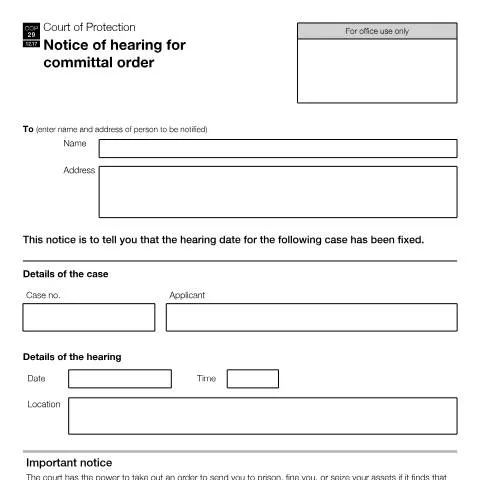
The Notice of Hearing for Committal Order (Form COP29) emerges from the intricate legal environment of the Court of Protection in the UK. This document serves a critical function in proceedings where an individual may face contempt of court allegations. The implications of this notice can be profound, potentially leading to penalties such as fines, imprisonment, or asset seizure. Therefore, comprehending the context, purposes, and processes surrounding this document is essential for those involved in legal proceedings under the Court of Protection.
Key Elements of the COP29 Notice
This notice contains essential information that informs the recipient about the scheduled court hearing. Key components include:
- Case Details: Identification of the specific case number and parties involved.
- Date and Time of Hearing: The scheduled date and time when the hearing will take place.
- Location: The courtroom address where the hearing is to be held.
- Important Notice: A warning regarding the potential consequences of failing to comply with the court's orders, emphasizing the seriousness of contempt of court matters.
The Role of the Court of Protection
The Court of Protection plays a pivotal role in safeguarding individuals who may lack the capacity to make certain decisions for themselves. This court handles a range of issues, including financial affairs and health care decisions for those deemed to lack mental capacity. Form COP29 is a procedural document that links closely with the court's mandate to ensure proper legal proceedings regarding capacity matters are followed.
Implications of Non-Attendance
Receiving Form COP29 is an indication that non-attendance at the hearing could result in severe repercussions. The notice explicitly states that the court holds the authority to enforce a committal order, which can lead to imprisonment or financial penalties. For individuals receiving this notice, understanding the necessity of appearing in court cannot be understated.
The Court’s Discretion and the Importance of Evidence
During the hearing, the recipient of the notice has the opportunity to present their side of the case. The importance of preparing adequate evidence cannot be overstated:
- Witnesses: Individuals who can corroborate the recipient's statements or provide context.
- Documents: Any relevant paperwork that supports the recipient’s claims or defends against allegations of contempt.
By presenting evidence, the recipient can argue against the allegations and provide a rationale for why these do not constitute contempt of court.
Interacting with Legal Counsel
Legal advice is highly recommended for anyone receiving a COP29 notice. The document advises individuals to seek guidance from a solicitor, as the Court of Protection staff are not permitted to offer legal counsel. Understanding the legal implications and potential defenses requires professional assistance:
- Preparation: A solicitor can help prepare for the hearing, ensuring all relevant materials are ready.
- Legal Representation: In some cases, having a solicitor attend the hearing can provide additional support and legal expertise.
Establishing a strong legal footing will be crucial for effectively navigating the complexities of the situation.
Addressing Questions and Concerns
The stress associated with receiving a COP29 notice can lead to many questions. The notice provides a contact number for the Court Enquiry Service, which serves as a resource for individuals seeking clarity. While it’s important to remember that the Enquiry Service cannot provide legal advice, they can assist with procedural questions:
- Hearing Logistics: Questions regarding the location, date, and time of the hearing can be directed to this service.
- Special Assistance Needs: If individuals require accommodations to attend the hearing, contacting the Enquiry Service is essential.
The Importance of Documentation
Form COP29 acts not only as a notification but also as a call to action. It is imperative that the recipient carefully reviews the details contained within the form. Documentation often plays a key role in court proceedings, and ensuring all necessary paperwork is in order is a vital aspect of preparation:
- Case Papers: Familiarity with the case documents relevant to the allegations against the recipient.
- Submission of Evidence: Ensuring that all evidence and documents are submitted properly and in accordance with the court’s directives.
Interrelation with Other Court Documents
Form COP29 does not exist in isolation—it is part of a broader legal framework that includes various court documents and rules. Understanding the interrelations can help recipients better navigate their cases:
| Document | Purpose |
|---|---|
| Form COP1 - Application for a Court of Protection Order | Initiates proceedings within the Court of Protection. |
| Form COP24 - Notice of an Application and Directions | Informs involved parties about upcoming hearings. |
| Form COP25 - Response to an Application | Allows respondents to articulate their objections or support. |
| Practice Direction 21A | Provides guidance on how to respond to allegations of contempt. |
Practical Steps Following Receipt of COP29
Upon receiving the COP29 notice, it is crucial to take proactive steps to prepare for the hearing. Here’s a streamlined approach:
- Review the Notice: Carefully read through the notice to understand the allegations and the required attendance.
- Seek Legal Advice: Contact a solicitor for advice tailored to your specific situation.
- Prepare Evidence: Gather any necessary documentation or witness statements that support your case.
- Contact the Court Enquiry Service: If there are any logistical concerns or if assistance is needed.
- Attend the Hearing: Ensure you arrive on time, equipped with all necessary materials.
Conclusion: Navigating the Legal Landscape
Form COP29 is more than a mere notification; it is a critical component of the legal process concerning contempt of court allegations within the Court of Protection. Engaging thoughtfully with this document and understanding its implications can greatly influence the outcome of a case. The stakes are high, and effectively preparing for the hearing can make a significant difference. Therefore, taking the necessary steps, seeking professional guidance, and being fully informed is the best strategy for anyone facing the legal challenges associated with a committal order hearing.
Understanding the Committal Process in England and Wales
The committal process is a significant aspect of enforcement within the judicial system in England and Wales. It refers to the procedure where a court can impose a custodial penalty for non-compliance with a court order. Typically, this is used in cases where individuals have failed to adhere to financial obligations, such as failing to pay child maintenance or not complying with a court order related to civil proceedings.
When a court determines that a person has not complied with its order, a hearing can be scheduled to ascertain whether the person is in contempt of court. It’s essential to recognize that contempt of court entails the willful disobedience of a court order. The process is governed by specific legal frameworks, primarily contained within the Contempt of Court Act 1981.
Key Considerations for the Committal Hearing
Fill in your form directly online
No printing: type your details into the boxes of the official form, tick, then download the PDF ready to send.
- 1Type into the form boxes
- 2Tick in one click
- 3Save and download the PDF
- The accused individual must be adequately served with the notice of the hearing, usually known as Form COP29, outlining the details of the alleged contempt.
- During the hearing, the court will assess whether the contempt was willful, meaning the individual had the means to comply with the order but chose not to.
- A burden of proof lies with the party seeking the committal order, typically beyond the standard civil threshold ('on the balance of probabilities').
It’s crucial for individuals facing a committal hearing to seek legal advice, as the implications of being found in contempt can lead to imprisonment. Legal representation can help navigate the complexities of the procedure and present a robust defense in court.
The Role of Legal Representation in Committal Hearings
Engaging legal representation when dealing with a committal hearing is imperative. A solicitor who is well-versed in family law or the specific area pertinent to the case can provide invaluable support. They can assist in a variety of aspects, including:
- Preparation of Defence: A solicitor can help gather evidence that may demonstrate compliance with the court order or provide justifications for any failure to comply.
- Understanding Legal Terms: The legal jargon associated with committal proceedings can be overwhelming. A lawyer can demystify the process, explaining terms and procedures that may not be immediately clear to the layperson.
- Representing the Client in Court: Having a lawyer present at the hearing can significantly impact the proceedings. They can articulate the defense and challenge the assertions made by the opposing party.
There is also the option for individuals to represent themselves (known as being a 'litigant in person'), but this carries risks, particularly in complex matters such as committal hearings where the stakes are high. Resources are available through organizations like the Law Society for those who may need assistance in finding representation.
Ultimately, a well-prepared and skilled legal professional can make a considerable difference in the outcome of a committal hearing, potentially mitigating against imprisonment or reducing the consequences of a contempt ruling.
Alternatives to Committal Orders and Their Implications
While committal orders can result in custodial sentences, courts often explore other avenues before resorting to imprisonment. Alternatives may include:
- Suspended Committal Orders: In some cases, a court may impose a suspended order where the individual is not immediately sent to prison. Instead, the order is held in abeyance for a specified period to allow the person time to comply with the original order. Should they fail to comply during this period, the court may then invoke the committal order.
- Financial Penalties: Courts can impose fines or other financial penalties for contempt of court, especially in civil matters, which may be more appropriate than incarceration.
- Community Service: Instead of imprisonment, a court may order community service as a form of punishment, allowing individuals to contribute positively to society while serving their sentence.
Exploring these alternatives can significantly influence the course of a case. The application for alternatives often rests on the individual's showing of remorse and willingness to comply moving forward. Courts may favor rehabilitative over punitive measures, particularly for first-time offenders or those with compelling personal circumstances.
Individuals facing potential committal should consult with legal counsel about the availability of these alternatives and how to effectively present their case to the court.