Understanding the RTASC O Form: A Guide for Claimants in Road Traffic Accident Small Claims
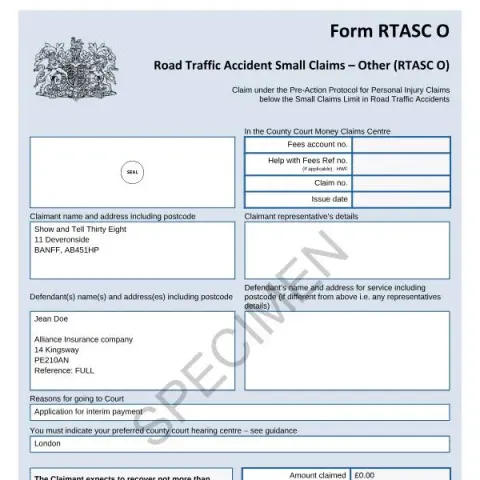
The Road Traffic Accident Small Claims – Other (RTASC O) form is an official document issued by the HM Courts and Tribunals Service. It is used by individuals involved in road traffic accidents to initiate or manage small claims related to personal injury or damages, particularly when the claim falls below the small claims limit in England and Wales. This guide aims to clarify the purpose of the form, how to prepare your claim, and the procedures involved in submitting and following up on your case.
Purpose of the RTASC O Form
The RTASC O form facilitates claims under the Pre-Action Protocol for Personal Injury Claims resulting from road traffic accidents. It is specifically designed for cases where the total claim does not exceed certain financial thresholds—£5,000 for pain and suffering, and £10,000 in total, including damages and other costs. The form helps streamline the process for claimants seeking damages for injuries or losses caused by a road traffic incident, especially when the parties are approaching or within the small claims limit.
Preparing Your Claim
Gathering Relevant Information
Before completing the RTASC O form, gather all necessary details about the accident, including:
- Full names and addresses of both claimant and defendant, including postcode
- Details of any legal representatives involved
- Reference numbers from previous proceedings, if applicable
- Supporting documents such as medical reports, photographs, or witness statements
Determining Your Claim Details
Clearly specify the amount you are claiming for damages, including pain, suffering, loss of amenity, and any other costs. Also, decide on the court hearing centre you prefer, which should be the one most convenient for your location, such as London or your local county court.
Using the Form: Key Sections and Their Functions
Section A: Existing Proceedings
If you have already initiated court proceedings, indicate this here. Provide your existing claim number and specify any support needed during the hearing, such as disability access or language interpreters.
Section B: Claim for Damages
This section allows you to specify what action you are requesting from the court. You can ask for the court to decide on interim payments, order the defendant to pay damages, or issue and stay proceedings to comply with the protocol.
Section C: Application for Interim Payment
If you seek an interim payment, this section guides you through stating whether liability has been admitted and whether the defendant disputes your entitlement. It also covers the status of your supporting documents and Court Pack.
Section D: Non-Payment of Interim Payment
Use this section if the defendant has agreed to an interim payment but has failed to pay. It involves details about any agreements reached and whether the defendant has failed to comply.
Section E: Limitation and Starting a Claim
This part is relevant if you need to issue proceedings before the limitation period expires. It requires confirmation that you have submitted necessary notifications and completed the Court Pack.
Section F: Dispute Over Fees
If there is a disagreement over fees related to medical reports or other disbursements, this section helps you document the dispute and the relevant supporting documents.
Section G: Settlement Non-Payment
When a settlement has been reached but the defendant has not paid the agreed damages or fees, this section captures the details of the non-payment and the claimed amount.
Fill in your form directly online
No printing: type your details into the boxes of the official form, tick, then download the PDF ready to send.
- 1Type into the form boxes
- 2Tick in one click
- 3Save and download the PDF
Submitting and Managing Your Claim
The RTASC O form can be submitted either in person at the court or via postal mail, depending on the court’s procedures. Ensure that all sections are completed accurately, and attach the necessary Court Pack documents as specified. Keep copies of your submission for your records.
Once submitted, the court will process your application, and you will be notified of any hearings or further steps required. Throughout the process, it is advisable to keep in touch with the court and any legal representatives involved to ensure your claim progresses smoothly.
Additional Support and Contact Information
If you need assistance completing the RTASC O form or understanding the court procedures, you may contact the HM Courts and Tribunals Service or consult the official guidance available on their website. Legal advice can also be sought from qualified solicitors or legal advisors specialising in personal injury and small claims.
In summary, the RTASC O form is a crucial document for managing small claims arising from road traffic accidents. Proper preparation and understanding of its sections can help you navigate the legal process effectively and ensure your rights are protected throughout your claim.