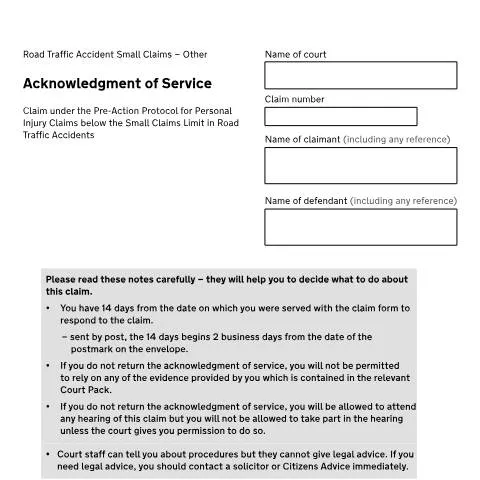
Understanding the Road Traffic Accident Small Claims – Other Document
A sudden road traffic accident can lead to a flurry of legal requirements and claims. If you are a defendant in such a situation, one of the initial documents you will encounter is the Road Traffic Accident Small Claims – Other form. This crucial document is a key part of the process following a road traffic incident, serving as a mechanism for acknowledging service of a claim, and ensuring that proceedings move forward appropriately.
Timelines and Key Actions: Immediate Steps After Notification
Once you receive the claim form, it’s essential to act promptly. You are allotted a period of 14 days to respond. This timeline begins from the day you are served with the claim. For claims sent via post, the clock starts ticking two business days after the date on the postmark. The following actions should be prioritized:
- Read the claim carefully to understand what you are being accused of.
- Prepare to complete the acknowledgment of service form.
- If necessary, seek legal advice—courts cannot provide legal assistance.
The Profile of Participants: Who Needs to Fill Out This Document?
The parties involved in a small claim related to road traffic accidents typically include:
- Defendants: Individuals or entities who are being accused of causing the accident.
- Claimants: The party claiming damages due to the accident.
- Insurers: In many cases, the defendant’s insurance company will also be involved, particularly in handling claims for compensation.
It’s crucial to note that if you are representing a company or organization, the signature must come from an authorized representative, along with their position within the firm.
Breaking Down the Acknowledgment of Service: Each Section Explained
The acknowledgment form consists of several sections that guide you through responding to various aspects of the claim:
Defendant's Information
Initially, you will be required to confirm the defendant’s full name, especially if it differs from the name listed on the claim form. This ensures that the court recognizes the correct party involved in the proceedings.
Claim Details
You must also provide details such as the court's name, your claim number, and the names of both the claimant and defendant as they appear in court documents. Accurate completion of this section is vital for the court's administrative flow.
Response Options and What They Mean
Depending on the situation, you will need to choose the appropriate response from the following categories:
| Response Type | What It Indicates |
|---|---|
| Agreement to Pay Interim Payment | You accept the claimant’s request for an interim payment. |
| Dispute over Interim Payment | You contest the claimant’s right to this payment. |
| Non-Payment of Agreed Settlement Sum | You have not paid the agreed compensation and are disputing it. |
Choosing the accurate response is crucial, as it can shape the direction of the claim. Your acknowledgment is not just a formality; it significantly impacts your legal standing.
Potential Consequences of Inaction: The Risks of Not Responding
Failing to return the acknowledgment of service within the stipulated time frame can have severe ramifications:
- You may be disallowed from presenting evidence during hearings, significantly weakening your position.
- The court may proceed with determining the claim without your input, leading to a potential judgment against you.
Thus, timely response is not merely advisable but essential for defending your interests in subsequent legal proceedings.
Special Circumstances: Addressing Unique Situations
There are instances where the typical procedures may not apply directly to your case. Consider the following scenarios:
Involvement of Minors
If the claimant or defendant is a minor, additional rules apply, including representation by a litigation friend. This aspect should not be overlooked, as it can complicate the acknowledgment process.
Claims from Foreign Entities
International claims may require additional documentation and considerations regarding jurisdiction. If you are involved in such a case, it’s wise to consult with legal professionals who specialize in cross-border claims.
Complex Cases and Urgent Situations
In cases where multiple claims arise from the same accident or when serious injuries are claimed, the process becomes more intricate. Here, detailed legal advice can be crucial in ensuring all procedural aspects are appropriately handled.
What Comes Next? Understanding the Court's Process Post-Acknowledgment
Once you have submitted the acknowledgment of service, the court will take action based on your response. Potential outcomes include:
- No Hearing Required: If the court finds enough evidence to make a determination based on documents alone, a hearing may be unnecessary.
- Scheduling a Hearing: If the dispute requires oral argument, the court will notify both parties at least 21 days in advance of the hearing date.
Staying proactive throughout this period, being prepared with necessary documents and evidence, will enhance your chances of a favorable outcome.
Legal Framework: The Underpinning Regulations
The Road Traffic Accident Small Claims – Other document is framed within specific legal contexts established under various regulations:
- The Pre-Action Protocol for Personal Injury Claims delineates the steps parties must undertake prior to submitting claims to court.
- Guidelines under the Civil Procedure Rules (CPR) govern how such claims should be handled in the legal system.
Understanding this framework is vital, as it not only informs your responsibilities but also your rights within the claims process.
Common Challenges: Navigating the Acknowledgment of Service Process
Many parties encounter challenges during the process of filling out and submitting their acknowledgment:
Cognitive Overload
The legal jargon and procedural requirements can be overwhelming. It's advisable to break down sections and tackle them one at a time to avoid mistakes.
Missing Deadlines
Being unaware of timelines can lead to missed opportunities for defense. Consider setting reminders for each critical date, ensuring you are never caught off-guard.
Insufficient Documentation
Failure to supply adequate supporting documents can hinder your claim or defense. Always double-check the necessary attachments before submission.
Staying Informed: Resources and Support
While the court provides procedural information, they do not offer legal advice. Here are some resources that may help:
- Citizens Advice: They can offer guidance on legal rights and the claims process.
- Legal Advisors: Consulting a solicitor with expertise in personal injury and small claims can be invaluable.
Taking advantage of available resources can make a significant difference in navigating your situation successfully.
Understanding the Small Claims Process for Road Traffic Accidents
When dealing with road traffic accidents, many individuals may not be aware of the small claims process available for resolving disputes. The small claims track is designed to handle minor civil disputes with a value of up to £10,000 in England and Wales, which includes personal injury claims resulting from road traffic accidents.
The process is straightforward, providing claimants with an opportunity to pursue their cases without the need for legal representation, although you may choose to seek legal assistance if you feel it necessary. To initiate a claim, the first step involves completing the appropriate claim form, which can be submitted online through the HM Courts & Tribunals Service or sent by post. The key form for initiating a small claim is the Form N1.
Once the claim is submitted, the defendant will be notified and given an opportunity to respond. It is crucial to keep track of all communications during this phase, as any delays in response could affect the outcome of the case. If the defendant denies the claim or fails to respond, the claimant may request a judgment from the court.
Fill in your form directly online
No printing: type your details into the boxes of the official form, tick, then download the PDF ready to send.
- 1Type into the form boxes
- 2Tick in one click
- 3Save and download the PDF
For road traffic accident claims, documentation such as police reports, witness statements, photographs of the accident scene, and any medical reports will be vital in substantiating your case. The burden of proof lies with the claimant to demonstrate that the other party was at fault, which is where comprehensive documentation becomes indispensable.
Key Considerations Before Filing a Claim
Before proceeding with a small claims action, there are several key considerations to evaluate to ensure that your claim has merit and is actionable.
1. Liability: It is essential to establish who was at fault in the accident. If liability is disputed, it may complicate your claim. Gathering evidence such as witness statements and photographs of the accident scene can strengthen your case.
2. Injuries and Damages: Documenting injuries sustained during the accident is critical. This includes seeking medical attention and obtaining medical records. Additionally, you should keep track of any out-of-pocket expenses related to the accident, such as vehicle repairs, lost wages, and any other financial impacts resulting from the incident.
3. Time Limits: In the UK, the standard time limit for initiating a personal injury claim following a road traffic accident is three years from the date of the accident. Failing to file within this period may bar you from pursuing your claim, so it is vital to act promptly.
4. Costs and Fees: While small claims are typically more affordable than larger court cases, claimants should still be aware of potential costs. Court fees apply, which can vary based on the amount claimed. For example, fees for claims up to £300 can be £35, while fees for claims between £300 and £500 can rise to £50. It's also important to note that unsuccessful claimants may be responsible for the defendant's costs in some cases.
What Happens at the Hearing?
If your claim proceeds to a hearing, it is essential to understand what to expect. The hearing is typically conducted by a District Judge, who will listen to both parties' arguments and review the provided evidence. Here’s a breakdown of the process:
1. Preparation: Before the hearing, ensure that you have all necessary documents organized and easily accessible. This includes copies of your claim form, any correspondence with the defendant, and all evidence supporting your claim.
2. Presentation of Evidence: The hearing will usually begin with the claimant presenting their case first. You will have the opportunity to explain your version of events and present your evidence. The defendant will then be allowed to respond and present their side. It is crucial during this portion to remain factual and avoid emotional arguments.
3. Questions: The judge may ask questions to clarify details or seek additional information. Be prepared to answer clearly and succinctly, sticking to the facts of the case.
4. Judgment: After both sides have presented their evidence, the judge will make a determination. They may provide a decision immediately, or you may receive a written judgment at a later date. If the judge rules in your favor, they will outline the compensation amount awarded, including damages and costs.
It is important to note that if either party is dissatisfied with the ruling, there are options for appeal, but this typically requires grounds based on errors in law or procedure, rather than simply dissatisfaction with the outcome.