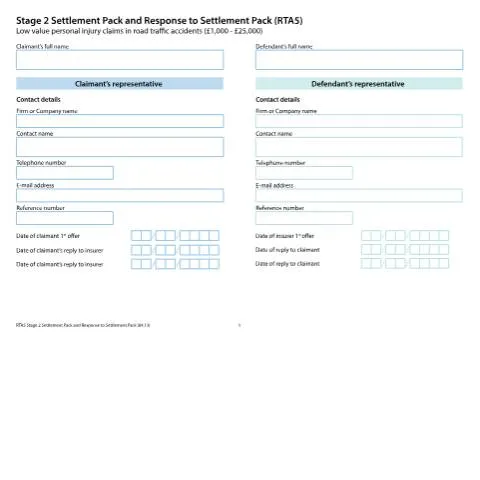
The Importance of the RTA5 Form in Road Traffic Accident Claims
When involved in a road traffic accident in the UK, navigating the claims process can often feel overwhelming, particularly when it comes to ensuring that all necessary documentation is completed accurately and submitted timely. One such critical document in this process is the RTA5 Stage 2 Settlement Pack and Response to Settlement Pack. This specific form plays a pivotal role in low value personal injury claims arising from road traffic accidents, which typically range from £1,000 to £25,000. Understanding its function, how to properly fill it out, and the subsequent steps is essential for claimants and their representatives.
Understanding the Framework Behind the RTA5 Form
The backdrop of the RTA5 form is steeped in regulations designed to streamline the processing of personal injury claims resulting from road traffic accidents. Introduced under the Pre-Action Protocol for Low Value Personal Injury Claims in Road Traffic Accidents, this form represents Stage 2 of the claims process. It's crucial to note that the protocol was established to facilitate quicker resolutions, thereby reducing the burden on the courts and enabling claimants to receive compensation more efficiently.
Historically, the protocol emerged in response to concerns regarding the lengthy timelines and complexities associated with personal injury claims. By introducing a structured, formalised procedure, the government aimed to protect the interests of claimants while ensuring that defendants could respond appropriately without excessive delay. The RTA5 form is a direct product of this initiative, serving both claimants and defendants by clearly detailing settlement offers and responses within the framework of the protocol.
Decoding the RTA5 Form: Structure and Key Components
To successfully navigate the RTA5 form, it’s essential to understand its structure and the specific components that need to be completed. Let’s break down the critical sections:
Claimant and Defendant Details
At the top of the form, both the claimant’s and defendant’s details must be accurately filled out. This includes:
- Full name of the claimant
- Full name of the defendant
- Contact information for both parties, including telephone numbers and email addresses
Ensuring that this information is correct is vital. Errors here can lead to significant delays or complications in the claims process.
Offers and Responses Section
This section is where the crux of negotiations occurs. The form requires details about:
- The claimant’s initial offer
- The defendant’s response to that offer
- Details about losses being claimed, including gross value, contributory negligence deductions, and net value claimed
When filling out this section, it’s crucial to provide comprehensive and clear information. Missing information or discrepancies can lead to misunderstandings and protracted negotiations.
Evidence and Documentation
Another critical aspect of the RTA5 is the evidence that must accompany the claims being made. Here, claimants must list the types of evidence attached to support their claims, such as:
- Medical reports
- Repair estimates
- Proof of earnings for loss of income claims
Claimants should be meticulous about the evidence they provide, as the strength of the claim often hinges upon the quality and relevance of the supporting documents.
Filing the RTA5 Form: Steps to Follow
Once the RTA5 form has been completed, the next important step is submission. Here’s how the process typically unfolds:
Where to Submit
The completed RTA5 form must be submitted to the appropriate party as specified in the guidance provided. Typically, this is the defendant’s insurance company or their legal representative. It’s recommended to send the form via a method that provides proof of delivery, such as recorded delivery.
Timeline Considerations
After submission, understanding the timeline is crucial. Generally, once the RTA5 has been submitted, the defendant is expected to respond within a specific timeframe. If negotiations are successful, an agreement can be reached, resulting in a settlement. However, if the defendant rejects the claim or does not respond, further steps may need to be taken, which can include escalation to litigation.
Responding to a Refusal: What’s Next?
In cases where the defendant does not agree to the settlement proposed by the claimant, it’s essential to understand how to proceed. The RTA5 form includes a section for comments, allowing both parties to articulate their positions clearly.
Negotiation Strategies
If a response to the RTA5 indicates that the offer is unacceptable, the claimant can choose to:
- Reassess their offer based on the feedback received.
- Provide additional evidence to strengthen their position.
- Consider alternative dispute resolution options, such as mediation.
This phase is critical as it can determine whether a fair settlement can be reached outside of court or if further legal action will be necessary.
Special Considerations: Unique Cases and Circumstances
While the RTA5 form is standardised, there are scenarios that may require special attention. Consider the following:
Claims Involving Minors
For claims involving minors, a parent or guardian must act on their behalf. This can complicate the process, as any settlement must be approved by the court to ensure that the minor's best interests are safeguarded.
International Considerations
For claimants from abroad or when the defendant is based internationally, additional complexities may arise. It’s crucial to seek legal advice in these circumstances, as the usual protocols may not apply, and jurisdictional issues can become significant.
Understanding Outcomes: Post-Submission Scenarios
Once the RTA5 form is submitted and the responses received, several potential outcomes can occur:
Successful Settlement
If an agreement is reached, both parties will need to sign the settlement agreement, concluding the matter satisfactorily. Ensure that all terms are clearly understood and documented.
Dispute Resolution Process
If a settlement cannot be reached, the matter may proceed to court. In such cases, the claimant must prepare for a more extensive legal process, which can include gathering additional evidence and possibly attending court hearings.
Impact of Delays and Errors
It’s important to note that delays in submitting the RTA5 form or errors in the information provided can have significant repercussions. From potential claims being dismissed to the need for re-filing, understanding the importance of precision and timeliness cannot be overstated.
Conclusion: The Significance of Diligence in Completing the RTA5 Form
The RTA5 Stage 2 Settlement Pack form is not merely a bureaucratic requirement but a fundamental document that can influence the outcome of personal injury claims significantly. Given its centrality to the claims process, taking the time to understand the form thoroughly and ensuring all information is accurate and substantiated will greatly assist claimants in achieving a fair resolution. Engaging with legal professionals who are well-versed in this area can also provide invaluable support, ensuring that every aspect of the claim is optimally managed throughout the process.
Understanding the RTA5 Form: Purpose and Importance
The RTA5 form, officially known as the Stage 2 Settlement Pack, plays a critical role in personal injury claims resulting from road traffic accidents in the UK. This form is initiated after the claimant has successfully completed the initial stages of the claims process, typically outlined in the RTA Protocol. Understanding the purpose behind the RTA5 form is essential for both claimants and defendants, as it sets the foundation for potential settlements outside of court.
Fill in your form directly online
No printing: type your details into the boxes of the official form, tick, then download the PDF ready to send.
- 1Type into the form boxes
- 2Tick in one click
- 3Save and download the PDF
Primarily, the RTA5 form serves two key functions: it allows the claimant to present their case for compensation and invites the defendant’s insurer to respond with their offer of settlement. The completion and submission of this form is crucial as it marks a transition from preliminary negotiations to a more formal settlement process. It is during this stage that both parties must carefully evaluate the evidence, including medical reports and witness statements, ensuring that all relevant information is accurately presented.
One significant aspect of the RTA5 form is its requirement for detailed information regarding the injuries sustained and the impact on the claimant's daily life. This is not just a formality; the details provided in this form can significantly influence the settlement amount. It is advisable for claimants to include all pertinent information, including any long-term consequences of the injuries, loss of earnings, and necessary medical treatments, as these factors will be integral to substantiating the claim.
Navigating the Response to the RTA5 Settlement Pack
Once the RTA5 form is submitted, the defendant's insurer is required to respond within a stipulated timeframe, typically 15 working days. Understanding how to navigate this response process is crucial for claimants. The insurer's response may include an acceptance of the claim, a counteroffer, or a rejection of the claim altogether. Each of these outcomes requires a different strategic approach from the claimant.
If the insurer accepts the claim, the next step involves agreeing on the terms and finalizing the settlement amount. Claimants should ensure that they review the settlement terms carefully, as accepting an offer can preclude any future claims related to the same incident. If a counteroffer is made, claimants should evaluate whether this offer accurately reflects their injuries and losses, and whether further negotiation is necessary.
In cases where the insurer rejects the claim, claimants must assess the reasoning provided. Often, insurers will cite insufficient evidence or lack of liability as grounds for a rejection. In such instances, it’s essential to revisit the evidence submitted with the RTA5 form and potentially gather additional documentation or statements that could strengthen the case. Consideration should also be given to the possibility of pursuing alternative dispute resolution methods or, as a last resort, litigation.
Throughout this response process, maintaining clear communication with legal representatives is vital. They can provide invaluable assistance in interpreting the insurer's response and advising on the best course of action, whether it involves negotiating further or preparing for court proceedings.
Common Pitfalls and How to Avoid Them
Completing and responding to the RTA5 form can be daunting, particularly for those unfamiliar with the legal landscape. Recognizing common pitfalls can help claimants navigate this process with greater confidence.
One frequent mistake is underestimating the importance of detailed documentation. A lack of comprehensive medical records, accident reports, or witness statements can severely weaken a claim. It is crucial to gather all relevant evidence before submitting the RTA5 form. This includes not only immediate medical assessments but also any ongoing treatment or therapy that may impact the claimant's quality of life.
Another pitfall is failing to take deadlines seriously. The RTA Protocol outlines specific timelines for each stage of the claims process, and missing these deadlines can jeopardize a claim. Claimants should be proactive in managing their timelines and ensuring that all forms are submitted promptly. Keeping a detailed calendar with marked deadlines will help maintain organization throughout the process.
Additionally, some claimants may feel pressured to accept the first settlement offer they receive. However, it is essential to thoroughly evaluate the offer in relation to the full extent of the injuries and losses incurred. Claimants should not hesitate to seek legal advice before accepting any offer, especially if it seems inadequate.
Lastly, clear communication is integral to avoiding misunderstandings. Claimants should maintain regular contact with their legal representation and be transparent about their expectations and concerns. Miscommunication can lead to missed opportunities for negotiation or the submission of incomplete forms.