Understanding the Official Guidance on Victim Representations and Impact Statements: Form T144
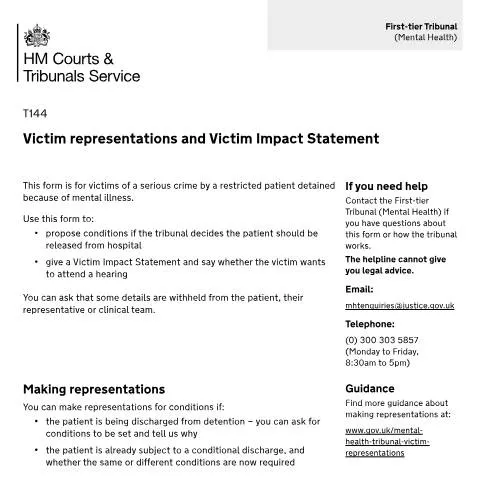
The Form T144 issued by the HM Courts & Tribunals Service is a crucial document designed to facilitate victims of serious crimes within the context of mental health tribunals. It specifically pertains to cases involving restricted patients who are detained due to mental illness. This guide aims to clarify the purpose, scope, and implications of this form, providing a comprehensive overview for victims, legal representatives, and other interested parties.
Purpose and Scope of Form T144
Form T144 serves multiple functions in the legal process surrounding the detention and potential release of mentally ill patients:
- It allows victims to propose conditions if the tribunal considers the patient's release from hospital.
- It provides a platform for victims to submit a Victim Impact Statement (VIS), expressing how the crime has affected them.
- Victims can indicate whether they wish to attend tribunal hearings, ensuring their voice is heard during proceedings.
Importantly, the form is tailored for victims of serious crimes involving restricted patients, who are detained because of mental health issues. Its design ensures victims can participate actively in the legal process while safeguarding their privacy and well-being.
Key Provisions and How to Use the Form
Making Representations for Conditions
Victims can use the form to suggest specific conditions that should be applied if the patient is discharged. These conditions might include restrictions on contact or geographical exclusion zones. The form also allows victims to specify whether they believe the same or different conditions are necessary compared to previous arrangements.
Victims have the option to request that certain details—such as their address—are withheld from the patient, their representatives, or clinical teams to protect their privacy. This non-disclosure request is subject to tribunal approval and is granted only in limited circumstances.
Providing a Victim Impact Statement
The form offers victims an opportunity to articulate the emotional, physical, or financial impact of the crime through a Victim Impact Statement. This statement informs the tribunal's decision-making process concerning the setting of conditions but cannot influence the decision regarding the patient's release itself.
Victims can choose to have their impact statement disclosed or withheld from the patient, with reasons provided to justify non-disclosure if applicable. The tribunal considers the potential for serious harm or distress to the victim when deciding on disclosure requests.
Implications for Victims and the Legal Process
The process established by Form T144 emphasizes the victim's role in the legal proceedings related to mental health detention. By submitting representations and impact statements, victims can:
- Contribute to the setting of conditions that might affect the patient's community reintegration.
- Express the personal impact of the crime, aiding the tribunal's understanding of the broader consequences.
- Request confidentiality measures to protect their safety and privacy.
However, victims should be aware that the tribunal's primary focus is on balancing the patient's rights, public safety, and the victim's interests. The legal framework, including the Victims and Prisoners Act 2024 and the Crime and Violence Act 2004, guides these proceedings, ensuring that victims' voices are heard within a structured and lawful process.
Fill in your form directly online
No printing: type your details into the boxes of the official form, tick, then download the PDF ready to send.
- 1Type into the form boxes
- 2Tick in one click
- 3Save and download the PDF
Contact and Support
For victims seeking assistance or clarification on completing Form T144, the HM Courts & Tribunals Service provides guidance and support through their dedicated helpline and email contact. While the helpline cannot offer legal advice, it can answer procedural questions and direct victims to relevant resources.
Victims are encouraged to prepare their representations carefully, considering the potential impact of their disclosures, and to seek support from victim liaison officers or legal advisors if needed.
Conclusion
Form T144 exemplifies the UK’s commitment to ensuring victims of serious crimes are actively involved in the legal processes concerning mentally ill offenders. By enabling victims to propose conditions and articulate their experiences through impact statements, the form fosters a more inclusive and transparent tribunal process, balancing justice, safety, and compassion.