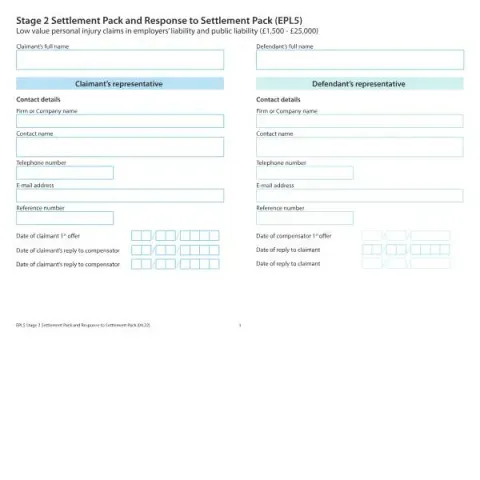
Understanding the EPL5 Document: A Critical Tool in Personal Injury Claims
Navigating the complexities of personal injury claims can be daunting, especially when dealing with employers' liability and public liability cases that fall within the range of £1,000 to £25,000. One essential document in this process is the Stage 2 Settlement Pack and Response to Settlement Pack, known as Form EPL5. This official document is pivotal for claimants and serves a dual purpose: it allows for the submission of claims and provides a structured way to respond to offers made by compensators.
The Profile of Potential Claimants: Who Should Use Form EPL5?
Form EPL5 is specifically tailored for individuals who have sustained low-value personal injuries in either an employment context or a public setting. This likely includes, but is not limited to, the following groups:
- Employees: Individuals who have experienced an injury due to their employer's negligence, such as accidents in the workplace.
- Members of the Public: Those injured in public spaces, like slip and fall incidents in stores or parks.
- Legal Representatives: Solicitors or advocates acting on behalf of claimants who must submit or respond to the EPL5.
It's essential to note that specific conditions can affect eligibility. For instance, claimants must ensure that their total claim does not exceed the upper limit of £25,000, and that the injury correlates directly with employer or public liability.
The Administrative Journey: From Submission to Settlement
The process does not end with filling out Form EPL5; understanding the administrative journey is crucial. Once submitted, the document initiates a sequence of interactions between claimants and compensators. Here’s what typically happens after submission:
- Review by the Compensator: After the EPL5 is filed, the compensator—which could be an insurance company representing the employer or a public liability insurer—will review the claim.
- Initial Offer or Rejection: The compensator may respond with an initial settlement offer or reject the claim. This response is crucial, as it marks the beginning of negotiations.
- Negotiation Phase: If an offer is made, the claimant has the right to accept, reject, or propose a counteroffer. This back-and-forth can continue until both parties reach a settlement.
- Final Agreement: Once both parties agree on the terms, the claimant must complete the EPL5 to formalize the agreement.
During this journey, it’s advisable for claimants to remain proactive. They can check the status of their claim by contacting the relevant office of the HM Courts & Tribunals Service or their legal representative.
Decoding the EPL5: A Section-by-Section Breakdown
Completing the EPL5 accurately is crucial to avoid delays or complications. Let’s break down the primary sections of the form:
Claimant's Information
- Full Name: Ensure that this is your legal name as it appears on official documents.
- Contact Details: Include up-to-date phone numbers and email addresses to facilitate easy communication.
- Representative's Information: If you are represented, their details must be accurately filled in, including the name of the firm.
Details of the Claim
This section requires specific information on the claim itself, such as:
- Date of Initial Offer: Be precise with the date you received the first offer from the compensator.
- Value Claimed: Clearly state the total value you are claiming, ensuring you differentiate between gross and net values.
- Head of Damage Claimed: Itemize your claims, such as PSLA (Pain, Suffering and Loss of Amenity), loss of earnings, medical expenses, etc.
Defendant's Response
This section captures the compensator's initial response. It’s vital to document:
- Agreed Amount: If an offer is made, ensure to note if it is agreed upon or disputed.
- Comments: Space for additional remarks from both the claimant and defendant regarding the offer.
Regulatory Context: The Framework Governing EPL5
The EPL5 form operates within a broader legal framework established by the Ministry of Justice and the HM Courts & Tribunals Service. Key regulations influencing the use of this document include:
- Pre-Action Protocols: These must be observed to encourage settlement before proceeding to court, emphasizing communication between parties.
- Data Protection Act 2018: All personal data submitted via the EPL5 is subject to stringent data protection laws that safeguard claimant information.
- UK Civil Procedure Rules: These rules guide the overall civil litigation process, including claim submissions.
The understanding of these regulations is integral for both claimants and their representatives when filling out the EPL5, as it impacts the entire claims process.
What To Do When Facing Challenges or Refusals
Claimants may encounter various obstacles during the claims process using the EPL5. Common issues include refusals of claims, missing documentation, or misunderstandings regarding the offer. Here’s how to navigate these challenges:
- Addressing a Claim Refusal: If your claim is rejected, it’s essential to request a detailed explanation from the compensator. You may want to appeal this decision if you believe there are grounds to do so.
- Correcting Errors: Should you notice mistakes in your submission, promptly contact the compensator to rectify these before they affect the outcome.
- Providing Missing Documents: If the compensator requires additional proof or evidence, gather and submit these documents as quickly as possible. Keep a record of all correspondence.
Preparation of Evidence: Assembling Your Documentation
The robustness of your claim often hinges on the evidence submitted alongside the EPL5 form. Here’s a list of recommended documents to prepare based on common situations:
| Type of Evidence | Details Required | Purpose |
|---|---|---|
| Medical Reports | Doctor's notes and treatment records | Support claims for personal injury and treatment costs |
| Employment Records | Payslips and contracts | Demonstrate loss of earnings |
| Receipts | Proof of expenses related to the claim | Validate claims for additional costs incurred |
| Witness Statements | Written accounts from witnesses | Corroborate your version of events |
Prioritizing the organization and clarity of these documents can significantly enhance the credibility of your claim.
Submission Channels for Form EPL5: Understanding Your Options
Claimants can submit the EPL5 form through various channels, each offering distinct advantages:
- Online Submission: Many claimants prefer this method for its convenience and speed. Using the HM Courts & Tribunals Service online portal allows for quick processing.
- Postal Submission: If you choose to send your EPL5 through the postal service, ensure that you use a reliable delivery method and keep a copy of everything you send.
- In-Person Submission: For those who prefer direct interaction, submitting the form at a local court can provide reassurance and immediate verification of receipt.
Each submission method has implications on processing times, so consider your situation carefully before making a decision.
Beyond Submission: The Importance of Monitoring Your Claim
Once the EPL5 form is submitted, tracking the progress of your claim is crucial. Keeping communication lines open with your legal representative or the HM Courts & Tribunals Service will help ensure you receive timely updates and notifications regarding your claim.
Remember, the outcomes of claims can influence how future cases are handled, both for yourself and for broader legal precedents in low-value personal injury claims. Taking an active role in managing your claim not only empowers you as a claimant but also contributes to a fairer, more transparent claims process for all parties involved.
Understanding the Stage 2 Settlement Pack in Employers' Liability Claims
The Stage 2 Settlement Pack is a critical component in the process of resolving low value personal injury claims under employers' liability and public liability insurance. If you have sustained injuries that fall within the range of £1,000 to £25,000, understanding this pack is essential for effectively navigating your claim.
First, it’s important to note that the Stage 2 Settlement Pack is typically issued after the initial claim has been submitted and when the insurer has acknowledged your claim. This pack contains various forms and documents that elucidate the insurer's assessment of your claim, including factors such as the nature of your injury, the estimated costs of treatment, and any impacts on your daily life.
Inside the pack, you'll find the relevant Form EPL5, which is specifically designed for low value personal injury claims. This form requires you to provide comprehensive details about your injury, including medical evidence, treatment history, and any recovery prognosis provided by your healthcare professionals. Failing to provide complete and accurate information can lead to delays or potentially lower compensation offers.
Furthermore, the Stage 2 Settlement Pack also includes the insurer's offer of settlement. This is essentially the amount they are willing to pay to resolve your claim. It is crucial to carefully review the offer against your expectations and the evidence you have submitted. If the offer is unsatisfactory, you have the right to negotiate or dispute it, which can be done by responding formally through the channels provided in the pack.
In addition to the financial offer, the pack may also contain a statement regarding your National Insurance number and any potential impacts that accepting the settlement may have on future benefits or compensations. It is advisable to seek independent legal advice before making a decision regarding the settlement to ensure that you are fully informed about the implications of your acceptance or rejection of the offer.
Responding to the Settlement Pack: Strategies and Considerations
When you receive the Stage 2 Settlement Pack, crafting a well-structured and reasoned response is paramount. Your response not only allows you to negotiate the terms of the settlement but also serves to reinforce your position and the validity of your claim. Here are some strategies to consider when preparing your response.
Firstly, gather all relevant evidence that supports your claim. This includes medical reports, receipts for out-of-pocket expenses, and any documentation supporting your assertion of how the injury has impacted your daily life. Presenting such evidence can bolster your argument for a higher settlement offer.
Fill in your form directly online
No printing: type your details into the boxes of the official form, tick, then download the PDF ready to send.
- 1Type into the form boxes
- 2Tick in one click
- 3Save and download the PDF
Secondly, when drafting your response, it should be clear, concise, and well-articulated. Start by acknowledging receipt of the Settlement Pack and express your appreciation for their processing of your claim. Following this, outline the specifics regarding any discrepancies you find in their offer compared to your expectations based on the evidence you have presented. If you believe the offer is too low, clearly articulate why you think a higher amount is justifiable.
It's also essential to maintain a professional tone throughout your communication, as this reflects your seriousness regarding the negotiation process. Avoid emotional language; instead, stick to factual statements and evidence-based arguments. If possible, reference any legal precedents or guidelines that may apply to your case, which may strengthen your position.
Additionally, consider discussing the timeline for your response. The insurers typically allow a specific period for you to respond to the Settlement Pack, usually around 21 days. Ensure that your response is submitted within this time frame to avoid complications with your claim.
Finally, it’s advisable to document your communication thoroughly. Keep copies of all correspondence for your records, as you may need them for future references or if disputes arise later in the process.
Common Pitfalls in the Claims Process and How to Avoid Them
Engaging in the claims process for low value personal injury claims can be fraught with potential pitfalls. Being aware of common mistakes and how to avoid them can significantly enhance your chances of a successful claim.
One major pitfall is underestimating the importance of evidence. Many claimants assume that their verbal accounts of injuries and impacts will be sufficient, but insurers require concrete evidence to substantiate claims. Always ensure you have comprehensive medical records, photographic evidence of the incident, witness statements, and documentation of any financial losses incurred as a result of the injury.
Another common mistake is failing to understand the terms of the settlement offer. Claimants may hastily accept an offer without fully comprehending the implications. Always read through the entire Settlement Pack and consider seeking legal advice to clarify any ambiguous terms, particularly regarding liability acceptance and future claims.
It’s also vital to avoid rushing into a settlement. While it might be tempting to accept a fast resolution and receive compensation quickly, this can sometimes lead to accepting a lower amount than what you are entitled to. Take the time to evaluate all offers and negotiate where necessary. A premature settlement may also prevent you from seeking further claims if your condition deteriorates later on.
Furthermore, maintain communication with your legal advisor throughout the process. Many claimants may assume they can handle everything independently, which often leads to missteps. If you are working with a solicitor or legal representative, keep them updated and consult them whenever you receive new documentation or correspondence related to your claim.
Lastly, be mindful of deadlines. The personal injury claims process is time-sensitive, and failing to adhere to set timelines can jeopardize your claim. Keep track of all relevant dates, including those for submitting responses, medical evaluations, and any other required documentation.