Navigating the EPL4: Understanding Interim Settlements for Low Value Personal Injury Claims
In the realm of personal injury litigation, the process can often feel overwhelming, particularly when it comes to understanding interim payments. The EPL4 Interim Settlement Pack plays a crucial role for claimants seeking compensation for low-value personal injuries under employers' or public liability claims. This document not only facilitates the interim payment process but also assists in clarifying the obligations of both claimants and defendants.
Who Engages with the EPL4: Claimants and Defendants
The process typically involves two key parties: the claimant, who has sustained an injury, and the defendant, usually the employer or entity responsible for the injury. Understanding the profiles of these parties can shed light on how they interact with the EPL4.
Claimant Profiles
- Employees Injured at Work: Workers who sustain injuries while performing their duties may seek compensation through their employer's liability insurance.
- Public Liability Claimants: Individuals injured in public areas, such as parks or shopping centres, where the local council or private entity holds responsibility.
- Vulnerable Claimants: This may include children or those with diminished capacity, requiring additional protection during the claims process.
Defendant Profiles
- Employers: Businesses of varying sizes must engage with this process when employees claim injury-related damages.
- Public Entities: Local councils or companies managing public spaces may also find themselves needing to respond to claims.
Key Steps in the Interim Settlement Process
The journey through the EPL4 process can be visualised in a series of logical steps. From the initial claim to the ultimate resolution, understanding these stages is vital for both claimants and their representatives.
1. Initiation of the Claim
The process begins when a claimant engages legal representation and their solicitor files a claim. During this phase, gather all relevant documents, such as medical reports and evidence of loss.
2. Submission of the EPL4
The claimant’s representative will complete and submit the EPL4, detailing all damages and losses incurred to date. This includes:
- Past and Future Losses: Clearly itemise losses, including earnings lost and medical expenses incurred.
- Evidence Submission: Attach all corroborative evidence that supports the claim.
3. Defendant's Response
Upon receipt of the EPL4, the defendant's representative must review the claim. They are expected to respond promptly, either agreeing to the interim payment or providing a counter-offer. Specific timelines may apply, so be vigilant in tracking these deadlines.
4. Settlement Negotiation
This stage involves negotiations between the claimant's and defendant's representatives. A clear understanding of the damages claimed and the defendant's position is essential for fruitful discussions.
5. Final Agreement and Payment
If both parties reach an agreement, an interim payment will be made. If disputes arise, the parties may need to seek resolution through the courts.
Documenting Losses: What to Include
A key aspect of the EPL4 is the need for detailed documentation of losses. Preparing an exhaustive list ensures that claimants receive fair compensation for their injuries.
Categories of Losses
| Type of Loss | Required Evidence | Comments |
|---|---|---|
| Loss of Earnings | Pay slips, employer confirmation | Include both past and future earnings potential. |
| Medical Expenses | Invoices, receipts | Ensure all documents are up to date. |
| Care/Services | Details of care required, costs incurred | Include evidence of hired services if applicable. |
| Other Losses | Various supporting documents | Be specific about each claimed item. |
Filing Methods: Online, Paper, and In-Person
One significant element of navigating the EPL4 process is understanding the various methods available for submitting the form. Each method has its nuances, which can affect the speed and efficiency of your claim.
Online Submissions
Submitting the EPL4 electronically can often expedite the process. It allows for immediate confirmation of receipt and reduces the likelihood of delays associated with postal services.
Paper Submissions
For those who prefer traditional methods, submitting a paper form is always an option. However, ensure you allow sufficient time for postal delays when opting for this route. Keep copies of all submitted documents.
In-Person Submissions
In certain circumstances, submitting the EPL4 in person may be advisable. This approach allows for direct communication with court staff, who can provide guidance and clarify any uncertainties regarding the submission process.
Tracking Your Claim: Monitoring Progress
Once the EPL4 is submitted, it's crucial to monitor the claim closely. Understanding how to check the status of your claim can help alleviate anxiety and ensure that the case proceeds efficiently.
Confirming Receipt
For electronic submissions, an automatic confirmation should be received. For paper submissions, consider following up with the relevant court to verify that your form was received.
Regular Updates
Maintaining communication with your legal representative will provide essential updates throughout the claim process. They can inform you of any developments and advise on next steps.
Dealing with Delays
If your claim is experiencing unexpected delays, don’t hesitate to reach out to the court or your legal representative for clarification. Understanding the reasons behind delays can help manage expectations.
What Happens After Submission: The Anticipated Outcomes
After submitting the EPL4 and awaiting responses, claimants should prepare for various potential outcomes, which might include acceptance, counter-offers, or disputes.
Accepted Claims
If the interim payment is accepted, the claimant will receive their compensation as agreed. It’s prudent for claimants to ask for a detailed breakdown of the payment.
Counter-Offers
If the defendant responds with a counter-offer, the claimant will need to assess this offer. This may involve additional negotiation, potentially requiring further evidence to support the original claims.
Dispute Resolution
In cases where disagreements arise, the claimant may need to consider alternative dispute resolution methods or even pursue court intervention to reach a settlement.
Final Thoughts on Managing the EPL4 Process
Engaging with the EPL4 Interim Settlement Pack is a complex yet essential aspect of pursuing compensation for personal injury claims. Navigating this process with diligence and awareness of each step can significantly influence the outcome of your claim.
By understanding the nuances of the EPL4, gathering necessary documentation, and maintaining proactive communication with all parties involved, claimants can effectively advocate for their rights and seek the compensation they deserve.
Understanding the EPL4 Form: Key Components and Requirements
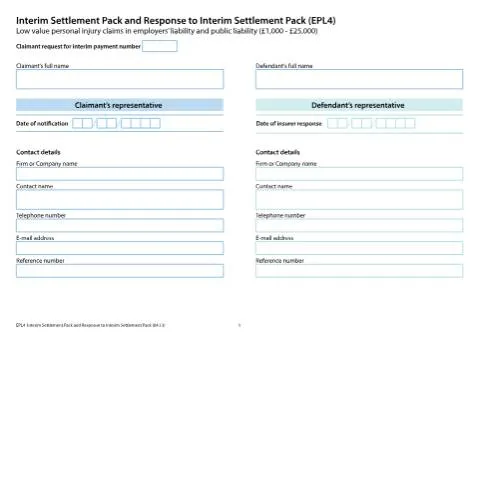
The EPL4 Form, known as the Interim Settlement Pack, is a crucial document tailored for individuals seeking interim compensation for low-value personal injury claims, specifically in the context of employers' liability and public liability. Understanding its components can significantly streamline the claims process, ensuring that claimants provide the necessary details to facilitate a fair evaluation.
When filling out the EPL4 Form, claimants must provide comprehensive information regarding their injury, circumstances surrounding the incident, and how it has impacted their daily lives. This includes:
Fill in your form directly online
No printing: type your details into the boxes of the official form, tick, then download the PDF ready to send.
- 1Type into the form boxes
- 2Tick in one click
- 3Save and download the PDF
- Incident Details: Clearly outline the date, location, and nature of the incident that led to the personal injury. This helps establish liability and provides context to the claim.
- Medical Evidence: Supporting documentation such as medical reports, treatment records, and any ongoing medical needs should be included. Claimants may need to obtain reports from healthcare professionals detailing the injury and prognosis.
- Financial Losses: Detail all financial implications stemming from the injury. This includes lost wages, medical expenses, and any other costs directly related to the incident. Evidence such as payslips or receipts can support these claims.
It's vital for claimants to understand that these components are not merely formalities; they are essential for the assessment of the interim settlement. Incomplete or vague information can lead to delays in processing the claim or, worse, a reduction in the offered settlement.
Responding to the Interim Settlement Pack: Strategies for Claimants
Receiving the Interim Settlement Pack can be a significant moment in the claims process, especially for those pursuing claims between £1,000 and £25,000. However, how claimants respond to this pack can significantly influence the outcome. Here are some strategies to consider:
1. Comprehensive Review: Before responding, take time to thoroughly review the contents of the Interim Settlement Pack. Assess the settlement offer in relation to the documented injuries, financial losses, and overall impact on your life. Are the financial figures reflective of your incurred and anticipated costs?
2. Gather Additional Evidence: If there are discrepancies between your understanding of the claim's worth and the offer presented in the pack, gather additional evidence to support your position. This may include new medical opinions, expert testimonies, or financial records that were not previously disclosed.
3. Engage in Negotiation: The response to the Interim Settlement Pack is an opportunity to negotiate. Don’t hesitate to counter the initial offer with a reasoned argument supported by evidence. Always maintain a professional tone, as this can help in fostering a more constructive dialogue with the other party.
4. Seek Professional Advice: If uncertainties arise during this process, consider consulting with a solicitor or a claims specialist. They can provide valuable insights and assist in crafting a response that accurately reflects your needs and enhances the chances of a satisfactory settlement.
The Role of Mediation in Low-Value Personal Injury Claims
Mediation can serve as an effective tool in resolving disputes arising from low-value personal injury claims, including those covered under EPL4. It offers a structured environment where both parties can negotiate and hopefully reach a satisfactory resolution without resorting to lengthy litigation. Understanding the mediation process and its advantages is crucial for claimants.
1. What to Expect in Mediation: Mediation sessions typically involve both parties meeting with a trained mediator who facilitates the discussion. Claimants should prepare to present their case succinctly and clearly, supported by the documentation gathered. Active listening and openness to compromise are key to successful mediation.
2. Benefits of Mediation: One of the most notable advantages of mediation is the ability to reach a resolution on your terms. Mediation tends to be more cost-effective and less time-consuming than court proceedings, allowing both parties to bypass the uncertainties of a trial. Additionally, it provides an opportunity to maintain a relationship with the other party, which might be beneficial for future interactions.
3. When to Consider Mediation: Mediation is particularly beneficial when both parties are willing to negotiate and when the evidence is not overwhelmingly in favour of one side. For claimants who may not have sufficient evidence to justify a higher settlement in court, mediation allows for an amicable resolution.
By understanding the nuances and potential benefits of mediation, claimants can approach the process with greater confidence and clarity, ultimately enhancing their chances of achieving a satisfactory outcome.