Navigating the Waters of Admiralty Claims: The Role of Form ADM2
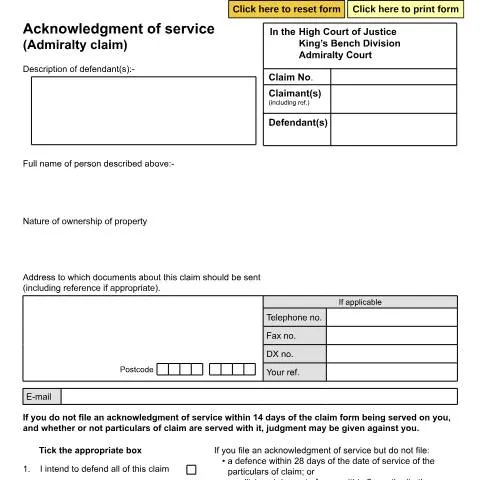
When faced with an admiralty claim in the High Court of Justice, understanding the procedural requirements can be daunting. Form ADM2, or the Acknowledgment of Service, is your essential first step towards addressing a claim against you. Failure to properly complete and submit this document within specified timeframes could lead to a default judgment being entered against you. This article delves deep into the importance of this form, guiding you through its nuances, requirements, and implications.
Historical Context and Legal Framework Surrounding Form ADM2
Admiralty law, the body of law governing maritime issues, has evolved significantly over centuries. The foundation of this legal framework is rooted in both common law and international treaties. The Admiralty Court, part of the King's Bench Division, administers these laws to ensure fair resolution of disputes involving vessels, cargo, and maritime contracts.
Form ADM2 has been designed in line with the CPR (Civil Procedure Rules), specifically tailored for admiralty claims. This adherence to established procedural rules ensures that the process remains efficient and just. The significance of this form cannot be overstated, as it serves as a formal notification to the court of a defendant's intention regarding the claim being made.
What You Need Before Tackling Form ADM2
Before you begin completing Form ADM2, it’s crucial to gather the necessary information and documentation. The completeness and accuracy of the details you provide can significantly influence the outcome of your case. Here are the key elements you should assemble:
- Claim Information: Familiarize yourself with the claim number and the names of the claimant(s) and defendant(s). This information is crucial for proper identification.
- Details of Ownership: Clarify the nature of ownership of the property associated with the claim. This includes whether it is owned personally or through a company.
- Contact Information: Ensure you have a valid address for correspondence and any relevant telephone, fax, or email information for timely communication.
- Legal Representation: If you are represented by a solicitor, gather their contact details to include in your submission.
Dissecting the Sections of Form ADM2
Form ADM2 comprises several sections, each requiring careful attention to detail to avoid common pitfalls:
Claimant and Defendant Identification
In this section, accurately enter the names of the claimant and defendant as they appear in the claim document. Any discrepancies may lead to confusion or delays.
Nature of Ownership
Clearly specify the type of ownership related to the property involved in the claim. This could range from an individual owner to a corporate entity. Be precise to avoid legal complications.
Intention to Defend
Here you must indicate your intentions regarding the claim:
- Intent to Defend All/Part of the Claim: This categorization directly impacts the next steps in your case.
- Contesting Jurisdiction: If you believe the court does not have jurisdiction over the matter, this must be explicitly stated.
Timelines for Submission
Be mindful of the critical timelines associated with the acknowledgment of service. The document must be filed within 14 days of being served with the claim form.
A Step-by-Step Journey from Submission to Judgment
Understanding the timeline and process from the submission of Form ADM2 to potential court judgment is essential. Here’s a chronological outline:
- Service of Claim: The process begins when the claim is served to you, marking the start of your response period.
- Submission of Form ADM2: You have 14 days from the date of service to submit Form ADM2.
- Filing a Defence: If you acknowledge service, you must file a defence within 28 days to prevent a default judgment.
- Potential Outcome: Failure to adhere to these timelines may result in a judgment against you. If not contested, the court will assume acceptance of jurisdiction.
Special Considerations for Unique Situations
Some individuals may find themselves in complex situations that require additional considerations when filing Form ADM2:
Foreign Defendants
For non-resident defendants, awareness of international jurisdiction and service of process rules is crucial. You may need to include additional details about your status and potential representation in the UK.
Minors and Incompetent Parties
If the defendant is a minor or deemed incompetent, the submission process may require appointing a litigation friend to act on their behalf.
Urgent Situations
In cases where time is of the essence, such as those involving immediate maritime dangers or financial implications, consider seeking expedited handling of your acknowledgment of service.
Post-Submission: Tracking Your Application
Once you've submitted Form ADM2, it’s essential to remain proactive in tracking the progress of your acknowledgment. Here are practical steps to follow:
- Contact the Court: Reach out to the court office where you submitted your form to confirm receipt and check the status.
- Document Everything: Keep copies of all forms and correspondence for your records to ensure you have a complete trail of communication.
- Prepare for Next Steps: Based on the court’s response, be ready to file your defence or any other necessary documents within the stipulated timescales.
Timeline: Key Dates to Watch
In navigating the complexities of an admiralty claim, being aware of critical dates is crucial:
| Milestone | Deadline |
|---|---|
| Service of Claim Form | – |
| Submit Acknowledgment of Service (Form ADM2) | 14 days from service |
| File Full Defence | 28 days from service of particulars of claim |
| Collision Statement (if applicable) | 2 months from service |
Final Thoughts on Navigating Form ADM2
Completing Form ADM2 is not merely an administrative task; it is a crucial part of your legal strategy in responding to an admiralty claim. Understanding its intricacies can significantly influence the trajectory of your case. As you prepare your submission, ensure that you pay close attention to every detail, adhere to timelines, and remain proactive in managing your communication with the court. Seeking legal advice can also bolster your position and enhance your understanding of maritime law's nuances.
Understanding the Acknowledgment of Service in Admiralty Claims
The Acknowledgment of Service (Form ADM2) is a crucial document in the context of Admiralty claims in the UK. This form is submitted to acknowledge receipt of a claim and indicates the respondent's intention to contest or not contest the claim. It is essential for establishing the timeline and procedural steps of the case. The form ensures that the claimant is informed about the respondent's position and can help in managing expectations for court proceedings.
Fill in your form directly online
No printing: type your details into the boxes of the official form, tick, then download the PDF ready to send.
- 1Type into the form boxes
- 2Tick in one click
- 3Save and download the PDF
When completing the ADM2 form, parties should pay particular attention to the specific sections that require detailed information, such as the statement of whether the respondent intends to defend the claim and the option to request a stay of proceedings. If a respondent chooses to defend the claim, they must subsequently submit a defence within the specified timeframe, typically 14 days from the date the ADM2 is filed. Failure to respond adequately may result in a default judgment against the respondent, potentially leading to significant financial and legal consequences.
Common Challenges and Tips for Submission of Form ADM2
Filing Form ADM2 can pose several challenges for both legal professionals and litigants. One common issue is the misinterpretation of the claim, which can lead to incorrect or incomplete information being provided on the form. It is imperative for respondents to consult the claim document carefully, ensuring that they understand the details and legal implications before completing the ADM2. This could involve seeking legal advice or conducting research on previous similar cases.
Additionally, timely submission of the ADM2 is critical. Missing deadlines can severely affect the respondent's position in court. Parties should keep in mind the importance of allowing ample time for postal delays or technical issues when submitting the form. It is advisable to send the ADM2 via a secure method that provides proof of delivery, such as recorded or special delivery, especially if the deadline is tight.
Another challenge is the need for accurate identification of parties involved in the claim. This includes confirming the correct name and address of the claimant and any other stakeholders. In cases involving international parties, verification of addresses may require additional effort. Respondents should ensure that the information provided is consistent with the details outlined in the claim documents to prevent confusion or disputes later on.
The Importance of Legal Representation in Admiralty Claims
While individuals have the right to represent themselves in Admiralty claims, the complexity of maritime law often necessitates legal representation. Engaging a solicitor with experience in Admiralty matters can greatly enhance the chances of achieving a favorable outcome. Legal professionals can assist in the meticulous preparation of the ADM2 form, ensuring that all necessary information is accurate and complete. They can also provide guidance on potential defenses and strategies to adopt in response to the claimant’s allegations.
Moreover, solicitors can help navigate the procedural rules governing Admiralty claims, which can be intricate. They are familiar with the Admiralty Court’s practices and can advise on how to effectively manage the claim throughout its lifecycle. By having legal representation, respondents are better equipped to handle potential counterclaims, negotiate settlements, and appear in court.
In summary, while the ADM2 form is a key document that initiates the response process in Admiralty claims, understanding its implications, challenges, and the value of legal representation can significantly influence the outcomes of such legal matters. It is essential for respondents to approach this part of the claim process with diligence and informed decision-making.