Understanding the Official Acknowledgement of Service Form (Form M6) in Northern Ireland
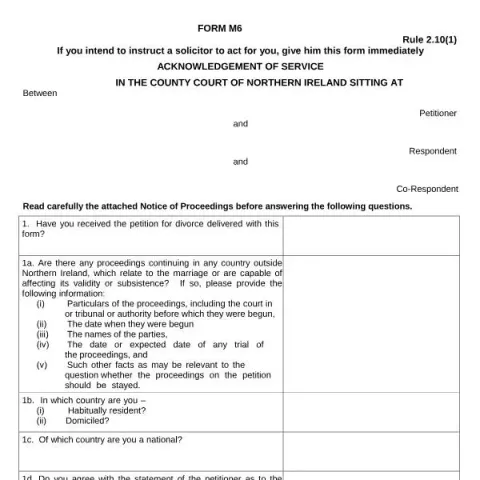
The Department of Justice Northern Ireland has established the Form M6, known as the Acknowledgement of Service, as a crucial legal document used within family proceedings, particularly in divorce cases. This form is designed to facilitate the legal process by confirming that the respondent has received the petition and related notices, and by providing essential information about their stance and circumstances. This article explains the purpose, structure, and procedural aspects of completing and submitting the Form M6.
Purpose and Use of the Form M6
The primary role of the Form M6 is to serve as an official acknowledgment from the respondent—typically the person responding to a divorce petition—that they have received the legal documents. It is a mandatory step if the respondent intends to instruct a solicitor to act on their behalf, as instructed by Rule 2.10(1). The form ensures that the court is aware of the respondent’s position regarding the proceedings and any relevant circumstances, such as ongoing proceedings in other jurisdictions or issues related to children or polygamous marriages.
In practice, the form is used in the context of divorce proceedings, but it can also cover related matters such as child arrangements and polygamous marriages. Its completion helps the court determine the next steps in the legal process, including setting dates for hearings or considering the respondent’s objections or agreements.
Key Sections and Information Required
Receipt and Personal Details
The form begins by confirming the date and address at which the respondent received the petition. It asks whether the respondent is the named individual and whether they intend to defend the case. These initial questions establish the respondent’s involvement and intentions.
Jurisdiction and International Proceedings
Respondents must disclose if there are ongoing proceedings outside Northern Ireland that could impact the case, providing details such as the court or tribunal involved, dates, and parties. They are also asked about their habitual residence and nationality, which can influence jurisdictional decisions.
Legal and Personal Stance
The form seeks the respondent’s agreement or disagreement with the grounds set out in the petition. It also asks whether they admit allegations such as adultery or consent to divorce based on separation periods. These responses are vital for the court to understand the respondent’s position and whether contested issues exist.
Financial and Child Arrangements
Respondents are prompted to state if they wish to apply to the court to consider their financial situation post-divorce. They are also asked whether they have received and agree with the proposed arrangements for any children involved, with space to submit additional comments if they disagree.
Additional Considerations
The form includes questions about polygamous marriages, requesting details of other spouses if applicable. It also requires the respondent to specify an address for service—either their residence or another address where court documents can be sent.
Procedural Guidance for Completing the Form
Respondents should read the attached Notice of Proceedings carefully before answering each question. It is important to answer all questions truthfully and completely, as the information provided will influence subsequent court decisions. Once completed, the form must be signed and dated, then returned to the Matrimonial Office at the Royal Courts of Justice, Belfast.
Fill in your form directly online
No printing: type your details into the boxes of the official form, tick, then download the PDF ready to send.
- 1Type into the form boxes
- 2Tick in one click
- 3Save and download the PDF
If the respondent instructs a solicitor, the solicitor will fill in the relevant sections and sign on their behalf. Any subsequent change of address for service must be notified in writing to the court office to ensure proper communication throughout the case.
Timelines and Submission
While the form itself does not specify explicit deadlines, it must be returned promptly after receipt of the divorce petition to ensure the case progresses without unnecessary delay. The court relies on the timely submission of this acknowledgment to schedule hearings, consider defenses, or move forward with divorce proceedings.
In summary, the Form M6 is a vital document in Northern Ireland’s family law process, ensuring that responses to divorce petitions are officially recorded and that all relevant personal, jurisdictional, and procedural information is available for the court’s consideration.