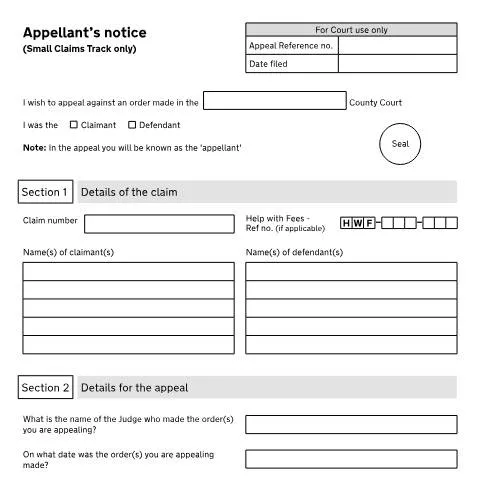
Challenging Small Claims Decisions: Understanding the N164 Appeal Process
When a District Judge's decision in small claims court doesn't align with your expectations, the Form N164 Appellant's Notice serves as your formal gateway to challenge that ruling. This specialised document, exclusive to the small claims track within HM Courts & Tribunals Service, enables litigants to escalate their case to a Circuit Judge for reconsideration. Unlike the fast track or multi-track procedures, small claims appeals follow a distinct pathway designed to maintain the accessibility that characterises this jurisdiction whilst ensuring proper judicial oversight.
The N164 form represents more than just paperwork—it's the mechanism through which individuals and small businesses can seek redress when they believe a fundamental error has occurred in their case. Whether you were initially the claimant pursuing a debt or the defendant fighting an unjust claim, this six-page document provides the structured framework for presenting your challenge to the original decision.
Navigating the Small Claims Appeal Landscape
The small claims track operates under unique rules that distinguish it from higher-value civil proceedings. Appeals within this track are heard by a Circuit Judge rather than the Court of Appeal, reflecting the streamlined nature of these cases. This internal review system acknowledges that whilst small claims disputes may involve modest sums—typically under £10,000—the principles of justice and correct legal application remain paramount.
Form N164 specifically caters to this environment by incorporating sections tailored to small claims circumstances. Unlike the more complex appeal notices used in higher tracks, the N164 recognises that many appellants will be litigants in person, structuring its requirements accordingly whilst maintaining the rigour necessary for effective appellate review.
Distinguishing Your Appeal from Other Judicial Remedies
It's crucial to understand that the N164 appeal differs fundamentally from other post-judgment options available in civil litigation. An appeal challenges the legal correctness of the District Judge's decision, arguing that errors of law or procedure occurred. This contrasts with applications for set-aside, which typically address issues like failure to receive court documents, or enforcement variations that modify how judgments are implemented.
The appeal process also differs from reconsideration applications, which are generally unavailable in small claims cases. Once you've identified that an appeal is your appropriate remedy, the N164 becomes your exclusive route to challenge the decision, subject to strict time limits and procedural requirements.
Statutory Framework and Judicial Oversight
The N164 appeal process operates under Part 52 of the Civil Procedure Rules, adapted specifically for small claims track cases. This framework establishes that appeals should only succeed where the District Judge's decision was "wrong" or "unjust because of a serious procedural or other irregularity". This relatively high threshold reflects the policy that first-instance decisions should generally stand unless clear errors are demonstrated.
The legislative intent behind this structure recognises the balance between accessibility and finality. Small claims procedures are designed to be swift and cost-effective, but the appeal mechanism ensures that significant errors don't go uncorrected simply because the sums involved are modest. The Circuit Judge hearing your appeal will apply these same exacting standards, examining whether the original decision can be sustained on the evidence and law as presented.
Permission Requirements and Judicial Gatekeeping
One of the most critical aspects of Form N164 is Section 3, which addresses permission to appeal. In many small claims appeals, you'll need to obtain permission either from the District Judge who made the original decision or from the Circuit Judge who will hear your appeal. This permission stage serves as a filter, ensuring that only cases with reasonable prospects of success proceed to full appeal hearings.
If the District Judge refused permission at the original hearing, or if you didn't request it then, you can apply for permission as part of your N164 submission. The Circuit Judge will then consider both the permission application and the substantive appeal together, though they may refuse permission without a full hearing if the grounds appear weak.
Completing the N164: A Section-by-Section Analysis
The form's structure reflects the logical progression of information needed to evaluate your appeal. Section 1 establishes the foundational details—your original claim number, whether you were claimant or defendant, and any Help with Fees reference that might affect court fees for your appeal.
Section 2 requires precise identification of the decision you're challenging. You must specify the judge's name and the exact date of the order. If you're only appealing part of the decision, you need to identify which numbered paragraphs of the order you're challenging, or if unnumbered, quote the specific wording. This precision is essential because your appeal will be limited to the aspects you've properly identified.
Crafting Your Grounds for Appeal
Section 5 demands the most careful attention—your grounds for appeal must be set out in numbered paragraphs explaining why the District Judge was wrong. Generic statements like "the decision was unfair" won't suffice. You need to identify specific legal errors, misapplications of evidence, or procedural irregularities that affected the outcome.
Effective grounds might include: misunderstanding the applicable law, failing to consider relevant evidence, drawing conclusions unsupported by the evidence, or applying incorrect legal tests. Each ground should reference specific aspects of the hearing or decision, demonstrating clear understanding of where the error occurred.
| Type of Error | Example | Evidence Needed |
|---|---|---|
| Legal misapplication | Wrong interpretation of contract terms | Legal authorities, contract wording |
| Factual error | Ignored key witness evidence | Hearing notes, witness statements |
| Procedural irregularity | Refused legitimate adjournment | Application records, correspondence |
| Inadequate reasoning | No explanation for key findings | Judgment text, hearing transcript |
Strategic Considerations and Additional Applications
Section 6 requires you to specify exactly what you want the Appeal Court to do—set aside the order entirely, vary it with your proposed alternative, or order a new hearing. This choice has significant tactical implications. Setting aside typically means you win outright, whilst variation suggests you accept some aspects of the original decision. Ordering a new hearing acknowledges that errors occurred but leaves the ultimate outcome uncertain.
Section 7 addresses additional applications that might accompany your appeal. A stay of execution (Part A) prevents enforcement of the judgment while your appeal is pending—particularly important if bailiffs might otherwise seize assets or the judgment debtor might dissipate funds. However, stays aren't automatic and require compelling justification.
Time Limits and Extension Applications
The 21-day time limit for filing appeals is strictly enforced, calculated from the date the District Judge made the decision you're challenging. If you're filing late, Part B of Section 7 requires detailed explanation of the delay and what steps you've taken since the original decision. Courts are increasingly strict about time limits, so extensions are only granted where compelling reasons exist and prompt action followed once the impediment was resolved.
Valid reasons for delay might include: serious illness preventing earlier action, failure to receive proper notice of the decision, or genuine confusion about appeal rights. However, mere disappointment with the outcome, difficulty finding legal advice, or financial constraints rarely justify extensions.
Documentary Requirements and Supporting Evidence
Section 9 mandates that you attach a copy of the order being appealed and, where applicable, Form N460 containing the reasons for any previous permission decision. These documents are non-negotiable—your appeal cannot be processed without them. If you don't have copies, you must obtain them from the court office before submitting your N164.
Section 8 allows you to present evidence supporting any additional applications in Section 7. This might include medical certificates explaining delays, correspondence demonstrating procedural errors, or financial information justifying stay applications. The Statement of Truth in this section carries the same weight as the main appeal grounds—false statements can result in contempt proceedings.
Preparing Supporting Documentation
Beyond the mandatory attachments, consider what additional documents might strengthen your appeal. Relevant case law, statutory provisions, or expert opinions that weren't properly considered at first instance could be crucial. However, appeals generally proceed on the evidence available to the District Judge—you cannot usually introduce entirely new evidence unless it relates to procedural applications.
Organise your documentation logically, with clear references to specific paragraphs in your grounds of appeal. The Circuit Judge needs to understand quickly how each document supports your challenge to the original decision.
Filing Procedures and Court Processing
Submit your completed N164 to the same court that made the original decision, not directly to the appeal court. The court staff will check for completeness and calculate any fees due. Current appeal fees vary depending on your case value and financial circumstances—those eligible for Help with Fees may have reduced or waived fees, referenced by your HWF number from the original proceedings.
Once accepted, the court will allocate an appeal reference number and serve copies on other parties. They have the right to file respondent's notices opposing your appeal, though this is less common in small claims cases than in higher tracks. The court will then list your case for hearing, typically allowing several weeks for preparation.
Case Management and Hearing Preparation
Unlike the informal atmosphere of small claims hearings, appeal hearings follow more structured procedures. The Circuit Judge will have read the papers in advance and will expect focused legal argument rather than re-hearing of the original evidence. Prepare by identifying the key legal points and practising concise explanations of why the District Judge's approach was wrong.
If you're a litigant in person, don't be intimidated by the formal setting. Circuit Judges are experienced in dealing with unrepresented parties and will ensure you have fair opportunity to present your case. However, they won't provide legal advice or help you develop arguments—your N164 grounds must be sufficiently clear to support your challenge.
Outcomes and Post-Appeal Procedures
The Circuit Judge has several options when determining your appeal. They might dismiss it entirely, upholding the original decision. Alternatively, they could allow the appeal and substitute their own decision, set aside the original order, or remit the case for rehearing by a different District Judge. The choice depends on the nature of the error identified and whether sufficient information exists for the appeal court to reach a definitive conclusion.
If your appeal succeeds, consider whether the other party might seek further appeal to the Court of Appeal. Whilst such appeals are rare in small claims cases and require exceptional circumstances, they remain possible where important legal principles are at stake. Conversely, if your appeal fails, your own options for further challenge are extremely limited and would require exceptional circumstances to justify Court of Appeal intervention.
The N164 process, whilst technical in its requirements, serves the essential function of ensuring that small claims decisions meet proper legal standards. Success requires careful preparation, clear identification of legal errors, and rigorous attention to procedural requirements. For those who believe justice was not served at first instance, this formal challenge mechanism provides a vital safeguard within the civil justice system, maintaining confidence that even modest disputes receive proper judicial consideration.
Special Circumstances and Complex Small Claims Appeals
While most small claims appeals follow standard procedures, certain circumstances require additional considerations and may affect your approach to completing Form N164. Understanding these nuances can significantly impact the success of your appeal.
Appeals Involving Multiple Parties or Counterclaims
When your original small claims case involved multiple defendants or included counterclaims, your Form N164 must clearly identify which aspects of the judgment you're challenging. The court needs to understand whether you're appealing the entire decision or specific elements relating to particular parties.
If you were both claimant and defendant (due to counterclaims), specify in section 6 of the form whether you're appealing your liability to pay the defendant's counterclaim, the court's rejection of your original claim, or both. Include the case reference numbers for all related proceedings, as these may have been consolidated or heard together.
For multi-party disputes, consider whether other parties might also be appealing. The Court of Appeal may consolidate related appeals to avoid conflicting decisions, but this could affect your timetable and the complexity of proceedings.
Challenging Costs Orders in Small Claims
Although the small claims track generally operates on a 'no costs' basis, district judges can make specific costs orders in certain circumstances. These might include costs for unreasonable behaviour, failure to comply with court orders, or expenses relating to expert witnesses that exceed £750.
If you're appealing a costs order, your Form N164 must demonstrate that the district judge incorrectly applied the Civil Procedure Rules Part 27. Common grounds include arguing that the behaviour deemed 'unreasonable' fell within normal litigation conduct, or that the costs awarded exceeded the prescribed limits.
Expert witness costs present particular complexities. The small claims track limits recoverable expert costs to £750 per expert, but disputes often arise about what constitutes an 'expert' versus a professional providing factual evidence. Your appeal grounds should clearly distinguish between these categories if relevant to your case.
Appeals in Cases with Vulnerable Parties
When appeals involve litigants in person who may have been vulnerable during the original hearing—such as individuals with disabilities, language barriers, or those experiencing domestic abuse—additional protections may apply. If you believe the district judge failed to make reasonable adjustments or properly consider your circumstances, this forms a legitimate ground for appeal.
Document any requests for adjustments you made during the original proceedings and how the court responded. If you have medical evidence or support worker statements confirming your needs, ensure these are included in your appeal bundle. The Court of Appeal has specific protocols for vulnerable appellants, including potential for different hearing arrangements.
Post-Judgment Enforcement and Its Impact on Appeals
The relationship between enforcement proceedings and your appeal creates complex procedural considerations that can significantly affect both processes. Understanding these interactions is crucial for protecting your position while your appeal is pending.
Fill in your form directly online
No printing: type your details into the boxes of the official form, tick, then download the PDF ready to send.
- 1Type into the form boxes
- 2Tick in one click
- 3Save and download the PDF
Staying Enforcement During Your Appeal
Filing Form N164 does not automatically prevent the successful party from enforcing the judgment against you. Unless you obtain a stay of execution, bailiffs may still attend your property, your bank accounts may be frozen, or your wages could be subject to attachment of earnings orders.
To request a stay, you must either include this application within your Form N164 (using the additional information sections) or file a separate application. The court will consider factors including the strength of your appeal grounds, whether you can provide security for the judgment amount, and the risk of the judgment becoming unenforceable if the appeal succeeds.
If enforcement has already commenced, document this carefully. County Court bailiffs taking control of goods, High Court Enforcement Officers attending your premises, or third party debt orders affecting your accounts all represent enforcement actions that may be reversed if your appeal succeeds.
Enforcement Against Assets and Business Operations
For business appellants, ongoing enforcement can cause operational difficulties that may strengthen your case for a stay. If the judgment debt affects your ability to trade—for example, by freezing business accounts or preventing access to essential equipment—this forms part of your argument for suspending enforcement.
However, courts balance this against the successful party's right to recover their judgment. If you're seeking a stay, be prepared to demonstrate either strong appeal prospects or your ability to provide alternative security, such as a bond or payment into court.
Consider also whether partial enforcement might be acceptable. Courts sometimes allow enforcement up to a certain amount while staying the remainder, particularly where the appeal challenges only part of the judgment or the quantum of damages.
Impact on Credit Rating and Business Reputation
County Court Judgments appear on credit files within one calendar month of being made, regardless of any pending appeal. This can affect your ability to obtain credit, secure business premises, or maintain professional relationships during the appeal process.
While a successful appeal will eventually remove the CCJ from your credit file, the immediate impact may be irreversible for some opportunities. Document any losses you suffer due to the judgment's effect on your creditworthiness, as these may form part of your damages claim if the appeal succeeds.
Strategic Considerations and Alternative Approaches
Before committing to the appeal process, consider whether Form N164 represents your best option or whether alternative approaches might better serve your interests. The appeal process, while providing important rights, involves significant commitments of time and resources.
Settlement Negotiations During the Appeal Process
Filing Form N164 doesn't preclude settlement discussions with the other party. Indeed, the prospect of a successful appeal may encourage the judgment creditor to negotiate, particularly if they face the risk of having to repay enforcement proceeds plus interest.
Settlement discussions can occur at any stage, but consider the timing carefully. Early settlement avoids appeal costs but may not reflect the full value of your potential success. Later settlement, after the respondent has incurred legal costs responding to your appeal, may secure better terms but increases your own exposure if negotiations fail.
Any settlement should address not only the judgment amount but also enforcement costs, credit file corrections, and potentially your appeal costs incurred to date. Ensure agreements are properly documented and provide for CCJ cancellation rather than mere satisfaction.
Judicial Review vs Appeal Routes
In exceptional circumstances, procedural irregularities in small claims cases might warrant judicial review rather than appeal. This applies where the district judge exceeded their jurisdiction, failed to follow mandatory procedural requirements, or demonstrated apparent bias.
Judicial review challenges the decision-making process rather than the merits of the decision itself. The Administrative Court requires applications within three months of the decision, with proceedings typically more expensive than appeals but potentially offering broader remedies.
However, judicial review is generally inappropriate where appeal routes exist. Courts expect litigants to use the appeal process unless exceptional circumstances apply, such as allegations of procedural impropriety that go beyond normal grounds of appeal.
European Convention on Human Rights Considerations
Article 6 of the European Convention on Human Rights guarantees fair trial rights, which remain part of UK law post-Brexit through the Human Rights Act 1998. If your small claims hearing involved significant procedural unfairness—such as denial of adequate time to present your case, exclusion of relevant evidence, or apparent bias—these may form human rights grounds for appeal.
However, courts interpret Article 6 in the context of the small claims track's simplified procedures. The fact that proceedings were less formal than in other tracks doesn't automatically breach fair trial rights. Focus on specific instances where the informality prevented you from presenting your case effectively.
Human rights arguments require careful pleading in your Form N164, with clear identification of which Convention rights were allegedly breached and how this affected the proceedings' outcome. Generic assertions about unfairness are insufficient; you need specific examples of procedural defects that materially disadvantaged your position.