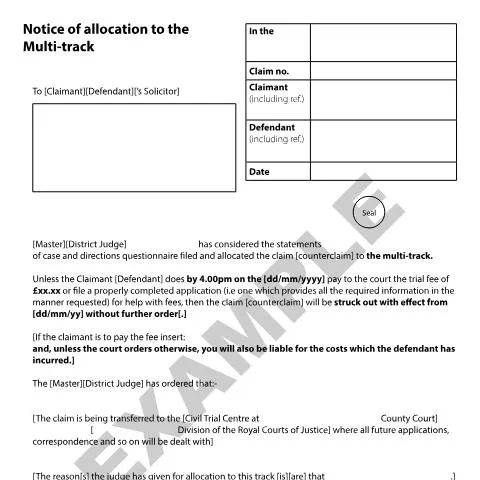
Navigating the Complexities of Form N155: Your Guide to the Notice of Allocation to Multi-Track
When engaging with the legal system, especially in civil matters, understanding the intricacies of court documents can significantly impact the outcome of your case. One such document is the Form N155: Notice of Allocation to Multi-Track, issued by HM Courts & Tribunals Service. This notice is crucial for individuals involved in civil litigation, as it indicates that a case has been assigned to the multi-track, a specific procedural route within the civil court system.
Understanding the Multi-Track Allocation
The multi-track is designed for more complex cases, often involving higher financial stakes or intricate legal issues. It provides a tailored approach compared to the fast track and small claims track, where cases are generally simpler and less expensive to prosecute. A few key aspects to note include:
- Higher Claim Value: Generally, cases involving claims exceeding £25,000 are allocated to the multi-track, although this isn’t a strict rule. The complexity of the case also matters.
- Judicial Management: Cases on the multi-track are managed by a judge who can tailor the procedure to suit the circumstances, which can include extended time frames for evidence submission or the necessity for expert reports.
- Trial Fees: The notice includes important information regarding trial fees, which must be paid by a specific deadline to avoid the claim being struck out.
Key Components of the Notice
Form N155 contains several critical elements that parties must understand to effectively navigate their cases:
- Claim Number: This unique identifier is vital for all correspondence with the court.
- Payment Deadline: The court specifies a deadline (noted in the document), by which the claimant must pay the trial fee or file an application for fee assistance.
- Future Correspondence: The allocation to the multi-track may involve a transfer to a specific court (e.g., a Civil Trial Centre), making it crucial to understand where to send future documents.
- Consequences of Non-Compliance: Should the claimant fail to meet the requirements outlined in the notice, the ramifications are severe, including a potential strike out of the claim.
Common Procedural Questions
There are various procedural queries that often arise in relation to Form N155. Here are some frequently asked questions along with their clarifications:
- What happens if I miss the payment deadline? If the trial fee isn’t paid by the specified time, the claim will be struck out without further notice. This underscores the importance of adhering to deadlines.
- Can I extend the time for payment? Extensions can be agreed upon by both parties unless otherwise specified by court rules. However, such agreements must be documented and communicated to the court.
- Will I receive reminders about the trial fee payment? Generally, unless you apply for fee assistance, the court will not send further correspondence regarding payment. It's critical to keep track of these deadlines personally.
Essential Terminology and Concepts
Familiarity with specific terminology can significantly aid in understanding and utilizing Form N155 effectively:
- Statement of Case: This document outlines the claimant's arguments and claims. It's crucial that this is completed thoroughly, as it forms the basis of the case.
- Directions Questionnaire: This form must be completed to provide the court with details on how the parties wish to proceed, including any proposed directions for the case.
- Trial Fee: The fee associated with the trial, which varies depending on the specifics of the case and is non-refundable.
Integrating N155 with Other Court Documents
The interaction between Form N155 and other documents is crucial for a well-rounded understanding of the process. For instance:
- Form N1 (Claim Form): The initial claim form that sets the case in motion. Ensure that the details correlate with those provided in Form N155.
- Directions Questionnaire (Form N180): Following allocation, this form must be submitted, addressing procedural directions and timelines.
- Form EX305: Leaflets available from the court office that provide further details about the multi-track and what it entails.
A Step-by-Step Approach to Using Form N155
To use Form N155 effectively, follow these steps:
- Review the Notice: Carefully read through all sections of the notice upon receipt.
- Check Deadlines: Note the deadline for paying the trial fee or filing for assistance.
- Prepare Any Necessary Documentation: Gather your statement of case and directions questionnaire, ensuring they are complete and accurate.
- Payment or Application: Decide whether to pay the trial fee or seek help with fees, and do so promptly.
- Contact the Court if Necessary: If any part of the process is unclear, reach out to the court office for guidance.
Identifying Target Audiences for Form N155
Form N155 is specifically tailored for various stakeholders within the legal landscape:
- Claimants: Individuals or entities initiating a claim who need to comply with the multi-track processes.
- Defendants: Those responding to claims must also understand the implications of the notice and their responsibilities.
- Legal Representatives: Solicitors and barristers managing cases will find this form essential for advising their clients appropriately.
Real-World Scenarios Where N155 Comes Into Play
Consider the following scenarios illustrating the importance of Form N155:
- Complex Civil Disputes: Situations involving significant financial claims, such as contract disputes or personal injury claims requiring expert witnesses.
- Partnership Disputes: Cases involving multiple parties where procedural complexities necessitate multi-track allocation for proper management.
- Property and Land Law: Disputes concerning land ownership or lease agreements, often requiring detailed examination and supporting evidence.
Potential Pitfalls When Engaging with Form N155
Being aware of the potential pitfalls can help avoid complications:
- Misinterpretation of Deadlines: Failing to meet payment deadlines can lead to strike out; always double-check dates.
- Inadequate Documentation: Incomplete applications or statements can weaken your case or lead to rejection.
- Failure to Communicate with the Court: Lack of communication with the court office can result in confusion and missed opportunities for assistance.
Final Considerations on the Use of Form N155
Utilizing Form N155 effectively requires a nuanced understanding of its components and the overall process of civil litigation. Knowing the implications of multi-track allocation and adhering to the stipulated procedures can greatly influence the outcome of a case. By following the guidelines laid out in the notice and being proactive in communication with the court, parties can navigate the complexities of their cases with greater confidence.
Resources provided by HM Courts & Tribunals Service, such as leaflets and guidance documents, can further assist in understanding ongoing responsibilities. Engaging with these resources is a proactive way to ensure compliance and to mitigate risks associated with civil claims.
Understanding the Multi-Track System
The multi-track system is a crucial aspect of the civil litigation process in the UK, governed by the Civil Procedure Rules (CPR). It is designed for more complex cases that require detailed case management and is different from the small claims track and the fast track. Typically, multi-track cases involve claims exceeding £25,000 or those that are deemed to be particularly complex.
When a case is allocated to the multi-track, it means that the court recognizes the need for a more bespoke approach to manage the specific issues of that case effectively. By utilizing Form N155, parties involved in litigation can understand the implications of being allocated to the multi-track, including the potential for increased costs and extended timelines. It is often essential for parties to be prepared to present comprehensive evidence and detailed legal arguments as part of the proceedings.
Moreover, allocation to the multi-track entails a series of procedural steps, including the setting of a timetable for the proceedings. This can involve a case management conference where the court may set deadlines for disclosure, expert evidence, and any pre-trial reviews necessary.
Fill in your form directly online
No printing: type your details into the boxes of the official form, tick, then download the PDF ready to send.
- 1Type into the form boxes
- 2Tick in one click
- 3Save and download the PDF
Key Considerations When Using Form N155
When completing Form N155, there are several key considerations that litigants should keep in mind to ensure a smooth allocation process. Firstly, it is essential to provide clear and concise details about the nature of the claim, including the relief sought and any relevant financial implications. This clarity helps the court in making an informed decision regarding the allocation of the case.
Secondly, parties should be proactive in considering how they plan to manage the litigation process. This includes identifying the key issues that need resolution and proposing how those issues might be addressed during the case management process. Demonstrating a clear understanding of the complexities involved in the case can influence the court's decision on allocation.
Another crucial aspect is the timeline for submitting Form N155. Parties must pay attention to the deadlines set by the court and ensure that submissions are made in a timely manner. Delays can lead to complications in the case management process, potentially affecting the outcome of the case.
Lastly, there may be variations in requirements or expectations depending on the court where the case is being heard. Litigants should familiarize themselves with local court rules and practices to ensure compliance and enhance the chances of a successful allocation to the multi-track.
Preparing for a Multi-Track Trial
Once a case has been allocated to the multi-track, preparation for trial becomes a crucial focus for all parties involved. Different from less complex trials, multi-track cases often require extensive planning and a strategic approach to presenting evidence and arguments. To prepare effectively for a multi-track trial, litigants should consider several key steps:
- Gathering Evidence: Compile all relevant evidence that supports your case. This may include documentary evidence, witness statements, expert reports, and any other materials pertinent to the claim.
- Setting a Trial Strategy: Develop a clear trial strategy that outlines how the case will be presented. This includes determining which witnesses to call, what expert evidence to rely on, and how to structure opening and closing statements.
- Conducting Pre-Trial Reviews: Engage in pre-trial reviews as ordered by the court. These reviews are critical for identifying unresolved issues, finalizing the list of witnesses, and ensuring all procedural requirements are met.
- Understanding Costs: Be aware of the potential costs associated with a multi-track trial. This includes not only court fees but also expenses related to expert witnesses, legal representation, and any potential costs if the case does not go in your favour.
- Revising Your Case: As the trial date approaches, continue to review and revise your case based on the evolving nature of the litigation. This ensures that all aspects are up to date and reflective of the current legal landscape.
Ultimately, preparation for a multi-track trial can significantly influence the outcome of the case. Litigants are encouraged to approach this phase systematically, ensuring that they are fully equipped to navigate the complexities of multi-track litigation.