Navigating the ELD2 Form: A Vital Step in Personal Injury Claims
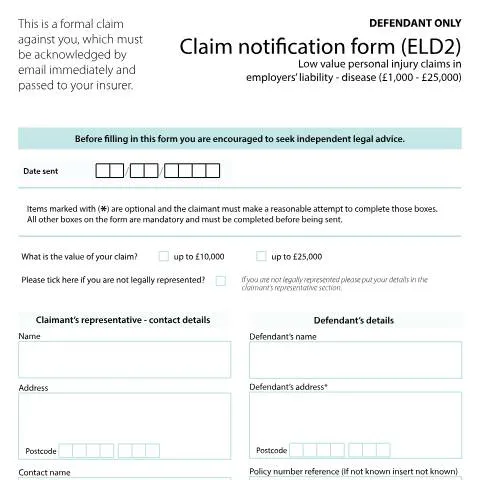
When faced with the aftermath of a workplace illness or injury, the process of lodging a claim can feel daunting. The ELD2 form, specifically designed for low-value personal injury claims in employers' liability related to disease, serves as a critical tool for defendants in these cases. Understanding how to effectively navigate this form can significantly influence the outcome of a claim, especially when the financial stakes range between £1,000 and £25,000.
Understanding the Unique Purpose of the ELD2 Form
The ELD2 form is not just another piece of paperwork; it is a formal notification of a claim against an employer for personal injuries arising from diseases contracted at the workplace. Distinct from other forms such as the ELD1, which pertains to general claims, or the N1 for broader civil claims, the ELD2 focuses explicitly on diseases and injuries linked to employment. This specificity is crucial, as it dictates the information required and the legal framework applicable to the claim.
Why Is This Form Classified as "Defendant Only"?
A pivotal aspect of the ELD2 form is its classification as "Defendant only." This means that it is intended for the party against whom the claim is made, typically an employer or their insurance provider, rather than the claimant. This unique perspective places the onus on the defendant to acknowledge the claim and respond appropriately. Understanding this context is essential for defendants, as failing to respond promptly could lead to default judgments.
Legal Context and Historical Significance of the ELD2 Form
The ELD2 form operates within a legal framework established to facilitate efficient resolution of low-value personal injury claims, particularly in the context of workplace-related diseases. The form was introduced as part of the wider reforms in the civil justice system aimed at improving access to justice and streamlining processes. The objective is to encourage early settlement and reduce the burden on courts, which is increasingly vital as the number of claims rises.
This legal backing is rooted in the Data Protection Act 2018 and the UK GDPR, ensuring that personal data processed through this form is handled in accordance with strict regulations. Defendants must note that their responsibilities extend beyond just filling out the form; they also have obligations regarding data privacy, especially when handling sensitive medical information related to the claimant.
Key Sections of the ELD2 Form: What Defendants Need to Know
Completing the ELD2 form accurately is paramount for ensuring a streamlined claims process. Here, we will break down the key sections and what is expected from defendants:
Claimant's Details
The first section requires basic information about the claimant. Defendants need to be thorough, as inaccuracies can lead to complications down the road. This includes:
- Name: Full legal name of the claimant.
- Address: A complete mailing address.
- Occupation: The job title or description.
- Period(s) of Employment: Accurate dates where applicable.
Each box must be filled in, as failing to provide the required information will delay processing.
Details of the Disease
Section B delves into the particulars of the disease suffered by the claimant. Here, defendants must provide comprehensive responses, including:
- Type of Disease: Options such as respiratory issues, deafness, or dermatitis must be selected appropriately.
- Time Off Work: Information about whether the claimant had to take time off, including specific dates.
- Treatment History: Details on any medical attention sought must be accurately documented.
Providing thorough and honest answers in this section can aid in establishing the liability of the employer, making it a critical area of focus.
Exposure and Circumstances
Section D covers the context in which the claimant was exposed to harmful conditions. This includes a description of the exposure location and circumstances leading to the disease. Defendants should focus on:
- Location: Precise details of where the exposure took place.
- Nature of Exposure: Describing the specific activities or environmental factors contributing to the claim is vital.
Thoroughly addressing these points can mitigate liability by demonstrating that the employer took reasonable precautions to protect workers.
What to Do Following Submission of the ELD2 Form
Once the ELD2 form is completed and submitted, defendants must remain proactive. The immediate next steps are crucial for both parties involved in the claim. Key actions include:
Acknowledgment of Receipt
Defendants are required to acknowledge receipt of the form via email immediately. Failure to do so can result in legal complications, including implications for liability if the claim progresses without proper acknowledgment. It also necessitates passing the claim to the relevant insurer without delay.
Assessing Liability and Preparing a Defence
Following acknowledgment, defendants should assess the claim thoroughly. This includes reviewing the details provided in the form and gathering evidence that supports their position. Engaging with legal counsel during this stage can be particularly beneficial, especially if the claim is complex. The defendant should:
- Gather Evidence: Collect documents, witness statements, and any other pertinent information regarding workplace safety practices.
- Communicate with Insurers: Ensure that the insurer is fully informed and involved in the subsequent steps, as they will play a key role in negotiations or court proceedings.
Handling Errors, Refusals, or Incomplete Submissions
In the event of an error or if certain pieces of information are missing, defendants need to act swiftly to rectify the situation. Possible scenarios include:
Responses to Incomplete Forms
If the ELD2 form is submitted with missing or incorrect information, the defendant should contact the claimant or their legal representative to address any discrepancies. Communication is key in these instances, as a collaborative approach can often resolve issues more efficiently.
What If the Claim Is Denied?
In cases where liability is contested, defendants must prepare for potential litigation. Denying the claim does not negate the obligation to respond formally through the ELD2 process. If the claim proceeds, defendants should:
- Prepare Legal Defence: This may involve formulating arguments against the claimant’s assertions.
- Engage Legal Representation: It is advisable to consult with a solicitor who specializes in personal injury claims.
Special Cases: Navigating Unique Circumstances
While the majority of claims will follow the standard process outlined, certain unique situations may arise that require additional consideration. These include:
Claims Involving Minors
When the claimant is a minor, additional regulations regarding representation and consent apply. It is imperative that:
- The claim is submitted on behalf of the minor by a parent or legal guardian.
- All necessary legal documentation is presented to validate the minor's claim.
Claims Involving Foreign Nationals
For defendants dealing with claims from foreign nationals, it is essential to understand the implications of jurisdiction and applicable laws. Engaging legal experts familiar with international claims can prove invaluable in these situations.
Consequences of Non-compliance and Missing Deadlines
The risks associated with failing to adhere to the requirements of the ELD2 form are substantial. Defendants must be aware that:
- Legal Penalties: Non-compliance can lead to financial liabilities and increased claim amounts.
- Reputational Damage: Prolonged disputes can harm an employer's reputation, affecting employee relations and business operations.
To avoid such pitfalls, it is recommended that defendants create a checklist of required actions and deadlines following the submission of the ELD2 form.
The Importance of Legal Representation
Engaging a knowledgeable legal representative can dramatically improve the trajectory of a claim. Legal experts can provide insights into:
Fill in your form directly online
No printing: type your details into the boxes of the official form, tick, then download the PDF ready to send.
- 1Type into the form boxes
- 2Tick in one click
- 3Save and download the PDF
- Strategic Advice: Tailored guidance on how to respond to claims effectively.
- Negotiation Skills: Proficient negotiation can often lead to settlements before escalating to court.
- Litigation Readiness: Should the case proceed to court, having representation ensures that all legal protocols are followed meticulously.
Thus, securing legal representation early in the process is strongly advised for defendants navigating the complex waters of personal injury claims.
Conclusion: The ELD2 Form as a Step Toward Resolution
The ELD2 form, while a simple document at first glance, carries significant weight in the claims process surrounding workplace-related diseases. For defendants, understanding its nuances and adhering to the stipulations can facilitate a smoother journey through the often convoluted legal landscape of personal injury claims. Proper completion and prompt response not only safeguard legal interests but also contribute to a more just and equitable resolution for all parties involved.
Understanding the ELD2 Form: Key Components and Their Importance
The ELD2 form serves as a crucial instrument in the landscape of personal injury claims linked to employers' liability, particularly concerning low-value disease claims ranging from £1,000 to £25,000. It is essential for defendants to grasp the fundamental components of the ELD2 form to navigate the claims process effectively. This understanding aids in the proper presentation of a case and ensures compliance with the regulatory framework established by the Ministry of Justice.
The ELD2 form predominantly consists of various sections that require detailed information about the claimant, the incident, and any related medical conditions. For instance, the defendant must provide accurate details about the employer’s liability insurance, including the policy number, insurer's name, and contact information. This is vital as it ensures that any potential compensation can be dealt with directly through the relevant insurance provider, streamlining the claims process.
The Role of Personal Injury Claims in Employers' Liability: An Overview
Employers' liability insurance plays a vital role in safeguarding the interests of employees who sustain injuries or illnesses in the workplace. Personal injury claims regarding low-value diseases are a significant subset within this domain. These claims often arise from conditions such as repetitive strain injuries, respiratory diseases, or other occupational health issues that develop over time due to the nature of the work environment.
Understanding the landscape of such claims is crucial for defendants. It involves not only a grasp of the legal framework but also awareness of the specific circumstances that could impact the outcomes. For example, claims related to long-term exposure to harmful substances may necessitate evidence of negligence or lack of proper safety measures by the employer. In these scenarios, defendants should prepare solid documentation and seek expert advice to mitigate potential liability.
Defendants are advised to carefully analyze the particulars of each case. Gathering comprehensive evidence, including workplace safety records, employee training logs, and expert witness testimonials, can significantly bolster one’s position during settlement discussions. Proactive engagement in the claims process often leads to more favorable outcomes, whether through settlements or court proceedings.
Strategies for Defendants in Responding to ELD2 Claims
When presented with an ELD2 claim, defendants should adopt a strategic approach to assess and respond. The initial response may involve acknowledging receipt of the claim while simultaneously undertaking a thorough review of the circumstances surrounding it. This includes not only the specifics of the claim but also the wider context in which the alleged injury occurred.
One effective strategy is to engage with legal counsel who specializes in personal injury and employers' liability cases. Their expertise can illuminate the nuances of the legal framework and help formulate a robust response. Additionally, obtaining a medical expert’s assessment can provide clarity on whether the claimed condition is indeed work-related and whether adequate preventive measures were in place.
It’s also vital for defendants to maintain open lines of communication. Promptly addressing the claimant’s concerns and providing necessary documentation can foster a more constructive dialogue, potentially leading to an out-of-court settlement. This not only saves time and resources but also contributes to preserving workplace morale and the reputation of the business.
Finally, documenting all interactions and decisions made in response to the ELD2 claim is crucial for maintaining a clear record. Such documentation can serve as invaluable evidence should the case escalate to litigation.