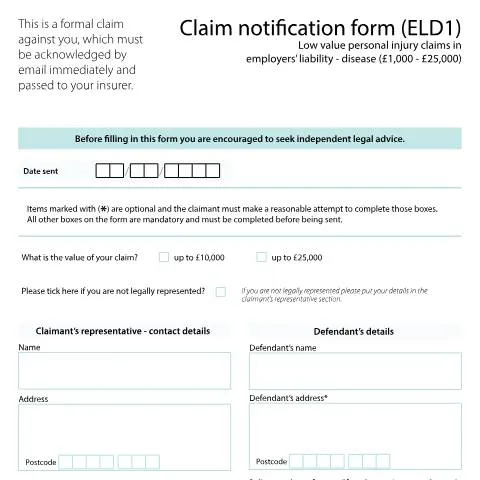
Understanding the Role of Form ELD1 in Personal Injury Claims
The Form ELD1, known as the Claim Notification Form for Low Value Personal Injury Claims in Employers’ Liability due to Disease, represents a crucial step for individuals seeking compensation for health issues linked to their work environment. This form is specifically designed for claims ranging from £1,000 to £25,000, allowing claimants to formally notify the relevant parties of their intention to claim. The significance of this form cannot be overstated; it initiates the legal process for redressing grievances linked to workplace diseases. By filling out and submitting Form ELD1, claimants begin a structured legal process, ensuring that their case is formally acknowledged, documented, and addressed by the responsible parties. This structured approach is vital for all stakeholders, including employers, insurers, and legal representatives, ensuring that everyone is informed and can act accordingly.Categories of Claimants: Who Can Use Form ELD1?
Form ELD1 is accessible to various profiles of claimants, each with specific nuances that may influence the completion and submission of the form. Below are the key categories of claimants who may find themselves needing to use this form:Employees and Workers
Most claimants are employees or workers who have suffered from diseases due to their employment. This includes conditions such as respiratory diseases, dermatitis, or vibration-related injuries. Claimants must detail their employment history, including the duration of employment and the circumstances under which exposure occurred.Children or Minors
In instances where the claimant is a minor, special considerations apply. Parents or guardians must complete the form on behalf of the child, ensuring that all required sections are accurately filled out while also providing consent for the claim to be lodged.Individuals with Complex Cases
Claimants facing complexities, such as concurrent claims, multiple employers, or longstanding health issues that have been exacerbated by work conditions, need to carefully articulate their circumstances in the ELD1 form. In such cases, securing legal advice before submission is highly recommended to navigate the specific intricacies involved.Key Sections of Form ELD1: Navigating the Details
The ELD1 form consists of several sections, each designed to capture essential information related to the claim. Completing each section thoroughly ensures that the claim is comprehensive and can be processed efficiently. Below is a breakdown of the significant sections encountered in Form ELD1:Claimant's Details
In this opening section, claimants must provide their personal details, including their name, address, and National Insurance number. For individuals without a National Insurance number, a valid explanation must be provided.Disease and Medical Information
This section requires a comprehensive description of the disease suffered by the claimant. Specific details about the type of disease, medical attention sought, and any time off work are obligatory. Claimants should ensure they provide accurate medical history and highlight any hospital visits or rehabilitation recommended by healthcare professionals.Exposure Location
Here, claimants must detail where the exposure occurred. This may include specific details such as workplace locations, equipment used, or situations leading to exposure. Clarity in this section helps establish the link between the work environment and the health issue claimed.Liability
Claimants must articulate why they believe the employer is liable for the disease. This requires a clear narrative that outlines the circumstances surrounding the exposure and any safety protocols that were disregarded by the employer.Funding Arrangements
If the claimant has an arrangement for funding, such as a conditional fee agreement or insurance policy, this section must be completed. Here, claimants specify the nature of these agreements, which can impact the proceedings and recovery process.Gathering Supporting Documentation: A Step-by-Step Guide
Compiling the necessary documentation to support the claim is a crucial aspect of the process. Below are practical steps claimants should take when preparing their submission:Medical Records
Obtaining medical records is essential. Claimants should fetch all relevant documents detailing diagnosis, treatment, and recommendations from healthcare providers. Medical professionals may also provide letters that outline the connection between the disease and workplace exposure.Employment Records
These documents provide verification of employment and specifics regarding working conditions. Claimants should gather pay slips, contracts, and any correspondence with employers that relate to the claim.Witness Statements
If applicable, securing statements from colleagues or others who can corroborate the claimant's experiences can strengthen the claim. Witnesses may provide valuable perspectives on the work environment and any health risks associated with it.Documentation of Rehabilitation
If rehabilitation has been recommended, any related documents, such as treatment plans or appointment records, should be included to illustrate the ongoing impact of the disease on the claimant's life.What Happens After Submission? The Timeline and Next Steps
Once Form ELD1 is filled out and submitted, the claim enters a defined timeline dictated by relevant legislation and procedural guidance. Understanding this timeline is critical for claimants:Acknowledgment of Claim
Claimants can expect to receive an acknowledgment from the defendant or their insurer, typically within a few days of submission. This acknowledgment is critical as it confirms that the claim is being taken seriously and sets the stage for subsequent communications.Investigation Period
Following acknowledgment, a statutory investigation period of up to 21 days is allotted for the defendant to respond to the claim. During this time, insurers will assess the claim’s validity and may seek additional information to inform their decision.Settlement Negotiations
If liability is accepted, the parties may enter into negotiations regarding compensation. This can involve back-and-forth communications to reach a settlement that is agreeable to both parties. If a fair settlement is reached, the claim may be resolved without further legal proceedings.Potential Court Action
Should the defendant deny liability or if negotiations fail, the claimant may need to consider escalating the claim to court proceedings. In such cases, legal representation becomes increasingly vital to navigate the complexities of litigation.Dealing with Challenges: Errors, Refusals, and Missing Documents
Navigating the claims process can be fraught with challenges, such as errors in the form, refusals from insurers, or missing documentation. Here's how to tackle these setbacks:Addressing Errors in the Form
If errors are identified within the submitted ELD1 form, it’s crucial to rectify these as soon as possible. Claimants should contact the relevant party (usually the insurer or legal representative) to inform them of the error and provide corrected information.Responding to a Refusal
If a claim is initially refused, claimants should carefully review the reasons provided for this refusal. Consulting with a legal advisor can help in understanding whether there are grounds for appeal or further negotiation.Missing Documentation
If any documents are missing, claimants should promptly gather the necessary paperwork. This may involve reaching out to healthcare providers for medical records or employers for employment verification. Prompt action helps avoid delays in the claims process.Comparative Analysis: Form ELD1 vs. Similar Claim Forms
For those navigating the claims process, it is important to understand how Form ELD1 differs from other similar forms, which can often lead to confusion. Below is a comparative analysis of relevant forms:| Form Name | Focus Area | Claim Value | Key Functions |
|---|---|---|---|
| Form ELD1 | Low value personal injury claims in employers’ liability - disease | £1,000 - £25,000 | Notify claim, establish liability |
| Form ELD2 | Low value personal injury claims in employers’ liability - accidents | £1,000 - £25,000 | Notify claim, establish liability for accidents at work |
| Form N1 | General civil claims | Varies widely | Initiate court proceedings for a variety of claims |
Channels for Submission: Exploring Options
Claimants have several avenues available to submit Form ELD1, each with its own advantages and considerations. Understanding these channels can help ensure a smooth submission process:Online Submission
Submitting the ELD1 form online can expedite the process significantly. Claimants typically receive immediate confirmation of submission, and this method is often more efficient than traditional postal routes. However, those unfamiliar with digital submissions may find this option challenging.Postal Submission
Mailing a completed form remains a viable option. Claimants should ensure that they send it with sufficient time to meet deadlines and consider using recorded delivery for confirmation of receipt. This method may take longer but can be preferable for those who wish to retain physical copies.In-Person Submission
For those who prefer face-to-face interactions or require assistance, submitting the form in person at the relevant court or tribunal can be advantageous. This allows claimants to ask questions or clarify details immediately. By navigating the submission channels carefully and selecting the most suitable option, claimants can enhance their chances of a successful claim process.Final Thoughts: Preparing for Your Journey through the Claim Process
Filing a claim using Form ELD1 can be an intricate process filled with specific requirements that necessitate attention to detail and thorough preparation. Each step taken, from completing the form to gathering supporting documentation, plays a critical role in ensuring the success of the claim. Claimants should not hesitate to seek independent legal advice, particularly if uncertainty arises. Understanding the legal landscape and the implications of each section of the form can profoundly impact the outcome of the claim. The journey through the claims process may be fraught with challenges, but with careful planning, attention to detail, and appropriate support, claimants can navigate it successfully.Understanding the Claims Process for ELD1: Step-by-Step Guidance
The ELD1 form is crucial for individuals making low-value personal injury claims against employers for work-related diseases, with claims ranging from £1,000 to £25,000. To effectively navigate the claims process, you should follow a structured approach to ensure your claim is valid and well-supported. Here’s a step-by-step breakdown:
-
Initial Assessment of Your Claim
Before completing the ELD1 form, assess whether your claim falls within the criteria of low-value personal injury claims. The disease must be directly related to your employment, and you should have evidence of how the employer's negligence contributed to your condition.
-
Gathering Evidence
Compile all necessary documentation to support your claim. This includes medical reports, witness statements, employment records, and any correspondence regarding your injury. Accurate documentation is pivotal as it substantiates your case.
-
Filing the Claim
Once you have completed the ELD1 form and gathered your evidence, submit your claim to the appropriate authority. The form must be filled out accurately to avoid any delays. If you're uncertain, consider seeking legal advice to ensure proper filing.
-
Awaiting Response
After submission, the defendant (your employer) is given a set period to respond. Typically, they have 21 days to acknowledge receipt of your claim and 3 months to provide a full response. During this period, it is essential to remain patient but proactive in case any further information is required.
-
Negotiation and Settlement
If the employer admits liability, the next steps involve negotiating a settlement. This can often be achieved through direct discussions or mediation. Be reminded to consider all your damages, including loss of earnings and medical costs, to reach a fair settlement.
Common Pitfalls to Avoid When Submitting the ELD1 Form
The process of filing a claim using the ELD1 form can be fraught with challenges. Here are some common pitfalls that claimants should avoid:
-
Insufficient Evidence
One of the most frequent mistakes is submitting the claim without adequate supporting documentation. Ensure that all medical and employment records are comprehensive and clearly illustrate the connection between your employment and your health condition.
-
Missing Deadlines
Be aware of all relevant deadlines, including the 3-year limitation period for filing a claim from the date you became aware of the injury. Missing these important timelines can result in your claim being dismissed.
-
Poor Communication
Maintain clear communication with your employer and any legal representatives. Failure to respond promptly to requests for information or clarification can hinder your claim's progress.
-
Underestimating the Claim Amount
Assess your damages comprehensively. Many claimants undervalue their claims, neglecting to account for future losses or ongoing medical expenses. Seek expert opinion if unsure about the financial implications of your claim.
The Role of Legal Advice in ELD1 Claims
While it is possible to submit the ELD1 form independently, seeking legal advice can significantly impact your claim's outcome. Legal professionals can provide invaluable support by:
Fill in your form directly online
No printing: type your details into the boxes of the official form, tick, then download the PDF ready to send.
- 1Type into the form boxes
- 2Tick in one click
- 3Save and download the PDF
-
Clarifying Legal Obligations
Understanding the legal framework surrounding employer liability can be complex. A solicitor can explain your rights and the obligations of your employer, which is essential in framing your claim effectively.
-
Assessing the Value of Your Claim
Legal experts can help you accurately assess the value of your claim by considering all relevant factors, including future medical treatment costs and loss of earnings, thus preventing potential undervaluation.
-
Supporting Documentation
Lawyers can assist you in gathering and preparing the necessary documentation to strengthen your claim. This expert guidance is vital for ensuring that your submission meets legal standards.
-
Negotiation Skills
Experienced solicitors can negotiate on your behalf with your employer or their insurance company, leveraging their expertise to secure a better settlement than you might achieve alone.