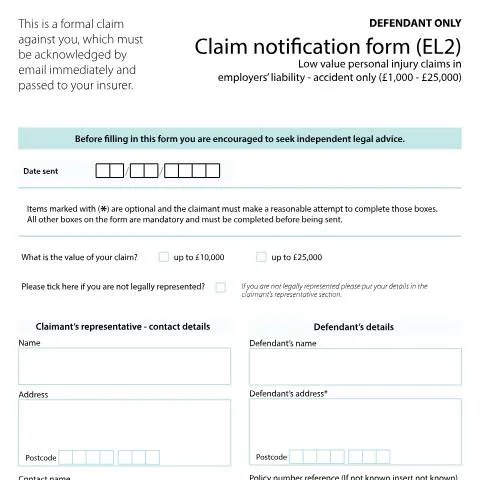
Understanding the Claim Notification Form EL2: A Guide for Defendants
Receiving a notification for a low-value personal injury claim can be a daunting experience. For defendants, particularly in employers' liability cases where the claim amount is between £1,000 and £25,000, the process of responding effectively to the Claim Notification Form (EL2) can determine the trajectory of any subsequent legal proceedings. This document serves as the initial stage for the claim process, and understanding its components is crucial for anyone involved.
The Importance of Timely Acknowledgment
Upon receipt of an EL2 form, it is essential to acknowledge the claim immediately. According to HM Courts & Tribunals Service guidelines, defendants are often required to notify their insurers as soon as they receive this claim notification form. Failing to do so can lead to complications, including delays in responding or even default judgments against the defendant. The defendant has a legal obligation to pass the form to their insurer without delay, ensuring that all parties are informed and can prepare an appropriate response.
Legal Framework and Compliance
The regulations surrounding the EL2 form are underpinned by the Civil Procedure Rules (CPR) and specific guidelines for personal injury claims. The claimant is encouraged to seek independent legal advice, a principle that underscores the importance of both parties being informed of their rights and responsibilities. Compliance with these rules not only facilitates smoother proceedings but also protects the interests of all parties involved.
Identifying the Defendant's Obligations
When filling out the EL2 form, defendants must be aware of their obligations. The form contains several mandatory fields that must be completed correctly. The following elements are vital:
- Defendant's Details: Full name, address, and contact information.
- Claim Value: Indicate the value range of the claim, as it directly impacts the handling and potential settlement strategies.
- Incident Details: Precise information regarding the accident, including time, location, and circumstances.
Failure to accurately complete any of these sections can lead to delays or complications in the claim process.
Understanding Potential Outcomes
After submitting the EL2 form, the defendant can expect several potential outcomes, such as:
- Settlement Negotiations: Often, parties will engage in discussions aimed at reaching an amicable settlement without proceeding to trial.
- Further Investigation: In cases where liability is disputed, further inquiries may be conducted to establish the facts.
- Litigation: If no resolution is achieved, the claim may escalate to formal court proceedings.
Detailed Breakdown of the EL2 Form Sections
Each section of the EL2 form serves a specific purpose and must be treated with diligence. Below is a detailed analysis of key sections that defendants must complete, along with common pitfalls to avoid.
Section A: Claimant’s Details
This section asks for the claimant's personal information. Defendants should ensure that:
- The claimant's name is spelled correctly.
- The address and contact details are precise.
Incorrect information can lead to unnecessary delays in communication and may impact the quality of the defense.
Section B: Injury and Medical Details
In this section, the defendant must understand the specifics of the injuries allegedly sustained. Responses to questions about the nature of the injury, time off work, and medical treatment should be approached meticulously:
- Failure to acknowledge if the claimant sought medical attention can be detrimental to the defense.
- Details regarding hospital visits and rehabilitation recommendations should be noted carefully, as they may lead to further claims for damages.
Section C: Rehabilitation Needs
Defendants need to assess whether the claimant has any rehabilitation needs stemming from the accident. If acknowledged, defendants should consider the implications for both liability and potential settlement amounts. If the claimant has received recommendations for rehabilitation, this should be factored into negotiations or assessments of claim value.
The Role of Insurers in the Process
Insurers have a crucial role when the EL2 form is submitted. Once the form is acknowledged, the insurer will typically begin their investigation into the claim. The defendant must provide any necessary documents or information requested by the insurer to assist in their assessment.
Coordination with Insurance Providers
It’s vital for defendants to maintain clear communication with their insurance provider throughout the process. They should prepare to supply any supporting documents or evidence pertaining to the claim. This coordination can significantly impact the speed and efficacy of the claim resolution process.
Consequences of Inadequate Responses
Defendants must understand the potential consequences of failing to respond adequately or thoughtfully to the EL2 form. Inadequate responses can lead to:
- Default Judgments: If the defendant does not respond adequately, the claimant may proceed with a default judgment against them.
- Increased Legal Costs: Poor handling of the claim can lead to escalated legal fees and increased settlement costs.
- Reputation Damage: Failing to handle claims responsibly can impact a company's reputation, particularly in industries reliant on public trust.
Utilizing Expert Legal Advice
Given the complexities associated with personal injury claims, defendants may benefit from seeking expert legal advice when responding to the EL2 form. Legal professionals can provide tailored guidance to ensure that the form is filled out correctly and that the defendant's rights are fully protected throughout the process. The investment in legal counsel can save considerable time and stress in the long run.
Final Considerations for Defendants
In navigating the complexities of the EL2 form, it is essential for defendants to remain proactive and engaged in the process. They should document all communications regarding the claim and stay informed about the progress of legal proceedings. By effectively managing their response to the EL2 form, defendants can better protect their interests and contribute to a fair resolution of the claim.
Ultimately, every claimant's situation is unique, and tailoring responses to the specifics of each claim is vital. Taking the time to understand the EL2 form thoroughly can significantly influence the outcome, whether that involves settling the claim or preparing for potential litigation.
Understanding the Purpose of Form EL2
Form EL2 serves a crucial function within the UK legal framework, specifically for low value personal injury claims arising from employers’ liability. Designed to streamline the claims process for accidents that fall within the financial threshold of £1,000 to £25,000, this form allows claimants to initiate their claims efficiently against their employers. Essentially, the core purpose of Form EL2 is to notify the defendant (the employer) of the assertion of a personal injury claim, enabling them to respond appropriately within stipulated timeframes.
Fill in your form directly online
No printing: type your details into the boxes of the official form, tick, then download the PDF ready to send.
- 1Type into the form boxes
- 2Tick in one click
- 3Save and download the PDF
When using Form EL2, it is vital for the claimant to provide adequate details regarding the accident, including the date, location, and nature of the injuries sustained. This information not only substantiates the claim but also aids in expediting the investigation process by the defendant's insurer. There is an emphasis on clarity and thoroughness; the more comprehensive the details provided, the smoother the progression of the claim. The form itself is structured to guide the claimant through listing essential details, ensuring that all pertinent facts are presented in a clear manner to avoid unnecessary delays.
The Role of the Defendant in the EL2 Process
Once Form EL2 is submitted, the responsibility shifts to the defendant to address the claim promptly. The defendant, typically the employer, has a legal obligation to respond to the claim notification. This response is crucial, as it can determine the course and speed of the claim resolution process. The defendant is given a specified period, generally 21 days from receiving the notification, to admit liability, deny the claim, or respond with further inquiries.
In instances where liability is admitted, the defendant or their insurer will often enter negotiations regarding compensation. This phase is fundamental, as it can lead to a financial settlement without the need for prolonged litigation. Conversely, if the defendant denies liability, they must provide grounds for their refusal, which could lead to further discussions or even escalate to court proceedings if no agreement is reached. It is also pertinent to note that the defendant should consult their legal representatives during this process to ensure that their rights and interests are adequately protected, particularly in complex cases where multiple factors may come into play.
Potential Challenges and Considerations in Filing Form EL2
While Form EL2 aims to facilitate a straightforward process for personal injury claims, several challenges may arise during its completion and submission. One of the primary hurdles is ensuring that all information provided is accurate and comprehensive. Failure to do so may result in delays as the defendant seeks clarification or, in worse scenarios, a rejection of the claim. Claimants should meticulously review the form and, if necessary, seek legal counsel to verify the accuracy of their information.
Additionally, claimants must be aware of the time constraints associated with Form EL2. The timeline within which to file a claim is typically three years from the date of the accident. However, certain exceptions may apply, such as cases involving minors or individuals who lack the mental capacity to initiate a claim. Understanding these nuances is critical for claimants to avoid missing the opportunity to seek compensation.
Another important consideration involves the documentation that must accompany Form EL2. Claimants are advised to gather all relevant evidence prior to submission, including medical records, witness statements, and any other supporting documentation. This evidence not only strengthens the claim but also aids in expediting the process by providing the defendant with a comprehensive understanding of the circumstances surrounding the accident.
Finally, it is advisable for claimants to consider the potential implications of the claim on their employment. While the legal framework protects against employer retaliation in such instances, individuals may still feel apprehensive about pursuing a claim. Open communication with legal advisors can provide reassurance and help clarify any concerns regarding job security or workplace dynamics during and after the claims process.