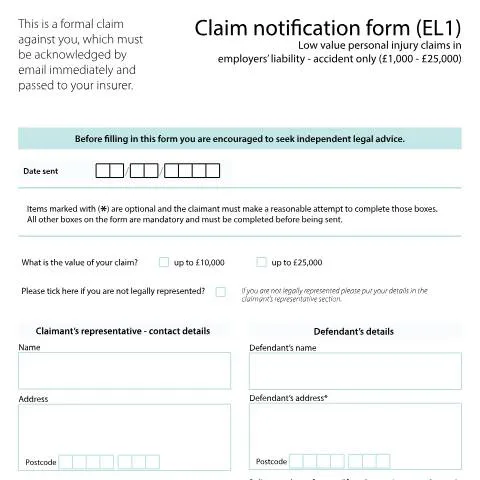
Understanding Form EL1: A Key Document in Employers' Liability Claims
When an employee suffers an injury at work, navigating the legal process can be daunting. One essential step in this journey is completing and submitting the Form EL1, known as the Claim Notification Form for low value personal injury claims in employers' liability cases. Covering claims between £1,000 and £25,000, this document plays a pivotal role in initiating claims against employers for workplace injuries. This guide offers a comprehensive look into the intricacies of Form EL1, empowering claimants to navigate the process with confidence.
Key Dates: Timeline of Your Claim Journey
The submission of Form EL1 marks the beginning of a structured legal process. Understanding the timeline is crucial for effective claims management. Below is a breakdown of significant dates involved in the process:
- Accident Occurrence: The journey begins when the accident takes place, leading to potential injury.
- Date of Form Submission: Claimants must submit Form EL1 promptly after the incident, ideally within three years of the accident date, to comply with legal time limits.
- Acknowledgment of Claim: Upon receipt, the defendant (typically the employer) must acknowledge the claim within 14 days.
- Response Time: The defendant has up to 90 days to respond to the claim, either admitting or denying liability.
- Resolution Period: If the claim is accepted, negotiations may lead to a settlement. If denied, further legal processes may follow, which can extend the overall timeline significantly.
The Role of Form EL1 in the Claims Process
Form EL1 is more than just a piece of paper; it is a formal notification that triggers the claims process. This form serves multiple purposes:
- Notification: It formally informs the employer (defendant) of the claim being made against them.
- Evidence Collection: It collects crucial information regarding the claimant’s injury, the circumstances of the accident, and details about the defendant.
- Legal Requirements: The information provided helps to meet legal standards as set out by civil procedure rules, ensuring that both parties are aware of the claim's particulars.
- Facilitation of Communication: It establishes a clear line of communication between the claimant, their representative, and the defendant.
Decoding the Form: Detailed Breakdown of Sections
Completing Form EL1 requires careful attention to detail. Each section serves a specific purpose, and understanding these can prevent potential pitfalls. Below is a detailed examination of critical sections of the form:
Section A: Claimant’s Details
This section gathers personal information about the claimant, including:
- Name and Address: Mandatory fields that must be completed accurately.
- Date of Birth: Used to confirm identity and establish age-related considerations, especially for child claims.
- National Insurance Number: A crucial identifier for processing claims, providing a link to the claimant's employment record.
Note: Incomplete entries might delay the process. Ensure all mandatory fields are filled to avoid complications.
Section B: Injury and Medical Details
Here, claimants detail the nature of their injuries, which is vital for establishing the claim's validity. Key points include:
- Description of Injury: A brief but comprehensive outline of how the injury occurred and its impact on the claimant's life.
- Time Off Work: Information about missed workdays is critical for calculating compensation for loss of earnings.
- Medical Attention: Details of any medical attention sought, including dates and types of treatment received.
Section C: Rehabilitation Needs
Injuries often necessitate rehabilitation. This section explores:
- Recommendations from Medical Professionals: Documentation of any recommended rehabilitation, such as physiotherapy, is important for justifying additional claims.
- Awareness of Rehabilitation Needs: Claimants must articulate any ongoing rehabilitation needs resulting from the accident.
Section D: Accident Time, Location, and Description
Providing a clear account of the accident is crucial. This section includes:
- Exact Time and Location: Precise details about when and where the accident occurred help in verifying facts.
- Accident Description: A comprehensive explanation of how the accident happened is vital for establishing liability.
Section E: Establishing Liability
Claimants must articulate why they believe the defendant is at fault. This section requires:
- Justification of Blame: Claimants should clearly state the reasons they believe the employer is liable, backed by facts and evidence.
Section F: Funding Arrangements
Disclosing any funding agreements is essential for transparency. This section covers:
- Conditional Fee Agreements: If applicable, claimants must note any agreements that might affect the claim.
- Insurance Policies: Details regarding any legal expense insurance must be provided, ensuring that all funding arrangements are disclosed.
Section G: Other Relevant Information
This open-ended section allows claimants to provide any additional information that may be pertinent to their claim, ensuring a comprehensive presentation of their case.
Section H: Statement of Truth
This final section emphasizes the importance of honesty in the claims process. Claimants or their representatives must sign a statement affirming that the facts stated are true. Misrepresentation can lead to severe consequences, including the dismissal of the claim.
The Consequences of Incomplete or Incorrect Submissions
Submitting Form EL1 is a significant step, but any errors or omissions can have serious ramifications:
- Delays: Incorrect or missing information may result in delays, prolonging the time it takes to resolve the claim.
- Claim Rejection: Incomplete forms are grounds for claims to be rejected outright, leaving the claimant without recourse.
- Legal Repercussions: Providing false information can lead to legal consequences, including fraud charges.
Navigating the Process: A Step-by-Step Overview
From the accident occurrence to the resolution of the claim, a clear understanding of the process is essential. Here's a chronological overview of what to expect:
- Accident Occurs: An employee suffers an injury at their place of work.
- Gather Information: Collect all necessary information related to the accident, including witness statements and medical reports.
- Complete Form EL1: Fill out the form accurately and thoroughly, ensuring all mandatory sections are completed.
- Submit the Form: Send the completed Form EL1 to the employer or their insurance provider, ensuring it is done within the legal time frame.
- Acknowledgment by Defendant: Wait for the employer to acknowledge receipt of the claim.
- Defendant's Response: Monitor for the employer's response regarding liability.
- Negotiation: If the claim is acknowledged, discussions regarding compensation may begin.
- Settlement or Court Action: Depending on the outcome of negotiations, the case may settle or proceed to court.
Seeking Legal Advice: The Importance of Professional Guidance
Before diving into the claims process, claimants are encouraged to seek independent legal advice. A qualified solicitor can provide invaluable assistance in understanding rights, obligations, and the complexities of the legal system. They can help with:
- Form Completion: Ensuring the form is filled out correctly and comprehensively.
- Legal Strategy: Developing a strategy for the claim, including the assessment of liability and potential compensation.
- Representation: Representing the claimant in negotiations with the employer or their insurer.
Emphasizing Transparency and Honesty in Claims
The integrity of the claims process relies heavily on accurate and honest information. Claimants must ensure that every piece of information provided in Form EL1 is truthful and reflects their circumstances. This not only fosters trust in the legal system but also ensures that claimants receive fair treatment regarding their claims.
In conclusion, Form EL1 is a critical document in facilitating personal injury claims arising from workplace accidents. By understanding its components, adhering to timelines, and seeking professional guidance, claimants can enhance their chances of a successful outcome. With the right preparation and knowledge, navigating the claims process becomes more manageable, leading to the rightful compensation for injuries sustained in the workplace.
Understanding the Claims Process for Low Value Personal Injury Claims
When it comes to filing a low value personal injury claim due to an accident at the workplace, the process can appear daunting. However, breaking it down into key steps will help you navigate the system more effectively. This claim type, denoted through Form EL1, specifically applies to claims ranging from £1,000 to £25,000 in the realm of employers' liability. First and foremost, it's essential to gather all pertinent evidence to support your claim. This includes accident reports, witness statements, and medical records. Each piece of evidence will bolster your assertion and provide clarity as to the circumstances surrounding your injury.
Fill in your form directly online
No printing: type your details into the boxes of the official form, tick, then download the PDF ready to send.
- 1Type into the form boxes
- 2Tick in one click
- 3Save and download the PDF
Once you have compiled your documentation, the next step involves submitting the claim notification through Form EL1 to the appropriate party, typically your employer's insurance provider. It's important to ensure that you complete the form accurately, as any discrepancies could cause delays or lead to your claim being rejected. The form will require details such as your personal information, a thorough account of the incident, and specifics about your injury and its impact on your daily life.
After submission, there is a waiting period during which the insurer assesses your claim. They may reach out to you for further information or clarification, so it’s advisable to remain available for communication. Understanding the timeline for responses and decisions can significantly reduce anxiety during this period. Generally, insurers are required by law to respond to the claim notification within a specified time frame, ensuring you are not left waiting indefinitely.
Potential Complications and How to Address Them
Despite the straightforward nature of low value personal injury claims, several complications can arise. One of the more common issues involves disputes over liability. In scenarios where the employer contests responsibility for the injury, you may find that your claim is met with resistance. It’s crucial to anticipate such challenges and prepare your evidence to counter any claims of negligence on your part. Engaging a legal professional who specializes in personal injury claims can provide clarity in these situations and improve your chances of a favorable outcome.
Additionally, delays can occur if the insurer requires further evidence or if there are discrepancies in the information provided. To mitigate these risks, it is wise to keep meticulous records of all communications and correspondence related to your claim. Such documentation will serve as a helpful reference if a dispute arises or if you require assistance later in the process.
Another potential hurdle is the limitation period for filing your claim. Under UK law, you generally have three years from the date of the accident to initiate your claim. However, there are exceptions that apply to minors or those lacking mental capacity. Understanding these timelines and taking prompt action after an incident is crucial in ensuring your claim remains valid.
Financial Implications of Low Value Personal Injury Claims
Filing a low value personal injury claim can have various financial implications, both immediate and long-term. Firstly, while the threshold for these claims is set between £1,000 and £25,000, the actual amount you may receive can vary significantly based on several factors. This includes the severity of your injury, the impact on your day-to-day activities, and any financial losses incurred as a result of your accident, such as lost wages or medical expenses.
It’s equally important to consider the potential costs associated with pursuing your claim. Legal fees, although often recoverable in successful cases, may initially pose a barrier. Many solicitors offer a “no win, no fee” arrangement, but it’s essential to clarify all costs upfront and understand how they might affect your settlement. Furthermore, some claims may require expert witness testimony or medical evaluations to substantiate the injury, which can also lead to additional expenses.
Lastly, it’s advisable to review the impact of your claim on your National Insurance Contributions (NICs) and any benefits you may be receiving, such as Universal Credit. Receiving a lump sum from a successful claim could potentially affect your eligibility for certain benefits, so seeking advice from financial experts or representatives from the Department for Work and Pensions (DWP) can provide valuable insight.