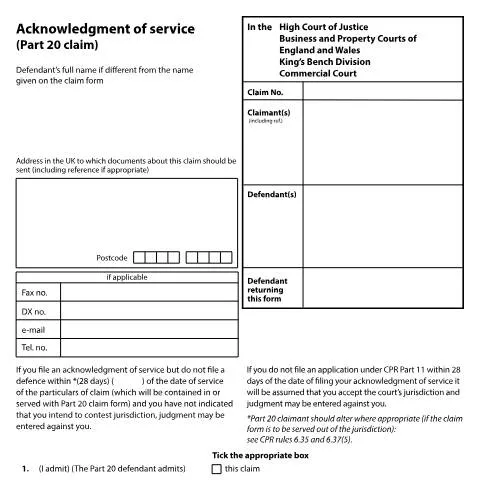
Understanding the Functionality of Form N213(CC) in the Commercial Court
When faced with a Part 20 claim in the Commercial Court, understanding the nuances of the Acknowledge service of a CPR Part 20 claim in the Commercial Court: Form N213(CC) is crucial. This form plays a pivotal role in the initial steps of defending a claim, ensuring that defendants properly acknowledge receipt of the particulars of the claim.
The process begins when a Part 20 claim is served, typically involving a counterclaim or a third-party claim. The defendant must submit Form N213(CC) to acknowledge service within a specific timeframe, allowing them to maintain their position in the proceedings. This document is essential for legally formalising their receipt of the claim details and indicates their intention regarding how they wish to respond.
Who Needs to Engage with Form N213(CC)?
A diverse array of individuals and entities may find themselves needing to complete and submit Form N213(CC). Understanding the profiles of those involved can provide clarity on the obligations and options available.
Individuals and Businesses
- Individuals: A defendant who may not be legally trained but is being taken to court as part of a commercial dispute.
- Companies: Businesses involved in contractual disputes might be required to acknowledge a third-party claim against them.
- Legal Representatives: Solicitors acting on behalf of defendants who must ensure accurate submission and adherence to court rules.
Each of these profiles presents distinct circumstances, influencing how they approach the form and manage their legal responsibilities.
Foreign Defendants
If the defendant is based outside the UK, additional rules apply. They must be particularly cautious regarding jurisdiction, as acknowledging service without contesting it can lead to judgments being entered without their presence in court.
Consequences of Failing to Submit Form N213(CC)
Neglecting to file Form N213(CC) or missing the deadline can lead to severe repercussions. The court may assume the defendant accepts the claim, potentially leading to a default judgment. Understanding the implications of an oversight is essential for any party involved in this process.
For instance, if a defendant submits an acknowledgment but does not file a defence within 28 days, they may face an automatic judgment against them. This highlights the importance of a timely and correct response to the claim.
Timelines and Key Dates to Consider
In the judicial landscape, timing is everything. The deadlines associated with Form N213(CC) are particularly crucial:
Key Dates:| Action Required | Deadline |
|---|---|
| Acknowledge service of claim | Within 14 days of service |
| File defence | Within 28 days of acknowledgment |
| File application under CPR Part 11 (if contesting jurisdiction) | Within 28 days of acknowledgment |
Adhering to these timelines is vital to avoid adverse judgments or loss of rights to contest claims. Legal representatives should maintain a calendar to track these critical deadlines diligently.
Completion Protocols for Form N213(CC)
Completing Form N213(CC) requires attention to detail. Incorrect or incomplete submissions can lead to complications.
Necessary Information
- Defendant's Information: Ensure the full name and address are accurate, as these details are crucial for legal correspondence.
- Claim Details: Reference the claim number correctly to avoid confusion within court records.
- Response Selection: Choose the appropriate option regarding admitting claim parts, defending the claim, or contesting jurisdiction.
Each section must be filled out precisely, as any errors could lead to delays or incorrect assumptions by the court. Legal representatives should guide defendants through this process to ensure completeness and accuracy.
Modes of Submission: Navigating Your Options
Once Form N213(CC) is completed, defendants have several options for submitting the form to the court. Understanding these options can affect the speed and efficiency of the acknowledgment process.
Electronic Submission
Many courts offer online filing through dedicated portals. Electronic submission can expedite the process, providing instant confirmation of receipt. However, it requires that all parties involved are registered and familiar with the online system.
Postal Submission
For those less comfortable with technology, mailing the completed form is a viable option. It is essential to send it via recorded delivery, ensuring that proof of postage and delivery is retained.
In-Person Submission
Individuals may also choose to submit the form in person at the court office. This can be beneficial for immediate queries or clarifications. The Royal Courts of Justice in London is typically open from 10 am to 4.30 pm, Monday to Friday, for such submissions.
The Impact of Legal Representation on the Process
The role of legal representation in completing and submitting Form N213(CC) cannot be overstated. Legal professionals bring valuable expertise that can significantly ease the process.
Advantages of Hiring a Solicitor
- Expert Guidance: A solicitor can provide insight into the nuances of the claim and the potential implications of acknowledging it.
- Efficient Form Completion: They can ensure that the form is filled out correctly, mitigating the risk of errors.
- Representation in Court: Should the matter progress further, having legal representation can be crucial for effective advocacy.
For defendants who are unsure of their position or the legal complexities involved, engaging a solicitor can be indispensable for navigating the process smoothly.
Next Steps After Submission of Form N213(CC)
Once the form is filed, several actions may follow, and being prepared can position defendants favorably in the proceedings.
Awaiting Court Response
After submitting Form N213(CC), defendants will receive confirmation and may await further instructions from the court. This could include orders regarding the next steps in the litigation process.
Strategies for Legal Defence
Upon acknowledgment, defendants must consider how to approach their defence. This may involve gathering evidence, interviewing witnesses, or consulting with experts to build a robust response to the claim.
It is advisable to engage in these activities promptly to ensure a well-prepared defence within the stipulated 28-day period. Effective planning in this phase can be crucial for a favourable outcome.
Final Considerations: The Importance of Compliance
Engaging with Form N213(CC) is not merely a procedural requirement; it is a vital step in protecting one’s legal rights in the face of a commercial claim. Understanding the implications and responsibilities associated with this form can have lasting effects on the outcome of legal proceedings.
Defendants should not underestimate the importance of timely and accurate submissions. The consequences of failing to comply with the requirements set out in this form can lead to judgments against them, which may have far-reaching implications for their business or personal affairs.
In conclusion, parties involved in a Part 20 claim must approach Form N213(CC) with thoroughness and care. Whether acting as individuals, companies, or through legal representatives, awareness of the legal landscape surrounding this form will ensure they are better prepared to navigate the complexities of commercial litigation in the UK.
Understanding CPR Part 20 Claims in the Commercial Court
Before delving into the specifics of Form N213(CC), it is crucial to understand the context of CPR Part 20 claims in the Commercial Court. Part 20 of the Civil Procedure Rules (CPR) deals with claims made by a party against another party in the context of existing proceedings. This could encompass a situation where a defendant seeks to bring in a third party who may be liable for some or all of the claim against them.
In the Commercial Court, these claims can arise in complex commercial disputes, such as contractual issues, fraud cases, or disputes over joint ventures. Understanding the nuances of CPR Part 20 is essential for parties involved in these proceedings, as it determines the rights of parties and the obligations they may have toward each other.
Typically, when a defendant files a counterclaim or seeks to add a third-party defendant, they must submit a Form N213(CC) to acknowledge service. This form acts as a formal notification to the court and the parties involved regarding the additional claims being made. By acknowledging the service, the party is not admitting liability but rather participating in the legal process to resolve these claims effectively.
Completing Form N213(CC): Step-by-Step Guidance
Completing the Form N213(CC) accurately is crucial, as any errors can delay proceedings or potentially harm your case. Below is a step-by-step guide for filling out the form, ensuring you comply with the requirements of the Commercial Court.
Step 1: Personal Details
Begin by providing your name, address, and contact details. If you're representing a company, include the company's name and registered office address. Ensure that these details are current, as they are used for all future correspondence.
Step 2: Case Information
In this section, you'll need to reference the existing claim by including the claim number and the names of the parties involved. This allows the court to tie your acknowledgment to the correct case file. Be precise – any inaccuracies can lead to confusion and further complications.
Step 3: Details of the Claim
Fill in your form directly online
No printing: type your details into the boxes of the official form, tick, then download the PDF ready to send.
- 1Type into the form boxes
- 2Tick in one click
- 3Save and download the PDF
Clearly outline the nature of your claim against the third party or any counterclaims. This section should be concise yet comprehensive enough to give the court a clear picture of the issues at stake. If required, attach additional sheets to provide a detailed explanation, ensuring that they are properly numbered and referenced in the form.
Step 4: Signature and Date
Do not forget to sign and date the form; your signature indicates your commitment to the claims made and your willingness to proceed with the legal process. Failing to sign the form may result in a rejection of your acknowledgment by the court.
After completing the form, ensure that you send it to the appropriate court office indicated in the guidance notes. It’s advisable to retain a copy for your records.
Potential Pitfalls and Common Mistakes with Form N213(CC)
Submitting a Form N213(CC) may seem straightforward, but there are several common pitfalls that parties should be wary of to avoid complications in their case.
1. Incorrect Case Number
One of the most frequent mistakes is entering the wrong claim number. Always double-check the case number on the original claim form. If this number is incorrect, it could lead to your acknowledgment being linked to the wrong case or being disregarded altogether.
2. Incomplete Information
Failure to provide complete information about your claim or failing to attach necessary documents can result in delays. Ensure that all sections are filled appropriately and that any supplementary materials you reference are included and clearly labeled.
3. Timeliness
Be mindful of the deadlines associated with the CPR Part 20 claims. There is a strict timeline within which you must acknowledge service of the claim, typically 14 days from the date of service. Missing this deadline could negatively impact your case, potentially leading to default judgments against you.
4. Lack of Legal Representation
If you are unsure about how to proceed, seeking legal advice is highly recommended. The complexities of the Commercial Court and the nuances of CPR Part 20 can be overwhelming. A solicitor experienced in commercial disputes can guide you through the process, ensuring all forms and procedures are correctly followed.
5. Ignoring Follow-Up Requirements
After submitting your Form N213(CC), remain vigilant about any follow-up actions required by the court. This includes responding to any notices or further instructions from the court, as failing to do so could hinder your position in ongoing proceedings.