Navigating the N210(CC) Form: Your Essential Guide
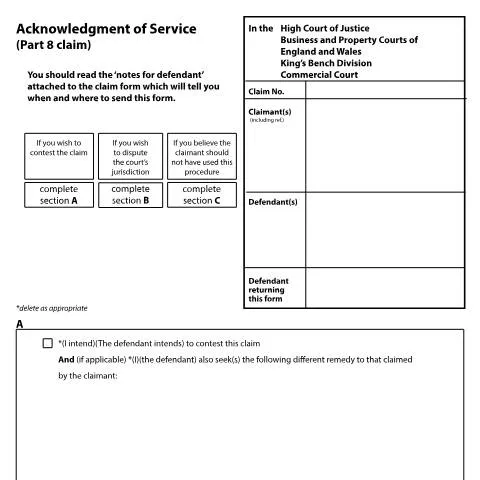
When faced with a claim in the Commercial Court, understanding the requirements and implications of the N210(CC) form, officially titled "Acknowledge service of a CPR Part 8 claim in the Commercial Court," is crucial. This document does not merely exist as a procedural formality; it serves as a pivotal step in asserting your position within the legal proceedings that lay ahead. The importance of this form becomes even more pronounced when considering the potential consequences of failing to respond appropriately.
Understanding the Purpose and Implications of the N210(CC) Form
The N210(CC) form is designed for defendants in the Commercial Court to formally acknowledge receipt of a claim under Part 8 of the Civil Procedure Rules (CPR). Part 8 claims are typically used for cases that require a rapid resolution to specific legal issues, often concerning commercial disputes. Each step in this process, especially the completion and submission of the N210(CC), can significantly influence the outcome of the case.
Who Needs to Complete the N210(CC) Form?
- Defendants: Any individual or entity receiving a Part 8 claim must complete this form to indicate whether they intend to contest the claim or dispute jurisdiction.
- Legal Representatives: Solicitors acting on behalf of a defendant can also submit this form, ensuring it is filled out accurately and in alignment with their client’s intentions.
- Litigation Friends: In cases involving children or protected parties, a litigation friend may need to sign on behalf of the defendant, highlighting the role of guardianship in legal proceedings.
Deciphering the Sections of the N210(CC) Form
Each part of the N210(CC) form must be navigated carefully to avoid pitfalls that could hinder your legal standing. Below is a breakdown of its sections, focusing on what needs to be filled out and common mistakes to avoid.
Section A: Contesting the Claim
In Section A, the defendant indicates their intention to contest the claim. The wording here is critical, as it determines the defendant's stance in the upcoming proceedings. It is essential to choose the correct phrasing—whether you intend to contest the claim or put forward a different remedy.
- Common Pitfalls: Inaccurate phrasing or unclear intentions can lead to misunderstandings. Ensure that you distinctly state whether you contest the claim as it stands or propose an alternative remedy.
Section B: Disputing Jurisdiction
If the defendant believes the court lacks jurisdiction to hear the claim, this section must be completed. It’s crucial to act quickly; an application disputing jurisdiction must be filed within 28 days of submitting the N210(CC).
- Timing is Key: Ensure that you track your dates carefully. The 28-day window is strict, and delays can severely impact your legal position.
Section C: Objecting to the Procedure
In some cases, a defendant may object to the claimant using the Part 8 procedure. This section allows you to state your reasons for contesting the chosen procedure, which can be a strategic move when the method of claim isn't suitable for the circumstances.
- Importance of Justification: Being vague in your objections may weaken your case. Clearly outline why you feel this procedure is inappropriate.
Filling Out the N210(CC): Tips and Best Practices
Completing the N210(CC) form correctly is essential for ensuring that your acknowledgment of service is accepted by the court. Here are some practical tips to assist you:
- Double-Check Details: Always verify that your name, address, and claim number are accurately recorded. Any discrepancies can lead to delays or complications.
- Signature Verification: Ensure that the person signing the document is authorized. If it’s a legal representative, confirm that they have the proper authority to submit on behalf of the defendant.
- Statement of Truth: This section holds legal weight; ensure the statement accurately reflects your belief in the truth of the contents. Misrepresentation can lead to severe consequences, including contempt of court.
The Timeline: Critical Dates for Submission and Next Steps
Understanding the timeline associated with the N210(CC) form is vital for a successful defence. Here’s how the timeline generally unfolds:
| Action | Deadline |
|---|---|
| Receive the claim | Day 0 |
| Submit N210(CC) | Within 14 days of receipt |
| File any jurisdictional objections | 28 days from N210(CC) submission |
| Await court's response | Varies by case |
Ensure that you adhere to these deadlines strictly. Missing even a single date can jeopardize your position and affect your ability to mount a robust defence.
Post-Submission: What Happens Next?
Once the N210(CC) form is submitted, it’s essential to understand the subsequent steps:
- Awaiting Court Instructions: After submission, the court will review the acknowledgment of service and issue further directions based on the content provided in the form.
- Potential Hearings: Your acknowledgement may lead to a request for a hearing, especially if there are disputes about jurisdiction or the appropriateness of the Part 8 claim.
- Compliance with Further Directions: Be prepared to comply with any further instructions from the court, which may include deadlines for submitting evidence or witness statements.
Handling Refusals, Errors, or Missing Documentation
In the event of an error in the N210(CC) form or if the court raises concerns over the submission, quick action is necessary. Here’s how to manage these situations:
- Addressing Refusals: If the court refuses your acknowledgment of service due to inaccuracies, you may be required to submit a corrected version within a specific timeframe.
- Missing Documentation: Ensure that any supporting documents referenced in your acknowledgment are submitted alongside or explicitly stated in the N210(CC). The absence of relevant pieces can weaken your position.
- Consulting Legal Representation: If you face complications, it’s advisable to consult a legal professional who can provide guidance based on your specific circumstances.
Conclusion: Empowering Your Legal Journey
The N210(CC) form is more than just a piece of paper; it’s a crucial building block in the architecture of your legal defence. By understanding its intricacies—from the specific sections to the implications of your choices—you can navigate the Commercial Court with greater confidence. Whether you’re contesting a claim, disputing jurisdiction, or objecting to the procedure, each step you take is vital. Stay informed, remain diligent, and equip yourself with the knowledge necessary to advocate effectively for your interests.
Understanding the Basics of CPR Part 8 Claims
Before diving into the specifics of acknowledging service for a CPR Part 8 claim using Form N210(CC), it is essential to understand the nature and purpose of such claims. CPR (Civil Procedure Rules) Part 8 deals with claims that are not suitable for the standard procedures outlined in Parts 7 and 24 of the CPR. Typically, these types of claims are used for seeking a declaration, an order, or other forms of equitable relief from the court, which can include matters such as seeking an interpretation of a contract or other legal documents. The key feature of a Part 8 claim is that it is designed for cases where there is no real dispute of fact, allowing for a more streamlined judicial process.
Moreover, the Commercial Court, which operates within the High Court, handles more complex commercial disputes, providing a specialist forum for businesses and individuals involved in commercial transactions. This court is equipped to deal with issues such as international trade, shipping disputes, and significant contractual issues. When a party initiates a Part 8 claim in the Commercial Court, they must follow specific procedures, including the use of Form N210(CC) to acknowledge service, ensuring all necessary documentation is correctly submitted.
Fill in your form directly online
No printing: type your details into the boxes of the official form, tick, then download the PDF ready to send.
- 1Type into the form boxes
- 2Tick in one click
- 3Save and download the PDF
The Importance of Timely Acknowledgment
Once a claimant files a CPR Part 8 claim, the next step for the defendant is acknowledging the service of the claim using Form N210(CC). Timeliness in this process is crucial. According to the CPR, defendants typically have 14 days from the date of service to respond formally by filing the acknowledgment of service. If this timeframe is missed, the court may enter a default judgment in favour of the claimant, potentially resulting in significant adverse consequences for the defendant.
Additionally, the acknowledgment of service must include any necessary information about the defendant’s intention to contest the claim or seek further clarification on the issues presented. Failure to make an acknowledgment or to convey an intention to defend can undermine a defendant’s position, limiting their ability to present their case effectively. Therefore, it is advisable for defendants to seek legal advice promptly upon receiving a Part 8 claim to ensure they understand their options and obligations regarding the acknowledgment process.
Potential Implications of Failing to Acknowledge Service
Neglecting to acknowledge service correctly or within the stipulated timeframe can have severe implications for a defendant in a CPR Part 8 claim. Once the acknowledgment period has expired, the claimant has the right to apply for judgment without further notice, which may lead to a court order that the defendant must comply with immediately. This may include financial penalties, specific performance orders, or other remedies that the claimant sought in their original application.
In instances where a defendant acknowledges service but does not file a proper defence or response within the subsequent timeline—usually extending to 28 days following the acknowledgment—they risk the same repercussions as failing to acknowledge altogether. Therefore, it’s critical for defendants not only to submit Form N210(CC) but also to actively engage with the claims process by preparing and presenting their case adequately. This can involve gathering evidence, seeking expert opinions, or gathering necessary documentation to support their position.
Moreover, defendants may also wish to consider applying for extensions of time to respond if they find themselves unable to meet the deadlines due to valid reasons. Such applications must be made formally to the court, and defendants should provide justifiable reasons for the request. This further highlights the importance of acting quickly and seeking legal guidance when facing a Part 8 claim in the Commercial Court.