The Role of the N213 RCC Form in the Commercial Jurisdiction Landscape
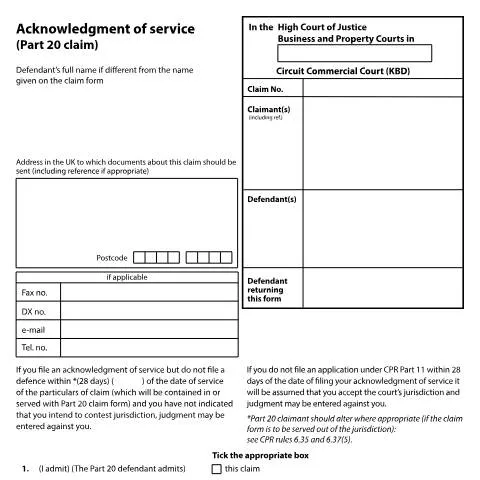
The N213 RCC form serves as a critical element in the legal process when dealing with claims in the Regional Commercial Court under Part 20 of the Civil Procedure Rules (CPR). This form is specifically designed for defendants involved in counterclaims or third-party claims, a feature that distinguishes it within the hierarchy of court documents. Its timely submission is essential, as it not only acknowledges the service of a claim but also indicates the defendant's intentions regarding the claim.
Understanding the implications of this form is crucial for defendants, as failure to respond appropriately can result in significant legal consequences, including default judgments. This situation underscores the importance of ensuring the correct completion and timely submission of the N213 RCC form within the stipulated timeframe.
A Step-by-Step Guide to Completing the N213 RCC Form
Completing the N213 RCC form requires attention to detail and a clear understanding of the required information. Below is a breakdown of the essential sections of the form, along with tips to avoid common pitfalls during the submission process.
Identifying Information
- Defendant’s Full Name: This should be the name of the party responding to the claim. If this differs from the name on the claim form, it must be clearly stated.
- Address for Service: The UK address where all correspondence related to the claim should be sent is critical. This ensures that the defendant receives all pertinent information regarding the case.
- Claim Number: This unique identifier for the case is crucial for the court to track and manage the case efficiently.
Indicating Your Position
In this section, the defendant must specify their position regarding the claim. The options include:
- Admitting the claim in full or in part
- Intending to defend all or part of the claim
- Contesting the jurisdiction of the court
Each choice has distinct legal implications; therefore, it is advisable to consult with legal representatives if unsure.
Timeline and Deadlines
The N213 RCC form must be submitted within 28 days from the date of service of the particulars of claim. It is vital to be aware of this timeline, as missing it can lead to serious ramifications, including a judgment against the defendant. Additionally, if there is a need to contest the court's jurisdiction, this too must be communicated through the acknowledgment of service within the same 28 days.
Submission Process: Where and How to Submit the N213 RCC Form
Once the N213 RCC form is completed, it needs to be accurately submitted to the appropriate court. The submission can be done via post or electronically, depending on the court's specific protocols. It’s essential to check the HM Courts & Tribunals Service website for guidelines on acceptable submission methods and any additional requirements that may apply.
When sending the form, always remember to address it to the court manager and include the claim number for proper tracking. Retaining a copy of the submitted form and any correspondence with the court is advised for personal records.
Understanding the Consequences of Inaction
Failing to submit the N213 RCC form or not following through with the subsequent steps can lead to dire consequences. If the defendant does not file a defence within the required timeframe after submitting the acknowledgment of service, the court may enter a judgment against them. This judgment can lead to further actions, such as enforcement proceedings, which may include garnishing wages or asset seizure.
Moreover, if a defendant intends to contest jurisdiction but fails to file an application under CPR Part 11 within the 28-day window, the court will assume acceptance of its jurisdiction. This highlights the importance of understanding the legal landscape and the implications of each decision made during the legal process.
What Sets the N213 RCC Apart from Similar Forms
The N213 RCC form is often confused with other court forms, such as the N9 (Acknowledgment of Service) or N10 (Notice of Change of Address). However, it is crucial to distinguish between these forms to ensure that the appropriate legal responses are made. The N213 RCC is specifically tailored for Part 20 claims, which involve counterclaims and third-party claims, whereas the N9 form is designed for general acknowledgment of service in civil claims.
Understanding the nuances between these forms is essential for defendants navigating complex legal situations. Misusing forms can lead to procedural delays and complications in court proceedings.
Dealing with Special Cases: Foreign Defendants and Unique Situations
The N213 RCC form also caters to special cases, such as those involving foreign defendants or minors. In cases where the defendant resides outside the UK, specific considerations must be taken into account regarding service and jurisdiction. The court rules stipulate that additional steps may be needed to ensure that these defendants are properly notified of the claim.
For minors, there are legal protections and requirements that must be followed, including the appointment of a litigation friend to represent their interests. In such instances, legal counsel should be sought to navigate these complexities effectively.
Tracking Your Submission: Communication with the Courts
Once the N213 RCC form is submitted, it is important to maintain communication with the court to track the status of your case. Defendants can inquire about their submission and any subsequent actions that may be necessary. It is beneficial to keep a record of any correspondence and to follow up if there are delays in processing the acknowledgment.
Proper communication ensures that defendants remain informed about their case and can address any potential issues proactively.
Legal Rights and Obligations Upon Filing
Filing the N213 RCC form opens a pathway for defendants to assert their rights in court. Acknowledging service allows defendants to respond appropriately to the claim and pursue their own defences. Additionally, it is crucial to recognize that once the form is submitted, defendants are obligated to comply with court procedures and timelines. This includes filing a defence if they intend to dispute the claim.
By adhering to these requirements, defendants can better protect their interests and work towards an equitable resolution of the case.
Conclusion: The Importance of Diligence
In summary, the N213 RCC form plays a vital role in the legal process for defendants involved in Part 20 claims within the Regional Commercial Court. By understanding its significance, carefully completing it, and adhering to deadlines and procedures, defendants can navigate the complexities of the legal system more effectively. Given the potential consequences of inaction, diligence in managing this form cannot be overstated.
Understanding the CPR Part 20 Process in the Regional Commercial Court
When dealing with a Part 20 claim in the Regional Commercial Court, it is essential to have an in-depth understanding of the Civil Procedure Rules (CPR) that govern such claims. CPR Part 20 specifically outlines the provisions for bringing third-party claims and counterclaims, which are crucial in commercial litigation. It allows defendants to bring claims against other parties who are not already part of the original proceedings, creating a more comprehensive resolution to the disputes at hand.
The process begins when a defendant seeks to acknowledge service. This involves submitting the N213 RCC form, which explicitly states the defendant's intention to respond to the Part 20 claim. The form must be filed within a particular timeframe, typically within 14 days from the date of service of the claim. This timeline is critical and failing to adhere can result in a default judgment against the defendant.
In addition to the N213 RCC form, defendants should consider the implications of the claim itself. Understanding the nature of the third-party claim, whether it be a contribution claim, a claim for indemnity, or another form of relief, is vital. This understanding will inform the defendant's strategy in responding to the claim, including whether to contest the claim, settle, or pursue further legal action. Similarly, they must consider the potential impact on their own defenses against the original claim.
Fill in your form directly online
No printing: type your details into the boxes of the official form, tick, then download the PDF ready to send.
- 1Type into the form boxes
- 2Tick in one click
- 3Save and download the PDF
Furthermore, the CPR Part 20 process includes specific rules regarding the disclosure of evidence and the management of court hearings. Defendants are encouraged to gather all relevant evidence early in the process to build a robust case. The court will often schedule a case management hearing to address procedural matters, and it is vital for all parties involved to be prepared and to comply with any directions given by the court.
Implications of Acknowledging a Claim on Business Operations
Acknowledging a CPR Part 20 claim can have significant implications for a business beyond the immediate legal considerations. The acknowledgment of service can often trigger a series of events that require careful management. For instance, businesses must engage legal counsel to provide advice on the claim's merits and the potential impact on their operations.
One of the primary considerations is the financial implication of defending a Part 20 claim. Businesses need to assess their legal budget and the potential costs associated with litigation, including attorney fees and any potential settlement amounts. Additionally, businesses should consider the reputational risks associated with being involved in litigation, as ongoing disputes can impact relationships with clients, suppliers, and other stakeholders.
It is also essential to consider the timing of the acknowledgment. The process can often be time-consuming, and businesses must weigh the potential for distraction from their core operations. If the claim involves significant sums or could potentially impact the company's future, it might necessitate a re-evaluation of business strategy, resource allocation, and risk management practices. Furthermore, companies may need to involve their insurance providers, particularly if they have liability insurance that might cover some of the legal costs associated with the claim.
Finally, businesses should keep in mind the importance of effective communication during this process. Clear and consistent communication with stakeholders about the status of the claim, its implications, and the company’s response can help mitigate any potential negative impacts on the business.
Potential Outcomes and Next Steps After Acknowledgment
Once a defendant has acknowledged a CPR Part 20 claim through the N213 RCC form, it is essential to understand the potential outcomes and what steps may follow. The acknowledgment does not equate to an admission of liability; rather, it is a formal recognition of the claim and allows the defendant to prepare an appropriate response.
One potential outcome could be that the court schedules a directions hearing, during which the judge will set out the timetable for the proceedings and decide on the issues that need to be resolved. It is crucial for defendants to be well-prepared for this hearing, as it may include discussions on disclosure, witness statements, and expert evidence.
Moreover, after acknowledging service, the defendant may choose to file a defence or counterclaim against the original claimant, which can further complicate the proceedings. This step requires careful legal analysis and should be undertaken with the advice of legal counsel to ensure that the claim is adequately supported by evidence and legal precedent.
In many cases, the parties may engage in settlement discussions. The courts encourage parties to explore alternative dispute resolution (ADR) methods, which can save time and costs associated with lengthy litigation. Engaging in mediation or other forms of negotiation can lead to a resolution that meets the needs of both parties without the need for a trial.
Finally, if the case proceeds to trial, it is essential for the defendant to continue to gather evidence and prepare their case diligently. This includes identifying key witnesses, collecting documentary evidence, and preparing any necessary expert testimony. Each of these elements plays a critical role in ensuring that a robust defense is presented in court, which could ultimately influence the outcome of the claim.