Navigating the Court Funds: Understanding the Process of Requesting Payment of Inheritance Tax
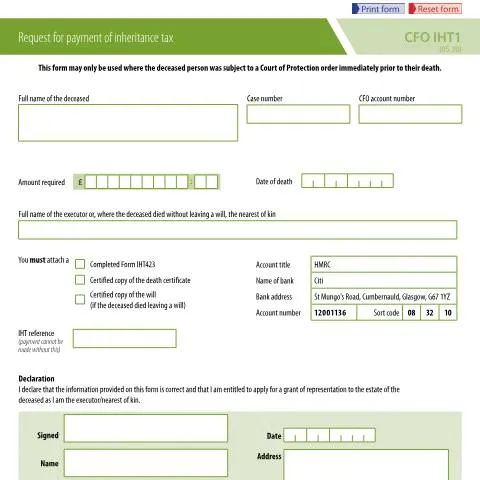
When dealing with the passing of a loved one, numerous administrative tasks can follow, including the payment of inheritance tax. One critical aspect of this process in the UK involves filling out the official document titled "Request for payment of inheritance tax" (CFO IHT1). This form is essential for those who are appointed as executors or nearest kin of a deceased individual, particularly if the deceased was under a Court of Protection order prior to their passing. Understanding this document and its role can significantly ease the emotional burden of managing an estate.
Who Should Prepare the Request for Payment of Inheritance Tax?
The necessity for this form arises primarily for individuals who find themselves in a position to manage the estate of someone who has passed away. This can include:
- Executors: Individuals named in the will who are responsible for administering the estate.
- Nearest kin: In cases where no will exists, the nearest relative may take on this responsibility.
These representatives are legally recognized as the parties who can request payment of any inheritance tax due on the estate. It is paramount that the executor or nearest kin understands their rights, as well as their obligations, in this sensitive scenario.
Understanding the Legal Framework
The governance of this process falls under the purview of the Ministry of Justice, which administers the Court Funds Office (CFO). The specific requirements for submitting Form IHT1 are shaped by various legal precedents and regulations, primarily rooted in the Inheritance Tax Act 1984. Additionally, the Data Protection Act 2018 ensures that all personal data is handled appropriately as individuals navigate these processes.
The Role of Form IHT1 in the Estate Management Process
Form IHT1 plays a pivotal role in the larger framework of estate administration. This document serves not only as a request for payment of the inheritance tax but also as a declaration of the details surrounding the deceased’s estate. Completing this form effectively indicates that the representative is prepared to fulfill their duties. Specifically, the form requests:
- Details regarding the deceased, including their full name and date of death.
- Information about the executor or nearest kin, along with their relationship to the deceased.
- A clear declaration that the information provided is accurate and that the representative is entitled to administer the estate.
Moreover, the form mandates the inclusion of pertinent financial information, including bank account details where the tax payment should be sent.
Essential Documentation Required
Alongside Form IHT1, various pieces of supporting documentation are crucial to substantiate the request. These typically include:
- A completed Form IHT423, which details the valuation of the estate and any tax liability.
- A certified copy of the death certificate confirming the passing of the individual.
- A certified copy of the will, if applicable. This document is vital for verifying the executor’s authority.
These documents collectively verify the legitimacy of the request and provide transparency to the process, ensuring that the inheritance tax is paid appropriately.
Completing the Form: A Step-by-Step Guide
While it may seem daunting at first, filling out Form IHT1 can be straightforward when approached methodically. Here’s how to navigate through it:
Step 1: Gather Personal Information
Before filling out the form, ensure you have the following information at hand:
- Full name of the deceased.
- Date of death.
- Full name of the executor or nearest kin.
- Relationship to the deceased (if applicable).
Step 2: Fill in Financial Details
It’s essential to provide the bank account details where the inheritance tax payment should be directed. This includes the bank name, address, account number, and sort code:
| Bank Name | Bank Address | Account Number | Sort Code |
|---|---|---|---|
| Citi | St Mungo’s Road, Cumbernauld, Glasgow, G67 1YZ | 12001136 | 08 32 10 |
Step 3: Confirm Accuracy of Information
Once the form is completed, carefully review all entries for accuracy. Any discrepancies could delay the processing of the request.
Step 4: Sign and Date the Form
Finally, ensure that the form is signed and dated by the executor or nearest kin. This signature serves as a declaration of the information’s accuracy and the right to request the payment of inheritance tax.
Submission of the Form: Where and How?
Once you have completed Form IHT1, the next step is to submit it to the Court Funds Office. The submission can typically be done via post. The mailing address to send your application is:
Court Funds Office Sunderland SR43 3AB DX 328004 Sunderland 19
In addition to the form, ensure that you include all required supporting documentation. It may be beneficial to send the package via a trackable mail service to confirm its delivery.
The Importance of Timeliness
The timeline for submission can be crucial. Delays in submitting these documents can result in penalties, or worse, complications in the estate administration process. It’s advisable to submit the form as soon as possible after the death has been registered. The Inheritance Tax must generally be settled within six months of the date of death to avoid incurring interest on payments owed.
What Happens After Submission?
Following the submission of the request, the Court Funds Office will process the application. The typical outcomes of this process can include:
- Successful Processing: If all information is verified and accurate, the inheritance tax payment will be issued to the designated bank account.
- Request for Further Information: Occasionally, the office may need additional details or clarification regarding the submitted application. In such cases, they will reach out to the executor or nearest kin.
- Rejection of Application: If the request is denied, typically due to inaccuracies or insufficient documentation, you will receive a notification with reasons for the denial.
How to Track Your Application
For individuals concerned about the status of their application, the Court Funds Office provides a helpline that can be contacted for updates:
Customer Helpline: 0300 0200 199
Understanding the Implications of Inheritance Tax Payment
Failing to pay the inheritance tax can have serious repercussions, both legally and financially. Some key points to consider include:
- Legal Obligations: The executor or nearest kin is legally obliged to ensure that this tax is paid; failure to do so can result in penalties or personal liability.
- Distribution Delays: Tax issues can complicate or delay the distribution of the estate to beneficiaries.
- Interest Accrual: Late payments may accrue interest, increasing the financial burden on the estate.
Therefore, it is vital for executors and nearest kin to stay informed and proactive regarding inheritance tax obligations.
Exceptions and Special Considerations
While the general process outlined is applicable to most estates, certain exceptions may arise depending on individual circumstances. Considerations may include:
- Foreign Domicile: If the deceased was living abroad or has foreign assets, additional tax implications might be involved.
- Minors: Special provisions apply when managing the estates of minors, which could affect the executor's responsibilities.
- Complex Estates: Estates with significant debts or complicated financial arrangements may require more extensive handling and potentially assistance from legal or financial professionals.
Seeking Professional Guidance
In complex situations, it is often beneficial for executors and nearest kin to seek professional guidance to navigate the intricacies of inheritance tax and estate management. Legal or financial advisors specializing in wills and estates can provide invaluable insights and support to ensure compliance with all legal requirements.
Undoubtedly, dealing with the loss of a loved one is a challenging experience, compounded by the need to manage their estate. Understanding the role and process of submitting the "Request for payment of inheritance tax" form is crucial for ensuring a smooth and lawful administration of the estate. By being informed and prepared, executors and nearest kin can fulfill their responsibilities with greater confidence and clarity.
Understanding Inheritance Tax in the UK
Inheritance Tax (IHT) is a significant aspect of financial planning in the UK, particularly for those with substantial estates. As it pertains to court funds, understanding the nuances of IHT is essential for beneficiaries. The rate of IHT is currently set at 40% on the value of an estate exceeding the nil-rate band, which is £325,000 for individuals. If a deceased person’s estate falls below this threshold, no IHT is payable. However, it is critical to note that the rules can vary if the estate includes a home, as additional allowances may apply.
When an estate is liable for IHT, the executor or personal representative is responsible for settling the tax before the assets can be distributed to beneficiaries. This process requires accurate valuation of the estate, which includes property, savings, investments, and other assets. Moreover, if the deceased has made gifts within seven years prior to their death, these may also impact the IHT calculation.
For beneficiaries awaiting distribution of court funds, the IHT must be paid within six months of the end of the month in which the death occurred to avoid interest charges. If the estate has insufficient liquid assets to cover the IHT, beneficiaries may need to wait longer for their inheritance or explore options like obtaining a loan against the estate, which can complicate matters further.
Steps to Request Payment of Court Funds Due to Inheritance Tax Liabilities
When you find yourself in the position of requesting payment of inheritance tax from court funds, it’s imperative to follow a structured approach to ensure compliance with legal requirements and avoid unnecessary delays. Here’s a step-by-step guide to navigating this process:
Gather Necessary Documentation: You must collect all relevant documents including the Death Certificate, Grant of Probate, and any valuations of the estate. Accurate documentation is crucial in substantiating your claim.
Fill in your form directly online
No printing: type your details into the boxes of the official form, tick, then download the PDF ready to send.
- 1Type into the form boxes
- 2Tick in one click
- 3Save and download the PDF
Assess the Estate's IHT Position: Collaborate with the executor or administrator to establish whether IHT is owed. Understanding the estate’s value and the applicable thresholds will enable you to determine if payment is required.
Complete the IHT Forms: The executor is responsible for filling out the appropriate forms such as the IHT205 or IHT400, which detail the estate’s value and liabilities. These forms must be submitted to HM Revenue and Customs (HMRC) for assessment.
Obtain Payment Reference: After submitting the IHT forms, you will receive a payment reference number from HMRC. This reference is essential for any subsequent transactions regarding the payment of IHT.
Apply for Release of Court Funds: Once the IHT has been calculated and any amount due has been settled, the executor can approach the court or relevant financial institution to request the release of funds. This typically requires completion of a specific application form outlining your request and any supporting documentation.
Monitor and Follow Up: After submitting your request for payment release, it is crucial to monitor progress. If there are delays, maintain communication with the relevant authorities to ensure your application is being processed.
Navigating the intricate details of inheritance tax and court funds can seem overwhelming, but these steps will help in ensuring a smoother process in requesting payment from an estate.
Common Challenges with Inheritance Tax and Court Funds
While the process of dealing with inheritance tax and court funds may seem straightforward, several challenges can arise. Being aware of these potential pitfalls can help beneficiaries and executors prepare and mitigate issues effectively.
Disputes Over Estate Valuation: One of the most common issues is disagreement over the value of the estate. Beneficiaries may feel that valuations provided by the executor undervalue certain assets, leading to disputes that can delay the distribution of funds. Having an independent valuation can help clarify the situation.
Delays in Probate Grant: The time it takes to obtain a Grant of Probate can vary significantly, depending on the complexity of the estate. If there are multiple beneficiaries or challenging assets, delays can occur that postpone the payment of court funds. Executors should keep beneficiaries informed of the progress to manage expectations.
Missing Documentation: If necessary documents are missing or incomplete, this can significantly hold up the process. Executors must be diligent in gathering comprehensive documentation to support the IHT calculations and subsequent payment requests.
Changes in Tax Legislation: Inheritance tax laws can be subject to change, impacting how IHT is assessed. Keeping abreast of any new legislation is vital for both executors and beneficiaries to ensure compliance and avoid legal issues.
Communication Breakdowns: Poor communication between executors and beneficiaries can lead to misunderstandings and discontent. Regular updates and transparent communication can help maintain harmony and reduce conflict.
By anticipating these challenges and addressing them proactively, stakeholders in the estate administration process can navigate the complexities of inheritance tax and court funds more effectively. Understanding the legal landscape and requirements helps beneficiaries feel more empowered in their rights to their inheritance.