When Court-Appointed Deputies Need Access to Protected Funds
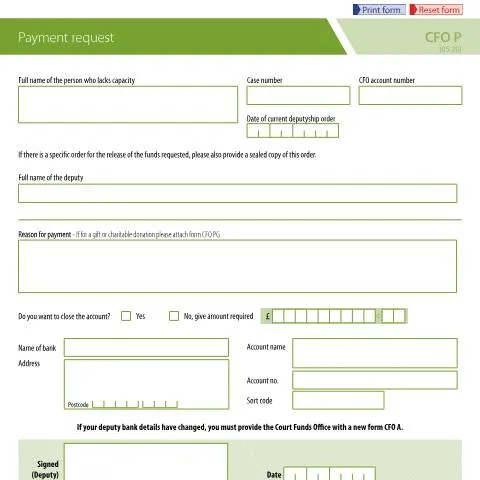
Managing finances for someone who lacks mental capacity involves navigating a complex system of safeguards designed to protect vulnerable individuals. The Court Funds Office (CFO) serves as the custodian for money belonging to people under Court of Protection orders, and accessing these funds requires strict adherence to formal procedures. The Court funds: payment request form CFO P represents the gateway through which court-appointed deputies can request withdrawals from accounts they oversee.
This process sits at the heart of deputyship responsibilities, where every financial decision must be justified and documented. The Court Funds Office, operating from its Sunderland headquarters, processes thousands of such requests annually, each representing someone's living expenses, care costs, or essential purchases. Understanding how this system works becomes crucial when families find themselves appointed as deputies following a relative's loss of capacity due to dementia, brain injury, or severe mental illness.
The Court Funds Office Framework and Deputyship Context
The Court Funds Office operates under the jurisdiction of the Ministry of Justice, managing funds for individuals who cannot handle their own financial affairs. This arrangement typically arises when the Court of Protection appoints a deputy following an assessment that someone lacks capacity to make financial decisions. The protected person's money is held in a CFO account, earning interest while remaining secure from potential exploitation or mismanagement.
Deputies fall into two main categories: property and financial affairs deputies and health and welfare deputies. Only those with property and financial affairs powers can request payments from CFO accounts. These appointments come with significant legal responsibilities, including the duty to act in the protected person's best interests and maintain detailed records of all financial transactions.
The CFO system ensures that funds remain protected while allowing legitimate access for the person's care and living expenses. Every withdrawal requires justification, creating an audit trail that protects both the vulnerable individual and the deputy from allegations of financial abuse. This protective framework explains why the payment request process involves multiple verification steps and detailed documentation requirements.
Account Types and Fund Sources
CFO accounts typically contain various fund sources, each with different withdrawal rules. Compensation awards from personal injury claims often form the largest component, alongside inheritance money, property sale proceeds, or accumulated benefits. Some funds may have specific restrictions imposed by the original court order, requiring additional documentation for certain types of expenditure.
The Court Funds Office maintains separate accounting for different fund sources within the same person's account. This segregation becomes important when requesting payments, as some expenditure may only be permitted from specific fund types. Deputies must understand these distinctions to avoid delays in processing their payment requests.
Completing the Payment Request: Essential Information and Documentation
The CFO P form demands precise completion, with every field serving a specific verification purpose. The form begins with fundamental identification details: the full name of the person lacking capacity, the deputy's full name and address, and critically, the CFO account number and case number from the deputyship order. These reference numbers link the request to the correct account and verify the deputy's authority to make withdrawals.
Banking details require particular attention, especially if circumstances have changed since the deputy's appointment. The form specifically asks whether deputy bank details have changed, triggering a requirement for form CFO A if updates are needed. This additional form provides the Court Funds Office with verified banking information, preventing payments from being sent to outdated or incorrect accounts.
| Form Section | Required Information | Common Issues |
|---|---|---|
| Personal Details | Full names, addresses, postcodes | Abbreviated names causing verification delays |
| Banking Information | Bank name, sort code, account number, account name | Outdated details or joint account complications |
| Payment Amount | Specific sum requested or account closure instruction | Insufficient justification for large amounts |
| Authorization | Deputy signature, date, contact details | Missing signatures or incorrect dates |
The payment amount section requires deputies to specify either a precise sum or indicate their intention to close the account entirely. Partial withdrawals must include clear justification for the amount requested, particularly for substantial sums that might trigger additional scrutiny from the Court Funds Office. The reasoning for payment becomes especially important when the request relates to gifts or charitable donations, which require the additional form CFO PG to demonstrate compliance with the deputy's legal powers.
Special Circumstances: Gifts and Charitable Donations
Deputies face strict limitations on making gifts from a protected person's funds, even to close family members. The Mental Capacity Act 2005 restricts gift-giving to reasonable amounts for special occasions or established patterns of giving that existed before the person lost capacity. Any gift or charitable donation request must be accompanied by form CFO PG, which requires detailed justification and may need prior court approval for significant amounts.
The Court Funds Office scrutinizes gift requests carefully, considering factors such as the protected person's previous giving patterns, their financial circumstances, and the relationship between the recipient and the protected person. Deputies should expect additional processing time for gift-related payment requests and may need to provide supporting evidence of the protected person's previous charitable commitments or family gift-giving traditions.
Submitting Requests and Court Order Requirements
The Court Funds Office accepts payment requests through multiple channels, with postal submission to their Sunderland address remaining the most common method. The DX delivery service (DX 328004 Sunderland 19) provides an alternative for legal professionals, while the customer helpline on 0300 0200 199 offers guidance for complex situations before submission.
Certain payment requests require additional documentation beyond the standard CFO P form. When a specific court order authorizes the fund release, deputies must provide a sealed copy of this order alongside their payment request. This requirement typically applies to large expenditures, property purchases, or payments that fall outside the deputy's general authority. The sealed copy proves that the Court of Protection has specifically approved the transaction, providing additional protection for both the deputy and the Court Funds Office.
Processing times vary depending on the complexity of the request and whether additional verification is required. Standard payment requests typically process within 10-15 working days, while requests requiring court order verification or involving substantial amounts may take several weeks. Deputies should plan accordingly, especially when requesting funds for time-sensitive expenses such as care home fees or medical treatments.
Payment Methods and Banking Considerations
The Court Funds Office issues payments by cheque or bank transfer, depending on the amount and circumstances. Cheques are made payable to the "Accountant General of the Senior Courts," requiring deputies to endorse them appropriately before banking. Bank transfers offer faster access to funds but require verified banking details on file with the CFO.
Deputies using joint bank accounts may face additional scrutiny, as the Court Funds Office must ensure that funds reach the correct recipient. In such cases, clear documentation showing the account's purpose and the deputy's authority becomes essential. Some deputies establish separate accounts specifically for managing the protected person's affairs, simplifying the verification process and maintaining clearer financial records.
Managing Ongoing Financial Responsibilities and Record-keeping
Each payment request forms part of the deputy's ongoing duty to maintain comprehensive financial records. The Court of Protection requires annual reports detailing all income and expenditure for the protected person, making accurate documentation of CFO withdrawals essential. Deputies should retain copies of all payment request forms, supporting documentation, and bank statements showing how withdrawn funds were used.
The Court Funds Office maintains detailed records of all transactions, but deputies cannot rely solely on CFO documentation for their annual reporting requirements. Each withdrawal must be categorized according to the Court of Protection's reporting guidelines, distinguishing between living expenses, care costs, medical treatments, and other expenditure categories.
Regular communication with the Court Funds Office helps deputies understand their account balance and any restrictions affecting future withdrawals. The CFO provides account statements upon request, showing current balances, recent transactions, and any holds or restrictions on the account. This information proves invaluable when planning future expenditure or preparing annual reports for the Court of Protection.
Handling Complex Financial Situations
Some protected persons have complex financial arrangements requiring careful coordination between multiple agencies. For example, someone receiving ongoing compensation payments while also having existing CFO funds may need specific documentation to justify payment requests. Similarly, protected persons with property interests or business holdings may require court approval for transactions affecting these assets.
Deputies managing substantial funds often benefit from seeking professional advice before making significant payment requests. While the Court Funds Office provides administrative processing, they cannot offer financial advice about investment strategies or major expenditure decisions. Professional deputies, such as solicitors or specialist firms, typically have established procedures for handling complex CFO accounts, but family deputies may need additional support when navigating complicated financial situations.
Fill in your form directly online
No printing: type your details into the boxes of the official form, tick, then download the PDF ready to send.
- 1Type into the form boxes
- 2Tick in one click
- 3Save and download the PDF
Monitoring Account Status and Resolving Processing Issues
The Court Funds Office customer helpline serves as the primary contact point for deputies tracking payment request progress or resolving processing issues. The helpline operates during standard business hours and can provide updates on request status, clarify documentation requirements, and explain any delays in processing.
Common processing delays arise from incomplete forms, missing signatures, outdated banking details, or insufficient justification for requested amounts. The Court Funds Office typically contacts deputies directly when additional information is required, but proactive communication can prevent unnecessary delays. Deputies should ensure their contact details remain current and respond promptly to any CFO correspondence.
Email communication through [email protected] provides an alternative contact method for non-urgent queries, though telephone contact often proves more effective for time-sensitive issues. The CFO's privacy notice, available through their government website, explains how personal information is processed and protected throughout the payment request procedure.
Annual Reviews and Ongoing Compliance
The Court of Protection conducts periodic reviews of deputyship arrangements, examining how deputies manage their responsibilities and whether continued protection remains necessary. CFO payment records form part of this review process, highlighting the importance of maintaining clear justification for all withdrawals and ensuring expenditure aligns with the protected person's best interests.
Deputies should prepare for these reviews by maintaining organized records of all CFO transactions, including payment request forms, supporting documentation, and evidence showing how withdrawn funds benefited the protected person. Unexplained withdrawals or patterns suggesting inappropriate expenditure can trigger detailed investigations and potentially result in the deputy's removal or replacement.
Data Protection and Privacy Safeguards in Fund Management
The Court Funds Office operates under strict data protection requirements, implementing the Data Protection Act 2018 and UK GDPR principles throughout their processing procedures. Personal information provided on payment request forms receives appropriate protection, with access limited to authorized personnel involved in processing the request.
Deputies should understand that submitting payment requests creates a permanent record within the CFO system, contributing to the protected person's financial history. This information may be disclosed to other agencies when required by law or court order, but routine disclosure remains restricted to authorized individuals such as the deputy, the protected person (if they regain capacity), and court-appointed representatives.
The privacy notice requirement on the CFO P form ensures deputies understand how their information will be processed and stored. This transparency supports informed decision-making about payment requests while maintaining the high standards of confidentiality expected in mental capacity proceedings. Deputies concerned about privacy implications can request additional information from the Court Funds Office before submitting their payment requests.
Understanding the Court Funds Office payment request system empowers deputies to fulfill their financial responsibilities effectively while maintaining the protective safeguards that prevent financial abuse of vulnerable individuals. The CFO P form represents just one element in a comprehensive framework designed to balance accessibility with protection, ensuring that people who lack capacity receive appropriate financial support while their assets remain secure from exploitation.