The Critical Role of Form ADM16A in Admiralty Limitation Claims
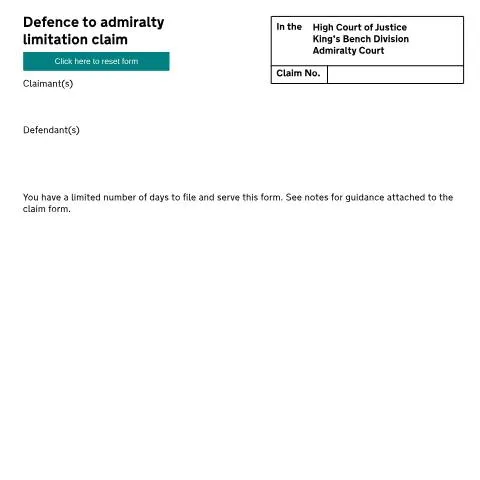
When faced with an admiralty limitation claim, the response must be timely and precise. Completing the Defence to Admiralty Limitation Claim: Form ADM16A is an essential step for defendants, as it serves as their formal introduction to the court and outlines their arguments against the claim made. Understanding the nuances of this document can significantly impact the case outcome.
Understanding the Legal Framework Surrounding ADM16A
This form is governed by specific regulations set out within the Admiralty Court, part of the High Court of Justice's King’s Bench Division. The use of this form stems from the Admiralty Act 1979, which provides mechanisms for limiting liability in maritime claims.
- The Act aims to protect shipowners and operators from excessive liabilities resulting from maritime incidents.
- It establishes a time limit within which claims can be filed, typically set at two years from the date of the incident.
By filing form ADM16A, defendants articulate their position regarding the limitation of liability and set the groundwork for potential court proceedings.
Navigating the Form: A Step-by-Step Breakdown
The ADM16A form comprises multiple sections that need careful attention. Each part plays a critical role in presenting the defendant's case. Here’s a detailed exploration of key sections:
Claim Details
Begin by accurately entering the claim number and the names of the claimant and defendant. It’s crucial to double-check these details against court records; inaccuracies can lead to delays or even dismissals.
Statement of Truth
This section emphasizes the authenticity of the claims made within the form. Defendants must understand that providing false information can result in serious legal consequences, including contempt of court. The signature should be from the defendant or an authorized representative, confirming the truth of the statements therein.
Address Information
Providing a correct and complete address is vital as it serves as the official correspondence address for all related documents. Ensure the postcode and other details are correct to avoid issues in communication.
Contact Information
While optional, supplying a contact number or email can facilitate quicker communication between the court and the defendant. This section helps in ensuring that any notifications regarding the claim reach the defendant promptly.
Preparation: Gathering Supporting Documents
Filing the ADM16A is not merely about completing the form; it involves compiling supporting documents that substantiate the defendant's claims. These documents can vary based on individual circumstances but might include:
- Evidence of the circumstances surrounding the incident.
- Documentation proving ownership or control of the vessel involved.
- Any previous correspondence related to the claim.
Defendants must organise these documents methodically, ensuring that they correspond with the claims made in the ADM16A. This preparation is essential for building a robust defence.
Timelines and Deadlines: A Crucial Element
The necessity for swift action cannot be overstated. Defendants have a limited number of days to file and serve the ADM16A form. Here’s a breakdown of the typical timeline:
| Action | Timeline |
|---|---|
| Notification of Claim | Day of notification |
| Deadline to file ADM16A | Typically 14 to 28 days |
| Submission of Supporting Documents | Simultaneous with ADM16A |
Failing to adhere to these timelines could result in forfeiting the right to present a defence, leading to a default judgement against the defendant.
What Distinguishes ADM16A from Related Forms?
While it may be tempting to confuse the ADM16A with other forms utilized within the admiralty jurisdiction, distinct differences set it apart. For instance:
- ADM1: This form is used for initiating a claim, while ADM16A specifically serves as a defence against limitation claims.
- ADM15: A form for settling convenience claims, which is not applicable in limitation cases.
Understanding these differences helps defendants choose the correct form, ensuring their arguments are presented in the right context.
Chronological Overview: From Incident to Defense
To better comprehend the process involving the ADM16A, it’s helpful to consider a chronological pathway that outlines each significant step from the initial incident to the defence:
- Incident Occurs: A maritime event triggers a potential claim.
- Claim is Filed: The claimant notifies the defendant of the intention to claim.
- Receipt of Claim Notification: The defendant receives the official claim notification.
- Complete Form ADM16A: The defendant gathers evidence and fills out the form accurately.
- File and Serve ADM16A: The defendant submits the form within the specified deadline.
- Court Proceedings: The case proceeds, with both parties presenting their arguments.
- Judgement: The court renders a decision based on the evidence and legal arguments submitted.
Staying attuned to each of these steps ensures that defendants remain proactive throughout the legal process.
Conclusion: Navigating the Complex Waters of Maritime Claims
The Defence to Admiralty Limitation Claim: Form ADM16A functions as a crucial tool within the legal arsenal for defendants facing maritime claims. Its importance cannot be understated, as it structures the defendant's legal strategy and influences the proceedings' outcome. By understanding the form's components, legal context, and timeline, defendants can effectively advocate for their interests in the often intricate domain of admiralty law.
Understanding the ADM16A Form: Purpose and Context
The ADM16A form serves as a critical document in the context of admiralty limitation claims within the UK legal framework. It is primarily used by defendants who seek to assert a defence against a limitation claim made under the Merchant Shipping Act 1995. This act allows shipowners and other responsible parties to limit their liability for damages arising from maritime incidents to the value of the vessel and its freight. The ADM16A form allows individuals or entities involved in maritime disputes to formally submit their defences, ensuring that their legal arguments are appropriately documented and considered by the court.
Fill in your form directly online
No printing: type your details into the boxes of the official form, tick, then download the PDF ready to send.
- 1Type into the form boxes
- 2Tick in one click
- 3Save and download the PDF
In understanding the significance of the ADM16A form, it is crucial to recognise the broader context of the admiralty jurisdiction in the UK. This jurisdiction deals with cases related to shipping, navigation, and the rights and liabilities of those involved in maritime activities. The filing of an ADM16A provides a structured way for defendants to respond to claims, ensuring compliance with procedural rules that govern admiralty proceedings. It also highlights the need for precise and timely submissions, reflecting the complexities of maritime law.
Key Considerations When Completing the ADM16A Form
Completing the ADM16A form involves several key considerations that defendants must keep in mind to ensure their claims are robust and legally sound. Firstly, accuracy is paramount. Every detail provided in the form must be meticulously checked to avoid delays or potential rejection of the claim. This includes precise identification of the incident giving rise to the claim, the relevant parties involved, and the nature of the defence being asserted.
Additionally, the defendant should consider the importance of supporting documentation. While the ADM16A form itself outlines the basic details of the defence, attaching evidence such as witness statements, expert reports, or technical assessments can significantly strengthen the argument. This supplementary information can provide the court with a clearer picture of the circumstances surrounding the claim and the rationale behind the defence.
Moreover, awareness of deadlines is critical when completing the ADM16A form. As per the rules of the Admiralty Procedure Rules 1997, defendants typically have a limited time frame to submit their defence following receipt of the limitation claim. Failure to adhere to these timelines can result in the loss of the right to contest the claim, leading to potentially adverse outcomes for the defendant.
Potential Outcomes and Next Steps After Submitting ADM16A
After submitting the ADM16A form, defendants can expect various potential outcomes, depending on the particulars of the case and the strength of the defence presented. One possible scenario is that the court may accept the defence, leading to the limitation claim either being dismissed or greatly reduced, based on the merits of the arguments and evidence put forth.
Alternatively, the court may schedule a hearing to further examine the defence outlined in the ADM16A. In such cases, it’s crucial for defendants to prepare thoroughly for this hearing, as they will need to substantiate their claims verbally and potentially face cross-examination from the claimant's legal representatives. Adequate preparation would involve a thorough review of all documents submitted, practising key arguments, and possibly consulting legal counsel for guidance on courtroom procedures.
In addition, after the court's ruling, if the defence is unsuccessful, defendants have the option to explore further legal avenues, such as appeals or negotiations for settlements. Engaging with a legal expert during this stage is advisable to understand the best course of action and potential implications for future maritime activities.
Ultimately, the process following the submission of the ADM16A form is complex and contingent on various factors, including the legal arguments presented, the conduct of involved parties, and the court's interpretation of maritime law. Defendants must remain proactive and informed to navigate these proceedings effectively.