The Significance of the ADM18 Form in Maritime Law
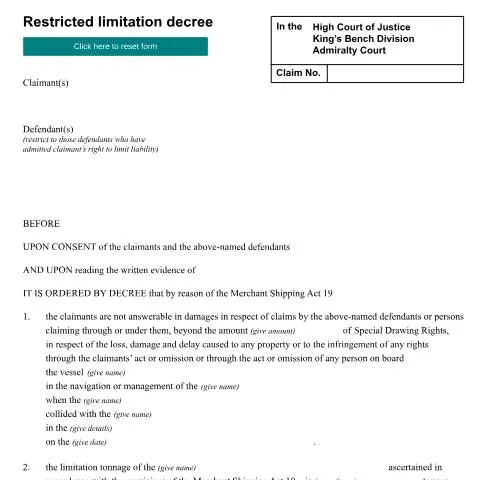
In the intricate world of maritime law, particular procedures and documentation serve as pivotal touchstones for resolving disputes involving shipping liabilities. One such critical document is the Restricted Limitation Decree: Form ADM18, issued by the HM Courts & Tribunals Service. This decree is not merely a formality; it encapsulates the legal framework governing liability limits for damages experienced during maritime operations, thus protecting claimants from excessive claims against them.
Who Engages with the ADM18 Form?
The ADM18 form is primarily utilized in cases involving maritime accidents, particularly where the Merchant Shipping Act is invoked. It concerns parties directly impacted by maritime incidents, typically:
- Claimants: Individuals or entities seeking to limit their liabilities following a maritime incident.
- Defendants: Parties who have admitted the claimant's right to limit liability.
In practical terms, this often includes shipowners, charterers, and those associated with vessel management. Each party must understand their role, the implications of the decree, and any potential impact on their rights and responsibilities.
Navigating the ADM18: A Step-by-Step Journey
Filling out the ADM18 form necessitates meticulous attention to detail. Each section requires accurate and comprehensive information to avoid complications. The journey begins with identifying the claimants and defendants:
- Claim Identification: Provide the unique claim number that corresponds to the case.
- Claimant and Defendant Information: Clearly list the names of all claimants and defendants involved.
- Consent Confirmation: Acknowledge the consent of the claimants and defendants regarding the limitation of liability.
This initial data forms the backbone of the decree, establishing who is involved and under what circumstances. Accuracy is paramount, as any discrepancies can lead to legal challenges or delays.
Understanding the Legal Context and Implications
The Merchant Shipping Act governs the ADM18 form, asserting that in specific cases, claimants may limit their liability for damages. This provision serves as a protective mechanism, ensuring that parties are not liable for amounts exceeding the calculated limitation fund determined by the act's stipulations. This crucial aspect must not be overlooked; failing to adhere to these regulations can result in substantial financial repercussions.
Key Components of the ADM18 Form
Each section of the ADM18 is vital for ensuring a complete and effective submission:
- Decree Orders: Clearly outline the limitations on liability, specifying the amount and related conditions.
- Limitation Tonnage: This figure is essential, calculated in accordance with the Merchant Shipping Act provisions, as it influences the limitation fund's valuation.
- Fund Distribution: Detail the manner in which the limitation fund will be allocated among the involved parties.
Understanding these sections aids in anticipating the decree's implications on liability and ensures meticulous compliance with legal requirements.
Addressing Complications: Errors and Omissions
In instances where the ADM18 submission is flawed, it is essential to be prepared for potential consequences. Common issues may include:
- Missing signatures or consent confirmations, which can lead to delays.
- Incorrect or incomplete claim amounts, resulting in legal disputes regarding liability limits.
- Failure to provide necessary evidence supporting the claims of limitation.
Addressing these complications promptly is vital. Should a submission face rejection, parties may need to rectify errors and resubmit the ADM18 form. Engaging with a legal professional during this stage can provide essential guidance to navigate the complexities of maritime law.
Evidence Preparation: Essential Documents for Support
Supporting documentation is integral to the successful submission of the ADM18 form. Depending on the circumstances of the maritime incident, claimants and defendants must prepare various types of evidence:
- Incident Reports: Detailed accounts of the maritime event, including circumstances leading to the liability claim.
- Financial Records: Documentation illustrating the economic impact of the incident on the claimant.
- Witness Statements: Testimonies from individuals present during the incident or involved in the maritime operation.
Compiling accurate and relevant evidence can significantly influence the outcome of proceedings, reinforcing the legitimacy of the claims made in the ADM18 submission.
The Flow of the Decree Process
Understanding the chronological flow of the ADM18 process helps participants navigate their responsibilities effectively:
- Incident Occurrence: The maritime incident triggering claims for damages.
- Claim Submission: Parties submit claims to the High Court, seeking a limitation decree.
- ADM18 Form Completion: Fill out the form meticulously, ensuring all required information is included.
- Court Review: The High Court assesses the submission, reviewing evidence and the completed ADM18 form.
- Decree Issuance: Upon approval, the restricted limitation decree is issued, outlining liability limits and responsibilities.
- Fund Management: The limitation fund is established, and proceedings against the claimants are stayed.
This structured approach highlights the importance of each stage in the process, emphasizing the need for thorough preparation and prompt action.
Consequences and Obligations Post-Decree Issuance
Once the ADM18 form has been approved and the limited liability decree issued, several obligations and consequences follow for the involved parties:
- Liability Cap Established: The decree specifies the maximum amount the claimants are liable for, which is a significant protection against excessive claims.
- Stay on Further Proceedings: Following the issuance, any further legal actions against the claimants regarding the incident are halted, allowing for a streamlined process.
- Distribution of Limitation Fund: Clearly defined protocols must be followed in distributing the limitation fund among claimants and defendants, as specified in the decree.
These outcomes underscore the importance of understanding not only the immediate effects of the ADM18 form but also the long-term implications for all parties involved.
Practical Tips for Successful ADM18 Submission
To enhance the likelihood of a successful submission of the ADM18 form, consider the following practical tips:
- Engage legal expertise familiar with maritime law to guide document preparation and submission.
- Ensure that all parties involved agree on the information presented in the ADM18 form to prevent future disputes.
- Maintain thorough records of all correspondences and document submissions related to the decree process.
These strategies aim to facilitate a smooth process and mitigate potential challenges that may arise during and after the ADM18 submission.
Fill in your form directly online
No printing: type your details into the boxes of the official form, tick, then download the PDF ready to send.
- 1Type into the form boxes
- 2Tick in one click
- 3Save and download the PDF
Final Remarks on Navigating Maritime Liabilities
Understanding the complexities of the ADM18 form and the associated procedures is crucial for anyone involved in maritime operations. The implications of a restricted limitation decree can significantly affect the legal landscape for claimants and defendants. By being well-informed, individuals and entities can protect their rights and navigate the often treacherous waters of maritime law with greater confidence.
Understanding the Restricted Limitation Decree
The Restricted Limitation Decree, encapsulated in Form ADM18, is a crucial aspect of the legal framework within the UK regarding specific administrative and judicial processes. This decree assists individuals and organisations in efficiently managing limitations concerning legal claims and liabilities. Understanding the implications of this decree is vital for anyone involved in legal proceedings or administrative functions.
In essence, the Restricted Limitation Decree applies to a variety of circumstances, including civil claims and administrative challenges that face time restrictions. For instance, it sets out timelines within which claims must be initiated, and it governs how these limitations can be extended or modified under specific conditions. This is particularly relevant in cases involving personal injury claims or breach of statutory duty, where the timing of filing a claim is paramount.
Who Should Use Form ADM18?
Form ADM18 is specifically tailored for individuals and entities who need to apply for a restricted limitation decree. This can include solicitors representing clients, businesses navigating contractual disputes, or individuals pursuing personal claims against public bodies or private entities. It's important to note that this form is not universally applicable; the need for it arises only under specific legal circumstances that warrant a deviation from standard limitation periods.
For example, if a claimant has been unable to pursue their claim within the standard limitation period due to circumstances such as mental incapacity or fraud, the ADM18 provides a pathway to extend the time limit for initiating legal action. It’s important for users of this form to clearly articulate their reasoning for the delay, as this will be assessed by the relevant court or tribunal.
Additionally, those involved in appeals to tribunals, particularly where the matter involves procedural irregularities or substantial new evidence, may also find the ADM18 applicable. Legal representatives must ensure that they understand the specific legal requirements and conditions under which the application is being made, as these can vary significantly depending on the type of legal action undertaken.
Filing Process for Form ADM18: Best Practices
The filing process for Form ADM18 requires meticulous attention to detail to ensure that the application is correctly completed and submitted. Here are some best practices to follow:
- Gather Comprehensive Documentation: Before filling out the form, collect all relevant documents that support your case. This may include medical reports, witness statements, or previous correspondence related to the claim. Having a complete file will strengthen your application.
- Consult Legal Counsel: If you are unsure about the process or the specifics regarding your situation, consulting a solicitor can be invaluable. They can assist in interpreting the legal language and advise on the appropriate course of action.
- Complete the Form Accurately: Ensure that all sections of Form ADM18 are filled out accurately and clearly. Ambiguities can lead to delays or even rejection of your application. Double-check for typographical errors and ensure that all required fields are completed.
- Submit Within the Appropriate Timeframe: Although the form is designed to address limitations, it’s crucial to submit it promptly to avoid further complications. Understanding the specific timelines related to your case is essential.
- Keep Copies of Everything: Always retain copies of your completed form and any documents submitted alongside it. This is essential for tracking the progress of your application and can be helpful in case of any disputes.
By following these best practices, applicants can increase their chances of successfully navigating the complexities of the Restricted Limitation Decree process. Remember, the courts have a vested interest in ensuring that justice is served, but they also require that the processes are adhered to rigorously.