Navigating the Admiralty Waters: Essential Insights on Form ADM1A
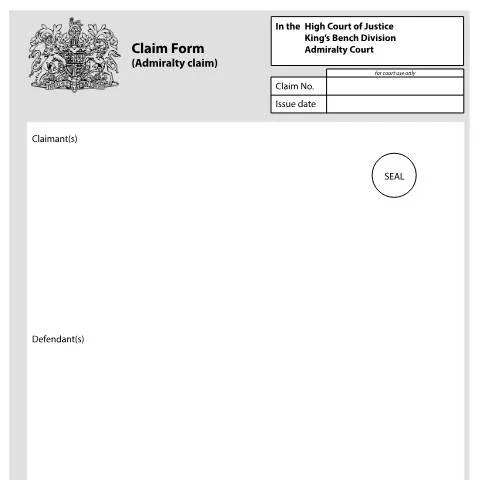
When maritime disputes arise, the pathways to resolution can often be complex and fraught with legal intricacies. Form ADM1A, officially designated as the Claim Form for Admiralty Claims, stands as a critical document in the context of legal proceedings under the Admiralty jurisdiction in the High Court of Justice. Understanding the purpose and the procedural context of this form is paramount for claimants seeking justice in maritime matters. This article delves into various dimensions of the ADM1A Claim Form, detailing its significance, completion instructions, and the procedural journey it entails for parties involved in maritime disputes.
The Journey Begins: Understanding the Form’s Role in Admiralty Claims
The ADM1A Claim Form is primarily intended for initiating legal proceedings related to maritime claims, commonly within the King's Bench Division of the High Court of Justice. Such matters might include shipping contracts, collisions at sea, or any other issues arising from navigation and shipping activities. This form serves as the claimant's first communication with the court, formally presenting the nature of the claim and triggering the subsequent legal process.
Types of Claims Covered
- Contractual Disputes: Issues arising from agreements between ship owners, charterers, and cargo owners.
- Personal Injury Claims: Incidents involving injuries sustained by crew members or passengers aboard a vessel.
- Property Damage: Claims concerning damage to vessels or cargo during transit.
- Environmental Claims: Issues related to pollution incidents or maritime safety breaches.
Filling Out the ADM1A: Step-by-Step Guidance
Completing the ADM1A is not merely a matter of filling in blanks; it requires careful consideration and precise information. Here’s how to navigate the form’s various sections effectively.
Initial Details: Claimant and Defendant Information
At the top of the form, you will need to clearly state the claim number and issue date, which you will receive once the form is submitted. Following this, you should provide comprehensive details regarding the claimant(s) and defendant(s), including names and addresses. Accuracy is vital at this stage, as any discrepancies can lead to unnecessary delays.
Details of the Claim
In the section titled "Brief details of claim," succinctly outline the essential facts of your case. This should include the nature of the claim, circumstances surrounding the dispute, and relevant dates. The particulars of the claim section allows for a more detailed account of events and should be attached as a supplementary document if it exceeds the space provided.
Statement of Truth: The Legal Implications
The statement of truth is a crucial part of the ADM1A, asserting that the information provided is accurate to the best of your knowledge. Misrepresentation in this statement can lead to serious legal consequences, including contempt of court. Therefore, it is imperative to ensure that every statement is truthful and substantiated by evidence where possible.
Timelines and Deadlines: A Crucial Overview of Proceedings
Understanding the timeline associated with submitting Form ADM1A is essential for maintaining procedural integrity.
From Submission to Acknowledgment
After submitting the ADM1A, the court will process your claim, typically issuing an acknowledgment of service. This acknowledgment is crucial as it informs parties of the next steps and timelines for responses. The initial response from the defendant must generally be submitted within 14 days from the acknowledgment date.
Proceeding to Hearing
Once responses are received, the case may be set for a preliminary hearing or trial. It’s important to be attentive to court correspondence, as the timeline can vary significantly based on the complexity of the case and the court's schedule.
Contextualizing Form ADM1A: Distinguishing Features
While there are various forms related to different types of claims, Form ADM1A possesses unique attributes that set it apart from other legal claims forms.
Comparison with Civil Claims
| Feature | Form ADM1A | Civil Claim Form |
|---|---|---|
| Jurisdiction | Admiralty | General Civil |
| Types of Disputes | Maritime Issues | Wide-ranging civil issues |
| Statement of Truth | Mandatory with strict legal implications | Standard but less stringent |
| Timeframes | Specific to Admiralty procedures | Varies by claim type |
Documentation: Preparing Supporting Evidence
Accompanying your ADM1A with the appropriate documentation is essential for substantiating your claim. This evidence should be comprehensive and meticulously organized to facilitate the court's understanding of the case.
Typical Documents to Include
- Contracts: Any agreements relevant to the maritime operation.
- Invoices: Proof of payments or financial transactions related to the claim.
- Incident Reports: Official reports detailing the circumstances leading to the claim.
- Witness Statements: Accounts from individuals who can corroborate your narrative.
Following Through: Keeping Track of Your Claim
After submitting your ADM1A, it’s vital to actively monitor the progress of your case. Communication with the Admiralty Registry can provide insights into any developments.
How to Effectively Communicate with the Court
- Keep Records: Document every correspondence and note key dates.
- Stay Informed: Regularly check for updates on court proceedings and deadlines.
- Be Proactive: If you haven’t received acknowledgment or updates within expected timelines, consider contacting the Admiralty Registry for clarification.
Conclusion: Navigating the Process with Confidence
Engaging with Form ADM1A and the associated legal processes can be daunting, but understanding its significance and the surrounding procedures is crucial for a successful claim. By meticulously completing the form, preparing necessary documentation, and staying vigilant throughout the process, claimants can effectively navigate the complexities of Admiralty law. The journey from submission to resolution is one that requires diligence, clarity, and a proactive approach to legal engagement.
Understanding the Basics of Admiralty Claims
Admiralty claims, governed by the law of the sea, involve disputes related to maritime activities. These claims can arise from various issues, such as shipping accidents, cargo damage, and personal injuries at sea. Notably, the process of filing an Admiralty claim in the UK typically involves completing specific forms, with Form ADM1A being the primary document for initiating such claims. Understanding the nuances of these claims is essential for both claimants and defendants, as maritime law can vary significantly from traditional civil law.
Fill in your form directly online
No printing: type your details into the boxes of the official form, tick, then download the PDF ready to send.
- 1Type into the form boxes
- 2Tick in one click
- 3Save and download the PDF
Before proceeding with Form ADM1A, it's crucial to determine if your claim falls under the jurisdiction of the Admiralty Court. Generally, the court has jurisdiction over matters concerning maritime law, including disputes involving ships, maritime contracts, and torts that occur on navigable waters. It is advisable to consult with legal professionals specializing in maritime law to understand your particular situation better.
Filling Out Form ADM1A: A Step-by-Step Guide
Completing Form ADM1A requires careful attention to detail to ensure that all the necessary information is included. Here's a breakdown of the key sections you will encounter:
- Section A: Claimant Details - This section requires you to provide your name, contact information, and any relevant identification numbers. If you are representing a business, include the company name and registration details.
- Section B: Defendant Information - You will need to provide the name and contact details of the defendant, as well as any known legal representatives. Accurate information is crucial, as errors can lead to delays or dismissal of your claim.
- Section C: Nature of the Claim - Here, you will detail the circumstances surrounding your claim. Be specific about the events that led to the dispute, including dates, locations, and any pertinent evidence or documentation that supports your case.
- Section D: Relief Sought - Outline what you are seeking from the court, whether it be monetary compensation, specific performance, or another type of remedy. Clearly stating your expectations will assist the court in understanding your objectives.
- Section E: Signature and Declaration - After completing the form, you must sign and date your submission to confirm that the information provided is accurate and truthful. This declaration is legally binding and should not be taken lightly.
It's important to review the completed form thoroughly before submission. Any inaccuracies or omissions can lead to complications or even a rejection of your claim. Additionally, be mindful of the deadlines associated with Admiralty claims, as these can differ from standard civil claims. In most instances, claims should be filed as soon as the circumstances arise to avoid potential statute limitations.
Common Pitfalls in Admiralty Claims and How to Avoid Them
Filing an Admiralty claim can be fraught with challenges. Understanding the common pitfalls can aid in navigating the process more effectively. Here are some issues to watch out for:
- Insufficient Evidence: One of the most significant reasons claims fail is the lack of supporting evidence. Gathering documentation such as witness statements, photographs, and relevant contracts can bolster your case. Make sure to retain copies of all correspondence and evidence related to the incident.
- Jurisdictional Issues: Not all maritime disputes fall under the Admiralty Court's jurisdiction. It’s vital to understand whether your claim is appropriate for this court. Misfiling can result in significant delays and additional costs. Consulting with a maritime law expert can help clarify jurisdictional matters.
- Failure to Meet Deadlines: Deadlines in Admiralty claims can be stringent. Missing a deadline may forfeit your right to claim compensation. Ensure that you are aware of all relevant dates, including the time frame for filing your claim and any other associated deadlines.
- Ignoring Legal Representation: While it’s possible to represent yourself in court, the complexities of maritime law often necessitate the expertise of a solicitor or barrister. A legal expert can advise you on the best course of action and represent your interests effectively.
By anticipating these common pitfalls and preparing accordingly, claimants can enhance their chances of a favorable outcome in their Admiralty claim.