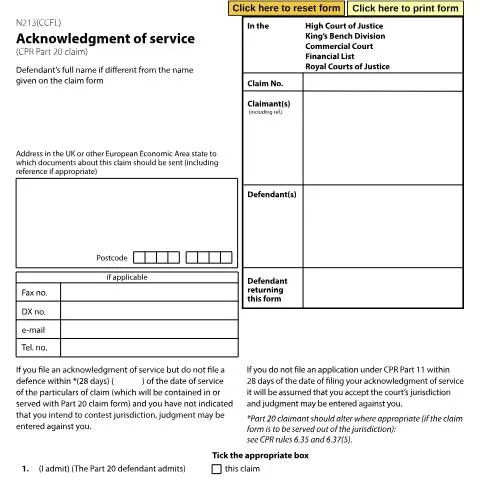
Understanding the Acknowledgment of Service: Form N213(CCFL)
In the realm of the UK's legal system, the intricacies of court procedures can often be overwhelming, especially for defendants navigating their obligations within the Commercial Court's Financial List. One pivotal document in this process is the Acknowledgment of Service – Commercial Court Financial List: Form N213(CCFL). This form acts as a crucial step for defendants who have received a Part 20 claim, providing them a formal avenue to communicate their intentions regarding the claim.
The Timeline: Key Dates and Subsequent Actions
Once you have been served with the particulars of the claim, the clock starts ticking. The timeline for filing the Acknowledgment of Service is critical, as it sets the stage for the defendant's next moves within the legal framework.
Initial Timeline Post-Service
- 28 Days to Respond: You have a strict 28-day period from the date of service to file your acknowledgment of service. This is a non-negotiable timeframe that must be adhered to.
- Filing a Defence: If you do not intend to contest the claim, it is vital to submit your defence within the same 28 days; otherwise, a judgment may be entered against you.
- Application to Contest Jurisdiction: Should you choose to dispute the jurisdiction of the court, this must also be filed within 28 days of your acknowledgment of service.
What Follows the Acknowledgment of Service?
Once you've submitted the N213(CCFL), the court will process your acknowledgment. If you have indicated your intention to defend the claim, the next steps will involve the filing of your defence, which should clearly outline your reasoning and any counterarguments you might have.
Role of Form N213(CCFL) in the Legal Process
The N213(CCFL) serves a dual purpose within the legal proceedings:
- Official Notification: By filing this form, you formally notify the court and the claimant of your position regarding the claim.
- Strategic Decision-Making: The choices you make on this form can significantly impact your approach to the case, including whether you admit liability, contest the claim, or challenge jurisdiction.
Understanding the Options on the Form
The N213(CCFL) includes several boxes that you must tick based on your response:
- If you admit the claim, you will need to specify which parts you admit.
- If you contest the claim, indicate whether you contest the entire claim or just parts of it.
- You can also express your intention to challenge the jurisdiction of the court, which can lead to separate proceedings.
Completing the Form N213(CCFL): A Step-by-Step Guide
Filling out the N213(CCFL) correctly is essential for ensuring that your intentions are clearly communicated. Below is a structured approach to completing this form:
Section Breakdown
- Claim Information: Include the claim number and the names of the claimants and defendants as they appear on the claim form.
- Defendant’s Details: Provide your full name and, if applicable, any alternate name as detailed in the claim form.
- Contact Information: Fill in your address in the UK or another EEA state where documents can be sent. Ensure accuracy to avoid delays.
- Response Selection: Carefully select the appropriate boxes indicating your response to the claim and any intentions regarding jurisdiction.
- Date of Birth: This is a required field that must be filled in accurately.
Signature Requirement
Finally, the form must be signed either by the defendant or their legal representative, clearly indicating the position held if signing on behalf of an entity. A date must also be included to validate the submission.
Submitting Form N213(CCFL): Where and How
Upon completion, the next step is to submit the form to the appropriate court office. Here are the essential details:
- Court Office Address: The Acknowledgment of Service should be sent to the Admiralty and Commercial Registry located at The Rolls Building, 7 Rolls Building, Fetter Lane, London, EC4A 1NL.
- Submission Methods: The form can be submitted either in person or via post. Ensure that any postal submissions are sent with adequate time to meet the 28-day deadline.
Tracking Your Submission
After submission, you may want to track the progress of your acknowledgment. You can contact the court office directly during their operational hours (10am to 4.30pm, Monday to Friday) to confirm receipt and inquire about the next steps in your case.
Potential Outcomes Following Submission
After filing your Acknowledgment of Service, there are several paths your case may take. Each course of action will depend on the choices indicated on the form.
If You Admit the Claim
By admitting the claim, you're essentially accepting liability. You may be required to settle the matter promptly or engage in discussions with the claimant regarding the resolution, which may include compensation or reparations.
If You Contest the Claim
If you intend to defend against the claim, subsequent steps will involve preparing your defence, which must be filed with the court within the next set of deadlines. Legal advice is highly recommended during this phase, as your defence will shape the court's understanding of your position.
If You Challenge Jurisdiction
Opting to contest jurisdiction can lead to separate hearings and may prolong the case. It is crucial to provide clear and valid reasons for challenging the court's jurisdiction in your application.
Supporting Documentation: Gathering Essential Evidence
While the N213(CCFL) serves a specific purpose, your case may require additional documentation to support your claim or defence. Preparing this in advance can streamline the process.
Fill in your form directly online
No printing: type your details into the boxes of the official form, tick, then download the PDF ready to send.
- 1Type into the form boxes
- 2Tick in one click
- 3Save and download the PDF
Types of Documents to Consider
- Emails and Correspondence: Any prior communication related to the claim can provide context.
- Contracts and Agreements: If the claim revolves around a contractual obligation, ensure you have the relevant documents ready.
- Financial Records: For claims involving monetary disputes, compile financial statements or transaction records that support your case.
Organising Your Evidence
It’s advisable to keep all documentation well-organised and easily accessible. Consider creating a digital folder for electronic copies and a physical folder for hard copies to ensure that you can provide evidence in a timely manner when required by the court.
Profiles of Individuals Engaged in the Process
The N213(CCFL) can be filled out by various parties, each with their unique circumstances. Understanding these profiles can help clarify the roles and responsibilities in this legal framework.
Individual Defendants
For individual defendants, the process may feel personal and daunting. They must navigate the complexities of the legal system without the extensive resources that larger entities possess.
Corporate Defendants
Corporations may have dedicated legal teams to manage their response to claims; however, they must still adhere to the same timelines and legal obligations as individuals. Failure to do so may harm the corporation's reputation and financial standing.
Legal Representatives
Legal representatives play a vital role in guiding defendants through the process, ensuring the form is completed accurately and submitted on time. Their expertise can significantly influence the outcome of the case, making their involvement crucial for successful navigation of the legal system.
Final Thoughts on Navigating Form N213(CCFL)
Completing and submitting the Acknowledgment of Service – Commercial Court Financial List: Form N213(CCFL) is not merely a procedural formality; it represents a critical juncture in the legal process. Understanding the implications of your responses, adhering to deadlines, and preparing supporting documentation can vastly improve your position in court. For those unfamiliar with legal proceedings, seeking professional advice is often beneficial to ensure compliance and optimise your response strategy.