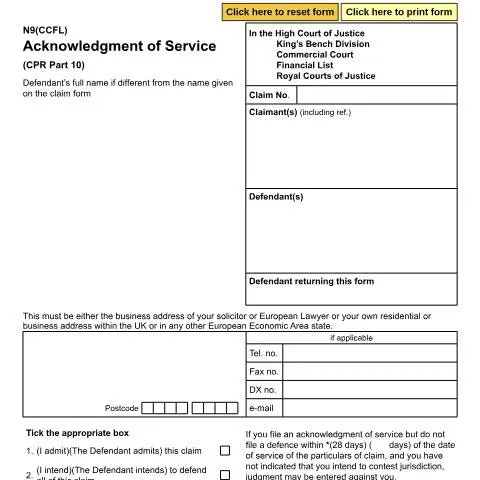
Understanding the Role of the Acknowledgment of Service - Form N9(CCFL)
The Acknowledgment of Service - Commercial Court Financial List: Form N9(CCFL) plays a pivotal role in the litigation process within the UK’s High Court of Justice. When a defendant receives a claim, the clock starts ticking for a response. This form is the first step in acknowledging receipt of this claim, which is crucial for any subsequent actions in court. Without completing this acknowledgment correctly, a defendant might face severe repercussions, such as automatic judgment against them.
Navigating the Complexities of the Commercial Court
In the context of commercial disputes, the Financial List is a specialised division of the King's Bench Division of the High Court, dealing with high-value financial claims. Understanding how Form N9(CCFL fits into this system is essential for defendants. When a claim is issued in this court, it signals the beginning of a potentially lengthy legal battle, making it imperative for defendants to act swiftly and appropriately.
The Importance of Timely Action
Upon receiving the claim, defendants have a limited timeframe to respond. Specifically, they must file an acknowledgment of service within 14 days of receiving the claim form. If the claim form has been served outside the UK, this timeframe extends to 28 days. Failure to meet these deadlines can lead to serious consequences, including entry of judgment against the defendant without a hearing.
Who Is Required to Submit the N9(CCFL)?
The form must be filed by the defendant, which can be an individual, a business entity, or a legal representative acting on behalf of the defendant. It's essential that any party completing the form understands their legal standing and the implications of the claim:
- Individuals: Individuals involved in financial disputes need to understand their rights and responsibilities, including potential defence strategies.
- Companies: Corporations may need to consult legal counsel to respond appropriately, given the complexities involved in business law.
- Legal Representatives: Solicitors or barristers may file the form on behalf of their clients, ensuring that all legal protocols are adhered to.
Diving Deep into the Form: A Step-by-Step Breakdown
Form N9(CCFL) requires specific details that must be completed with accuracy to avoid delays or complications in the legal process. Below is a detailed examination of the key sections of the form:
Defendant's Information
Accurate filling out of personal information is critical. This includes:
- Full Name: Ensure that the name matches the one listed on the claim form, as discrepancies may lead to complications.
- Address: Include a residential address or a business address within the UK or European Economic Area (EEA). A current and accurate postcode is vital for court records and correspondence.
- Contact Information: Telephone number, fax number, and email address, if applicable, should be provided for any necessary communications from the court.
Defendant's Position on the Claim
Defendants must indicate their stance on the claim through a series of checkboxes. The options include:
- Admission of the claim
- Intention to defend the entire claim
- Intention to defend only part of the claim
- Intention to contest the jurisdiction of the court
Each choice carries different legal implications. For instance, if a defendant admits the claim, they may bypass further litigation but must be prepared to comply with any court orders for payment or other remedies.
Consequences of Failing to Respond
A crucial aspect of the N9(CCFL) is the warnings regarding the consequences of inaction:
If the acknowledgment of service is filed but no defence is lodged within the stipulated 28 days from the service of particulars of claim, the court may enter judgment against the defendant. This automatic ruling can be detrimental, particularly in financial disputes where hefty damages may be awarded.
Legal Context and Underpinning Regulations
The procedural rules governing the use of Form N9(CCFL) are found in the Civil Procedure Rules (CPR), particularly Part 10. These regulations are designed to ensure fairness in legal proceedings, providing defendants with a structured way to respond to claims while protecting their legal rights. The rules also outline the necessary steps if a defendant wishes to contest the jurisdiction of the court.
Regulatory Framework
The Data Protection Act 2018 and the UK GDPR impose stringent guidelines regarding the handling of personal data submitted on this form. Defendants must be aware of their rights under these laws, particularly in terms of how their personal information is stored and processed by the courts.
The Timeline of Filing: What to Expect
Understanding the timeline associated with Form N9(CCFL) can greatly aid defendants in managing their responses effectively:
| Action | Timeframe | Notes |
|---|---|---|
| Receive Claim Form | Day 0 | The starting point for all subsequent actions. |
| File Acknowledgment of Service | 14 days (or 28 days if served outside UK) | Essential for preventing automatic judgment. |
| File Defence | 28 days from acknowledgment | Failure to do so may result in judgment by default. |
Methods of Submission: Exploring Your Options
Defendants can submit Form N9(CCFL) through several channels, each with its own considerations:
Online Submission
Submitting the form online is often the quickest method. It allows for immediate acknowledgment by the court, reducing delays in processing. It also provides a digital record of submission.
Paper Submission
Alternatively, defendants may prefer to submit a physical copy of the form. This method requires careful attention to postal timings to ensure deadlines are met. It’s advisable to send the form via recorded delivery to obtain proof of submission.
In-Person Submission
For those who prefer a face-to-face interaction, submitting the form directly at the court can also be an option. This method allows for immediate confirmation that the form has been received but may involve waiting times.
Understanding the Implications of Your Choices
The consequences of the options selected on the N9(CCFL) can have far-reaching impacts. For instance, contesting jurisdiction might lead to additional hearings and costs, while admitting the claim may simplify proceedings but could also limit options for negotiation or appeal later on.
Seeking Legal Advice
Given the complexities inherent in the claims process, defendants should seriously consider seeking legal advice. A qualified solicitor can provide invaluable guidance, ensuring that all elements of Form N9(CCFL) are filled in correctly and that the defendant's interests are adequately protected.
Final Reminders for Defendants
Completing Form N9(CCFL) is not merely a bureaucratic step; it’s a critical action that can determine the outcome of a dispute. Effective management of the timelines, an accurate understanding of the form’s requirements, and the potential consequences of actions taken can influence the trajectory of legal proceedings dramatically.
Before filing, double-check all entries. An incorrectly filled form can lead to unnecessary legal complications. Remember, the stakes are high, and timely, accurate responses are crucial in maintaining one’s legal standing in any financial dispute.
For further details, defendants can access resources provided by the HM Courts & Tribunals Service or seek the assistance of legal professionals to navigate the complexities of their specific cases.
Understanding Form N9(CCFL): Key Components and Required Information
Form N9(CCFL) serves as an essential document within the context of the UK’s Commercial Court Financial List. Upon receipt of a claim form, it is crucial for defendants to understand the various components of this form to ensure a proper acknowledgment of service. The form is divided into several sections, each designed to collect specific information.
The first section generally requires the defendant’s full name, address, and, if applicable, the business name. This information is fundamental as it verifies the identity of the defendant and establishes a clear record. In cases where defendants are individuals, it’s essential to use their full legal names rather than nicknames or abbreviations. For businesses, the registered name must align with the particulars held by Companies House.
Fill in your form directly online
No printing: type your details into the boxes of the official form, tick, then download the PDF ready to send.
- 1Type into the form boxes
- 2Tick in one click
- 3Save and download the PDF
Next, the form asks about the details of the claim. This includes the claim number, which is vital for tracking the proceedings. Defendants must ensure this number is accurate to prevent administrative mishaps. Additionally, the form will prompt for a brief summary of the nature of the claim. Although this is typically not the primary focus, providing a concise overview can assist in setting the context for the response to the claim.
Furthermore, defendants will need to indicate their preferred method of responding to the claim, whether that be via the particulars of claim, counterclaim, or simply issuing a defence. Understanding the options available on the form can significantly impact the defendant's legal strategy. It's also essential for defendants to pay attention to the deadlines associated with each response method; failing to respond in a timely manner can lead to default judgments in favour of the claimant.
Steps to Complete and Submit Form N9(CCFL)
Completing and submitting Form N9(CCFL) may appear straightforward, yet adherence to certain steps can ensure compliance with the court's requirements and avoid unnecessary complications.
First, it’s critical to obtain the correct version of the form. Forms can sometimes be updated, so always ensure you are using the most current edition available from the HM Courts & Tribunals Service website. After downloading the form, carefully read through the instructions provided, as they contain valuable information on how to fill out the form correctly.
When filling out the form, accuracy is paramount. Take your time to enter the required information, and double-check for typographical errors. In many cases, even a small mistake can lead to delays or issues with your acknowledgment. If you’re submitting the form on behalf of a company, ensure that someone with the authority to act on behalf of the company is signing it.
Once completed, the form must be submitted to the court where the claim originated. This is usually done via post or, depending on the court's facilities, may also be submitted electronically. Ensure that you keep copies of the submitted form for your records. It’s also advisable to send the form via a method that provides proof of delivery, such as recorded delivery. This will protect you in the event of any disputes regarding whether or not the court received your acknowledgment.
Lastly, once you have submitted the form, it is wise to monitor the progress of your case. You can do this by contacting the court directly or checking any available online systems. Remaining proactive can ensure that you respond promptly to any further communications or requirements from the court.
Consequences of Failing to Submit Form N9(CCFL)
Individuals and businesses must understand that failing to submit Form N9(CCFL) can lead to significant legal repercussions. One of the most immediate consequences is that the claimant may request a default judgment against the defendant. This means the court may automatically rule in favour of the claimant, as the defendant failed to respond within the mandated time frame.
In addition to the risk of a default judgment, failing to submit the form can also complicate the defendant's legal standing. If a defendant wishes to contest the claim, not filing the acknowledgment can restrict their ability to present a full defence later on. Courts often view these situations unfavorably, and it may limit the options available for appealing or challenging the claim.
Moreover, the failure to acknowledge service of a claim can result in increased costs. If the claimant has to pursue the case without the defendant’s input, they may incur additional fees, which could ultimately be passed onto the defendant if the court rules in favour of the claimant. This could include costs for legal representation during any default hearings.
In summary, the ramifications of neglecting to submit Form N9(CCFL) can extend beyond a simple acknowledgment. It is crucial for defendants to act promptly and responsibly in relation to any claims made against them to protect their rights and interests within the judicial process.