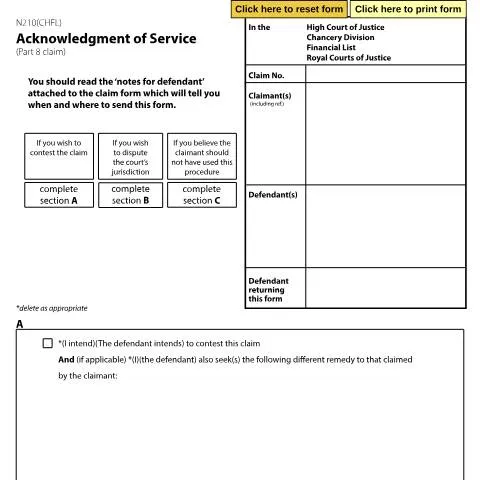
Understanding the Role of Form N210(CHFL) in Financial Disputes
The Acknowledgment of Service - Chancery Division Financial List: Form N210(CHFL) serves as a pivotal document within the UK legal framework, especially in financial disputes filed under Part 8 of the Civil Procedure Rules (CPR). When a defendant receives a claim form, they must respond appropriately, with the N210(CHFL) being the mechanism to formally acknowledge service of the claim. This form signals the defendant's intent to engage with the court process, which is crucial for ensuring that procedural timelines are adhered to.
Typically, the N210(CHFL) is submitted to the HM Courts & Tribunals Service (HMCTS) within a specific timeframe. It is essential for defendants to grasp the implications of submitting this form, as it delineates their position regarding the claim and can significantly influence the judicial proceedings that follow.
Who Needs to Complete the N210(CHFL)?
This form is primarily required for defendants in financial disputes under the Chancery Division. If you are a defendant facing a claim initiated by a claimant, it is imperative to complete this document. Defendants might include individuals, corporations, or other entities that are involved in financial transactions that have led to a legal dispute. Notably, anyone in a position to contest the claim or dispute the jurisdiction of the court needs to engage with Form N210(CHFL).
For instance, if a company is being sued for breach of contract in a financial matter, the registered representative or legal counsel for that company must ensure that the form is filled in accurately and returned in accordance with the stipulated guidelines.
Specific Cases for Consideration
- Individuals receiving a claim for debts owed, who may wish to contest the amount or the validity of the claim.
- Companies facing claims regarding financial obligations, where they might dispute liability or jurisdiction.
- International entities involved in a dispute within the UK jurisdiction, requiring careful attention to the procedural nuances of the N210(CHFL).
Steps to Complete the N210(CHFL)
Completing the N210(CHFL) involves several critical steps that defendants must follow carefully to ensure compliance with court requirements. The process begins once the defendant has received the claim form. The following outlines the necessary actions:
1. Review Provided Information
Upon receiving the claim form, it is imperative to read the accompanying 'notes for defendant.' These notes provide detailed guidance on how to fill out the N210(CHFL) correctly and outline the deadlines for submission, typically within 14 days from the date of service.
2. Determine Your Position
Defendants must consider their stance on the claim. The N210(CHFL) requires them to select one of the sections:
- Section A: If you intend to contest the claim, this section must be filled out.
- Section B: Use this section if you wish to dispute the court's jurisdiction.
- Section C: If you believe the claimant should not have initiated the case under the current procedure, outline your reasons here.
3. Provide Necessary Details
Fill in the relevant sections of the form, ensuring that all information provided is accurate. This includes:
- Your name and address, including the postcode.
- The claim number, which is critical for the court's processing.
- Contact details, such as a telephone number and email address, for communication purposes.
It's advisable to keep a copy of the completed form for your records.
Where and How to Submit the N210(CHFL)
Once the N210(CHFL) is completed, defendants have several options for submission. Understanding the relevant channels can enhance the efficiency of the process.
1. Submission by Post
Mailing the completed form to the appropriate court is a common method. The address for the court managing the case is typically provided on the claim form. Ensure to use recorded delivery for tracking purposes.
2. In-Person Submission
Defendants can also choose to submit the form in person at the court. The Admiralty and Commercial Registry at The Rolls Building, London, is open during business hours, making it accessible for filing documents directly with court staff.
3. Electronic Submission
In certain situations, electronic submission may be acceptable. It’s advisable to check with HMCTS or consult legal counsel for any guidelines regarding e-filing procedures.
Keep Track of Your Submission
After submitting the N210(CHFL), monitoring the status of your acknowledgment is crucial. Defendants can achieve this through several means:
1. Court Communication
Following submission, defendants should expect a response from the court regarding the acknowledgment of service. Any correspondence, including notifications of hearings or further actions required, will be sent to the address provided on the form. It’s essential to maintain up-to-date contact information to avoid missing critical court communications.
2. Online Case Tracking
Some courts provide online services that allow defendants to track their cases. By entering the claim number, individuals can view updates related to their case status and forthcoming dates.
What Happens After Submission?
Once the N210(CHFL) has been submitted and acknowledged by the court, several procedural steps follow depending on the stance taken by the defendant. Understanding these steps is vital for navigating the legal process effectively.
1. If Contesting the Claim (Section A)
Should a defendant choose to contest the claim, they will need to prepare for a potential court hearing. This may involve gathering evidence, engaging legal representation, and preparing a defence against the allegations made in the claim.
2. If Disputing Jurisdiction (Section B)
If jurisdiction is contested, the defendant must file a separate application within 28 days of submitting the N210(CHFL). This application will set forth reasons for disputing the court's jurisdiction, which the court will then consider before proceeding with the case.
3. If Objecting to the Procedure (Section C)
For those who object to the procedural grounds on which the claim was filed, it is essential to articulate clear reasons for this objection on the N210(CHFL). The court will assess these objections and determine the validity of the claim under the current procedural rules.
Handling Complex Situations with Form N210(CHFL)
Certain scenarios may complicate the process surrounding Form N210(CHFL). Understanding these complexities ensures that defendants are adequately prepared to handle unique circumstances.
1. International Defendants
For defendants not residing in the UK, special considerations apply. They must ensure that they comply with international service regulations, which may necessitate legal assistance to navigate the complexities of jurisdiction and international law.
2. Minors or Incompetent Parties
In cases where the defendant is a minor or lacks capacity, a legal representative must act on their behalf. The representative would be responsible for completing and submitting the N210(CHFL) in accordance with the legal requirements applicable to vulnerable parties.
3. Urgent Cases
In situations requiring urgent attention, defendants must prioritize the timely completion and submission of the form within applicable deadlines. For urgent hearings, specific protocols might need to be followed, and legal advice is often recommended to expedite the process.
Distinguishing N210(CHFL) from Other Forms
It's essential to differentiate Form N210(CHFL) from other court forms to avoid confusion and ensure accurate filing. Below is a comparative overview of how this form aligns with or differs from similar documents:
| Form | Purpose | Used By | Filing Deadline |
|---|---|---|---|
| N210(CHFL) | Acknowledgment of service in Part 8 claims | Defendants in financial disputes | 14 days from service |
| N244 | Application Notice for varying a court order | Any party seeking a change to a court order | As soon as possible |
| N1 | Claim Form for initiating a claim | Claimants wishing to start legal action | Not applicable |
| N11M | Application Notice for a money judgment | Claimants seeking a judgment on debts | As soon as possible |
This table highlights the unique aspects of Form N210(CHFL) in contrast to other relevant forms, further emphasizing its specificity within the Chancery Division.
Fill in your form directly online
No printing: type your details into the boxes of the official form, tick, then download the PDF ready to send.
- 1Type into the form boxes
- 2Tick in one click
- 3Save and download the PDF
Conclusion: The Path Forward After Acknowledgment
Successfully navigating the process surrounding Form N210(CHFL) represents a crucial step in the legal journey for defendants in financial disputes. By understanding the form's role, the completion process, submission methods, and the significance of monitoring the case, defendants can effectively advocate for their positions in court.
As such, whether contesting a claim or disputing jurisdiction, being well-informed and prepared is key to achieving a favorable outcome in the subsequent legal proceedings. Legal counsel can provide invaluable support throughout this process, especially in complex cases, ensuring that defendants are not only compliant with regulations but also strategically positioned to address the claims against them.
Understanding the Chancery Division Financial List
The Chancery Division of the High Court deals primarily with matters related to equity, trusts, and commercial law, particularly those involving financial disputes. The Financial List within this division was established to handle claims involving complex financial issues, where the parties involved are often large corporations or financial institutions. This specialized list aims to provide quicker resolutions to matters that could otherwise become drawn out in the general court system.
When filing a claim under the Financial List, it is crucial to understand the types of cases typically heard. These can involve disputes regarding company shares, insolvency proceedings, or breaches of fiduciary duty involving financial instruments. Having a clear understanding of these matters ensures that claimants can adequately prepare their documentation and present a compelling case.
Additionally, the Financial List has its own set of procedures and rules, which can differ from standard court procedures. For instance, the disclosure of documents may be more stringent, and there is often a greater emphasis on case management hearings. Therefore, engaging with professionals who specialize in Chancery matters is advisable to navigate these intricacies effectively.
Steps to File Using Form N210(CHFL)
Filing an Acknowledgment of Service using Form N210(CHFL) is a pivotal step in the litigation process within the Financial List. The process begins once you receive the claim form and particulars of the claim. Here’s a step-by-step guide on how to proceed:
- Review the Claim: Carefully examine the claim details provided in the initial documents. Understanding the nature of the claim will enable you to prepare a robust acknowledgment.
- Complete Form N210(CHFL): Fill out the form accurately. Ensure that you include all relevant information, such as your contact details, the details of the claim, and the court in which the claim is filed. Pay attention to the deadlines; typically, you have 14 days from the date you were served to file your acknowledgment.
- Serve the Acknowledgment: Once the form is completed, you must serve it to both the court and the claimant. This can typically be done via post or, if allowed, electronically. Ensure you retain proof of postage or delivery.
- Consider Your Next Steps: After filing your acknowledgment, you must decide whether to contest the claim, seek to negotiate a resolution, or prepare for a court hearing. It is important to consult legal representation, especially given the complexities of financial disputes.
Moreover, be mindful that if you fail to respond within the stipulated time frame, the claimant may seek a default judgment against you, which could have serious implications for your financial position or business operations.
Implications of Non-Compliance with Acknowledgment of Service
Failing to submit the Acknowledgment of Service using Form N210(CHFL) carries significant consequences, particularly within the context of the Financial List. The implications of non-compliance can range from procedural penalties to significant financial repercussions.
One of the primary risks associated with non-compliance is the potential for a default judgment to be entered against you. This judgment can be particularly detrimental, as it may result in an immediate liability without the opportunity to present your case. This is especially critical in financial disputes, where the amounts at stake can be substantial.
Additionally, missing the filing deadline can lead to increased legal costs. If the case proceeds without your input, you may incur higher expenses as legal representation might become necessary to respond to a judgment or pursue an appeal.
Moreover, non-compliance may impact your relationship with the other party involved in the dispute. In financial matters, maintaining a professional rapport can be essential, particularly if there are opportunities for negotiation or alternative dispute resolution. A failure to comply with court rules may also signal to the other party that you are unprepared or unwilling to engage in constructive dialogue.
Lastly, repeated non-compliance could lead to more severe sanctions from the court. In extreme cases, this could involve the dismissal of your claims or the imposition of fines. To mitigate these risks, it is advised to maintain open lines of communication with the court and promptly address any issues that may arise in the process.