Understanding the Acknowledgment of Service: A Deep Dive into Form N213(CHFL)
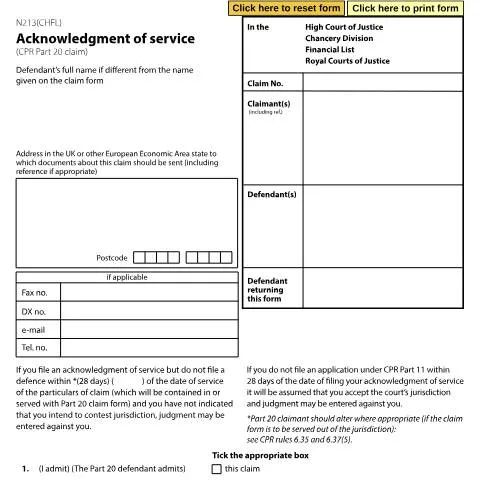
When a claim is initiated in the Chancery Division’s Financial List, the defendant receives a formal notification, compelling them to respond within a specified time frame. The Acknowledgment of Service – Form N213(CHFL) is pivotal in this process. It is not merely a document but a critical procedural step that dictates the course of legal proceedings. Defendants must navigate this form with care to avoid adverse judgments.
Who is Required to Submit Form N213(CHFL)?
The requirement to submit Form N213(CHFL) spans a variety of scenarios involving financial claims. Primarily, it concerns defendants who are served with a Part 20 claim in the High Court of Justice. Individuals and entities alike find themselves in this situation, necessitating an understanding of their obligations and options upon receipt of this form.
Profiles of Users: Individuals vs Corporations
- Individuals: Typically, these are private persons who might be involved in disputes over financial obligations, property claims, or similar issues.
- Corporations: Businesses facing claims such as contractual disputes or financial liabilities must also complete this form, often through legal representatives.
- Exceptions: Certain cases may involve foreign entities or complex partnerships where additional considerations apply.
The Unique Role of Form N213(CHFL) in Legal Proceedings
Form N213(CHFL) stands apart from other forms often used in the court system. For instance, while some forms pertain to general responses to claims, this particular acknowledgment is expressly tailored for claims brought under Part 20 of the Civil Procedure Rules (CPR).
Differentiation from Related Forms
- Form N9: This is the basic acknowledgment form for general claims, whereas N213(CHFL) specifically addresses financial claims in the Chancery Division.
- Form N244: Used for applications to the court, this form serves a different purpose than merely acknowledging service.
- Part 20 Claims: Understanding the nature of a Part 20 claim is essential, as it introduces third parties or relates to counterclaims.
Completing the Form: A Step-by-Step Guide
Accurate completion of Form N213(CHFL) is vital, as mistakes can lead to default judgments. Here’s a comprehensive breakdown of what to include:
Essential Sections of N213(CHFL)
- Claim Information: Include the claim number and names of the claimant(s) and defendant(s). Ensure that the defendant’s full name is clearly provided.
- Response Options: Tick the relevant box indicating whether you admit the claim, intend to defend it, or contest jurisdiction.
- Contact Information: Provide a valid address within the UK or another European Economic Area country for correspondence.
- Date of Birth: This is required to confirm identity, especially for personal defendants.
Each section must be filled out thoughtfully to ensure the court has all relevant information.
Submission Channels for Form N213(CHFL)
Form N213(CHFL) can be submitted via various channels, each with its distinct implications. Understanding these options is crucial for compliance and timely processing.
Available Submission Methods
| Method | Description | Pros & Cons |
|---|---|---|
| Online | Submission through the court's online services. | Pros: Quick and efficient. Cons: Requires setting up an online account. |
| By Post | Mailing the completed form to the court. | Pros: Accessible and can be submitted without technology. Cons: Potential delays in mail delivery. |
| In Person | Hand-delivering the form to the court office. | Pros: Immediate confirmation of receipt. Cons: Requires travel to the court. |
Selecting the appropriate method depends on individual circumstances, including proximity to the court and technological proficiency.
Complex Cases: Handling Unique Situations
There are instances where filling out Form N213(CHFL) may involve additional complexities. These can include situations involving minors, international defendants, or urgent claims.
Special Considerations
- Minors: If the defendant is under 18, a legal guardian must act on their behalf, including submitting the form.
- International Defendants: Those living outside the UK must ensure they are compliant with jurisdictional requirements.
- Urgency: In cases where timing is critical, defendants may need to seek expedited processing through the court.
Documentation and Justification: Preparing for Submission
Before submitting Form N213(CHFL), it is imperative to gather all necessary documentation that may support your claims or defenses. While the form itself requires specific information, related documentation can strengthen your position.
Types of Supporting Documents
- Evidence: Copies of relevant contracts, financial statements, or communication may be needed.
- Identification: Proof of identity for individuals, such as a passport or driving licence, is often required.
- Legal Representation Documents: If represented, documents confirming the authority of your solicitor or representative are necessary.
Compiling these documents ahead of time can streamline the process and mitigate potential issues.
Tracking Your Submission: Follow-Up Procedures
After submitting Form N213(CHFL), understanding how to track your case is essential. The court’s processing timeline can vary, and being proactive can prevent unnecessary complications.
Monitoring Your Case Status
- Initial Confirmation: Post-submission, you should receive acknowledgment from the court, either digitally or by mail.
- Regular Inquiries: For any updates, you can contact the court manager at The Rolls Building, specifying your claim number.
- Preparing for Next Steps: Familiarize yourself with the timeline for filing a defense to ensure you are prepared for potential follow-up actions.
The Consequences of Inaction
Failing to submit Form N213(CHFL) or not meeting the associated deadlines can lead to severe repercussions in legal proceedings. Understanding these consequences is essential for defendants.
Default Judgments and Court Assumptions
- Default Judgment: If you do not file a defense within 28 days, a judgment may be entered against you.
- Acceptance of Jurisdiction: Not filing an application under CPR Part 11 within the stipulated timeframe suggests acceptance of the court’s jurisdiction, leading to unfavorable outcomes.
Defendants must take Form N213(CHFL) seriously, as the manner in which it is filled out and submitted can significantly influence the trajectory of their legal case. Proactive engagement, accurate documentation, and understanding the implications of their responses are essential for navigating the legal landscape successfully.
Understanding the Acknowledgment of Service Procedure
The Acknowledgment of Service (AoS) is a critical step in the legal process when engaging with the Chancery Division's Financial List. Essentially, it is a formal admission by the defendant that they have received the claim against them and are prepared to respond. This process is crucial because it sets the timeline for the subsequent steps in litigation. The AoS must be filed using Form N213(CHFL) and should be completed carefully to ensure compliance with the rules set out by HM Courts & Tribunals Service.
When filling out the form, the defendant must indicate whether they intend to contest the claim, whether they are seeking to negotiate a settlement, or if they wish to admit liability. The choice made can profoundly influence how the proceedings progress. If a defendant fails to respond appropriately within the specified timeframe, they risk a default judgment, which could lead to severe financial consequences.
It’s important for defendants to be aware that the AoS should ideally be filed within 14 days of receiving the claim form. If a defendant requires additional time to prepare their response, they can apply for an extension of this deadline, but this application needs to be substantiated with a valid reason and is at the discretion of the court. Failure to comply may result in the court assuming that the defendant does not wish to contest the claim, leading to potential adverse outcomes.
Fill in your form directly online
No printing: type your details into the boxes of the official form, tick, then download the PDF ready to send.
- 1Type into the form boxes
- 2Tick in one click
- 3Save and download the PDF
Potential Consequences of Failing to File the Acknowledgment of Service
Understanding the implications of failing to file an Acknowledgment of Service is essential for any defendant involved in proceedings within the Financial List of the Chancery Division. The consequences can be significant. If a defendant neglects to file Form N213(CHFL) within the stipulated 14-day period, they may face what is known as a default judgment. This judgment is issued without the defendant's input, meaning they lose the opportunity to present their case or contest the claims made against them.
Additionally, a default judgment can lead to enforcement actions taken by the claimant, including but not limited to wage garnishment, property liens, or other measures to recover the owed amount. Furthermore, it can severely damage the defendant's credit rating and create a lasting negative impact on their financial standing.
For those who believe they might miss the deadline, it is advisable to seek legal advice immediately. Consulting with solicitors who specialize in Chancery matters can provide clarity on the next steps and potential strategies to mitigate the risks associated with a default judgment. In some cases, defendants may be able to apply for a set-aside of a default judgment, but this is also at the court's discretion and typically requires compelling reasons.
Common Mistakes When Completing Form N213(CHFL)
Filling out Form N213(CHFL) is a straightforward process, yet many defendants make simple errors that can lead to complications in their case. Some of the most common mistakes include providing inaccurate information, such as incorrect names or addresses, failing to sign and date the form, or not responding to every question thoroughly. Each detail matters in legal proceedings, and inaccuracies can delay the case or lead to unnecessary legal challenges.
Another frequent mistake is misunderstanding the language of the form. Legal terminology can be complex, and if defendants are unsure about what a term means, they may either misinterpret the question or provide an inadequate response. It is highly advisable to seek legal assistance when completing the form to ensure that all aspects are addressed correctly. Additionally, some may neglect to keep a copy of the submitted form for their records, which can be useful should any disputes arise later on.
Timing is also critical; submitting the form too close to the 14-day deadline can lead to administrative issues. It is prudent to submit the AoS as early as possible, allowing for any potential errors to be corrected and ensuring that the court has ample time to process the filing without complications. By being mindful of these common pitfalls, defendants can better position themselves within the legal framework of the Chancery Division's Financial List.