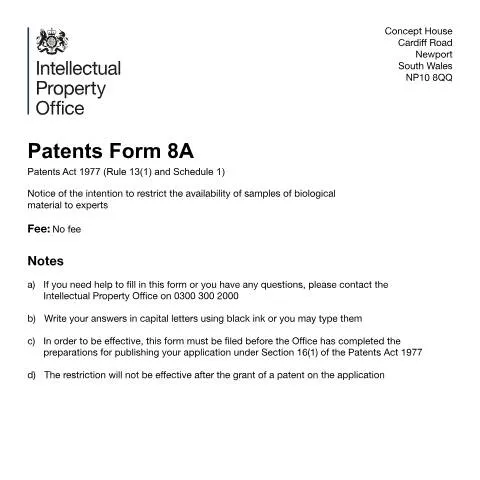
Understanding the Implications of the Notice of Intention to Restrict Samples of Biological Material
The Notice of Intention to Restrict Samples of Biological Material is an essential document for inventors and applicants within the field of biotechnology and pharmaceuticals. As the landscape of intellectual property (IP) evolves, this notice serves as a tool to safeguard sensitive biological materials and restrict their access to qualified experts. In a world where innovation is paramount, understanding how to navigate this notice is crucial for ensuring that your intellectual property remains protected while complying with legal requirements.
Connecting the Dots: The Role of the Notice within the Patent Application Process
This notice acts as a preliminary step for applicants who wish to limit public access to their biological samples. It’s particularly relevant during the patent application process outlined in the Patents Act 1977. A firm grasp of how this notice integrates with other documents can streamline your application and effectively manage the confidentiality of your biological materials.
Key Interactions with Related Documentation
- Patent Application Number: This notice must reference your patent application number, connecting it directly to your overall patent strategy.
- Schedule 1 of the Patents Rules 2007: The notice ties into specific provisions in this schedule that outline the conditions under which biological materials can be restricted.
- Communication with the Intellectual Property Office (IPO): Proper use of this notice allows clearer communication with the IPO, as they prepare to publish your application.
Therefore, understanding the interdependencies between this notice and other procedural documents can provide clarity and efficiency to the patent application process.
Step-by-Step Guide to Utilizing the Notice
Using the Notice of Intention to Restrict Samples of Biological Material appropriately requires an understanding of its structure and intention. Here’s a step-by-step guide to ensure you leverage this document effectively:
- Identify Your Biological Material: Clearly define the biological samples you wish to restrict. Understanding their value and implications is vital.
- Gather Required Details: Collect the necessary information, including your patent application number and details about the depositary institution holding the biological material.
- Prepare Your Notice: Complete the form following the instructions. Ensure all information is accurate, especially the contact details of the individual completing the notice.
- File Before Publication: It is essential to file this notice before the IPO publishes your application under Section 16(1) of the Patents Act 1977.
- Confirm Restrictions: The restriction is effective only before the grant of your patent, so timely filing is crucial.
By following these steps, you can navigate the complexities surrounding the restriction of biological materials effectively and ensure the confidentiality of your innovations.
Common Misinterpretations and Pitfalls
While the Notice is a straightforward document, misinterpretations can lead to significant issues in protecting your biological samples. Understanding potential pitfalls can assist applicants in avoiding unnecessary complications.
Misinterpretations to Avoid
- Assuming Automatic Protection: Filing the notice does not automatically guarantee that samples will remain confidential post-patent grant. It merely restricts access during application processing.
- Neglecting Communication: Failing to keep clear lines of communication with the IPO can lead to misunderstandings about the status of your application and restrictions.
- Incomplete Forms: Any inaccuracies or omissions in the information provided may result in delays or rejections, so meticulous attention to detail is crucial.
By being aware of these potential missteps, applicants can enhance their chances of successful patent protection and restrict access to their biological materials as intended.
Target Audience: Who Should Utilize This Notice?
This notice serves a wide range of stakeholders within biotechnology, academia, and pharmaceutical industries. Understanding who benefits most from this document can help tailor its usage effectively.
Key Stakeholders
- Researchers and Academics: Those involved in creating novel biological samples and seeking patent protection for their work.
- Biotechnology Firms: Companies developing proprietary biological materials that require confidentiality during the patent application process.
- Inventors: Individuals holding unique biological innovations that necessitate expert access restrictions.
- Legal Professionals: IP attorneys guiding clients through the complexities of patent applications associated with biological materials.
By identifying the target audience, the document enables focused protection strategies and compliance efforts that suit specific needs in the innovation landscape.
Scope and Limitations of the Notice
Understanding what the Notice of Intention to Restrict Samples of Biological Material covers—and what it does not—is vital for effective usage. This section breaks down the scope and limitations to provide clarity on its operational boundaries.
What the Notice Covers
- Expert Access: The notice ensures that only qualified experts can access the restricted biological materials, preserving their integrity during the patent application process.
- Formal Filing Process: It provides a structured methodology to formally restrict availability, which can be crucial for sensitive innovations.
- Pre-Publication Protection: The notice safeguards your intellectual property before the IPO publishes your patent application, minimizing risk of exposure.
Limitations of the Notice
- Post-Grant Effectiveness: Once a patent is granted, the restrictions become void. Therefore, the timing of filing is critical to ensuring protection.
- Not a Guarantee of Confidentiality: While the notice restricts access during the application phase, it does not prevent future disclosures that might occur through other means.
- Dependent on Accurate Information: Inaccuracies can lead to the ineffectiveness of restrictions, highlighting the need for thorough completion of the notice form.
By comprehending both the scope and limitations, applicants can utilize the notice to its fullest potential while remaining aware of the risks involved.
Practical Considerations: Beyond the Notice
Engaging with the Notice of Intention to Restrict Samples of Biological Material is only one piece of a larger puzzle in the IP landscape. Taking a broader view can help you strategically plan your intellectual property journey.
Integrating with Broader IP Strategies
- Comprehensive IP Management: Incorporating this notice into a larger strategy that includes trademarks, copyrights, and patents ensures holistic protection.
- Regular Updates and Monitoring: Continually monitor the status of your applications and potential external factors affecting your materials.
- Consultation with IP Experts: Regular consultation with legal advisors can provide insights that enhance your use of the notice and overall strategy.
By embedding this notice within a comprehensive intellectual property management plan, you can better secure your innovations and ensure that you maintain control over sensitive biological materials.
Future Considerations: The Evolution of Biological Material Protection
As technology advances and biological research progresses, it is crucial to consider the evolving landscape of intellectual property rights concerning biological materials. Anticipating future changes can prepare applicants for shifts in regulations and best practices.
Emerging Trends in Biological Material Protection
- Increased Focus on Open Science: As the push for open data grows, applicants must navigate the balance between sharing information and protecting their intellectual property.
- Regulatory Changes: Keeping abreast of potential changes in the law regarding biological materials will be essential for ongoing compliance and protection.
- Global Perspectives: Awareness of international IP laws relating to biological materials can enhance strategic planning for global applications.
Being proactive in understanding these trends can offer a competitive edge, ensuring that applicants can adapt to future challenges while effectively managing their biological materials.
The Notice of Intention to Restrict Samples of Biological Material is far more than a procedural document; it is a vital tool for preserving the integrity of your innovations. By comprehensively understanding its application, implications, and integration into broader strategies, stakeholders can navigate the complexities of patent law and protect their intellectual property effectively.
Understanding the Process for Submitting a Notice of Intention
When intending to restrict samples of biological material, it is crucial to understand the procedural framework within which you are operating. This includes identifying the necessary documentation and ensuring compliance with the regulations set forth by the relevant authorities, such as the UK Environment Agency and the Health Research Authority (HRA).
The first step in this process is to draft a comprehensive Notice of Intention (NOI). This document must clearly outline the specific biological materials intended for restriction, the reasons for such restrictions (which could range from ethical considerations to public health concerns), and any anticipated impacts on research and development. It's important to detail the intended usage of the samples, including any potential benefits or drawbacks to the scientific community and the general public.
Moreover, before submission, you should consider whether a consultation with stakeholders is necessary. Engaging with parties who may be affected, including researchers and patient advocacy groups, can provide valuable insights and foster a collaborative environment. The NOI should then be submitted to the relevant regulatory body, ensuring that it adheres to all specified formats and protocols. It’s advisable to maintain a copy of this submission for your records, as it may be referenced during any follow-up discussions or evaluations.
Once the NOI is submitted, the waiting period for feedback can vary. Be prepared to address any queries or additional requirements from the regulatory authority. This may include providing further data or clarifications on the rationale behind the restrictions. Keeping open lines of communication during this phase is essential for a smooth review process.
The Role of Ethical Review Boards in the Restriction Process
Ethical Review Boards (ERBs) play a pivotal role in the oversight of research involving biological materials, particularly in cases where restrictions are proposed. When submitting a Notice of Intention, it is often mandatory to receive approval from an ERB, especially if the biological materials in question involve human samples. The role of these boards is to ensure that research complies with ethical standards and protects the rights and welfare of participants.
In preparing for an ethical review, it is beneficial to compile comprehensive documentation that includes the rationale for restricting the samples, the potential risks involved, and clearly defined protocols for handling, processing, and utilizing the biological material. This documentation should also explain how the restrictions align with broader ethical standards in research and public interest.
Once the ERB receives your submission, they will assess it based on criteria such as the significance of the research, the necessity of the restrictions, and the safeguards in place to protect participant interests. If the board deems the restrictions appropriate, they will provide formal approval, which must accompany your NOI. Be aware that the review process can take time, depending on the complexity of the case and the board's meeting schedule. Maintaining open communication with the ERB can facilitate a more expedited review.
Additionally, upon receiving feedback from the ERB, it's crucial to address any concerns raised promptly. This may involve revising your methodology or providing further justification for the restrictions. Engaging in constructive dialogue with the board can contribute to a more favorable outcome.
Implications of Non-Compliance with Restriction Guidelines
Failure to adhere to the guidelines when submitting a Notice of Intention to restrict biological material can have serious consequences, not only for the individual or organization involved but also for broader public health and safety. Non-compliance may lead to legal repercussions, including fines or restrictions on future research activities. Additionally, any unauthorized use of biological samples could result in the loss of public trust in research entities and hinder future funding opportunities.
It is essential to understand the ramifications of non-compliance, particularly as it relates to the Data Protection Act 2018 and UK GDPR, which govern the handling of personal and sensitive data. Breaching these regulations can lead to investigations by the Information Commissioner's Office (ICO) and potential sanctions, including financial penalties or reputational damage.
Moreover, if the restriction of biological materials is not handled appropriately, it could stifle innovation in scientific research and public health initiatives. Researchers depend on access to various biological samples to advance their studies, and unnecessary restrictions can hinder progress in important areas such as disease prevention, treatment, and understanding genetic conditions.
To mitigate the risks associated with non-compliance, it is advisable to establish internal protocols that ensure all team members understand the regulatory requirements and ethical guidelines governing the use of biological materials. Regular training sessions and updated resource materials can aid in maintaining compliance and cultivating a culture of ethical research practices.