When Immigration Victory Becomes a Strategic Crossroads
The moment you receive notice that the Home Office has granted you leave to enter or remain in the UK should be cause for celebration. Yet for some applicants, this apparent victory creates an unexpected dilemma. Having previously lodged an appeal on specific grounds—whether relating to refugee protection or race discrimination—you now face a crucial decision: accept the granted status and move forward, or continue pursuing your original appeal to secure recognition on the precise grounds you initially claimed.
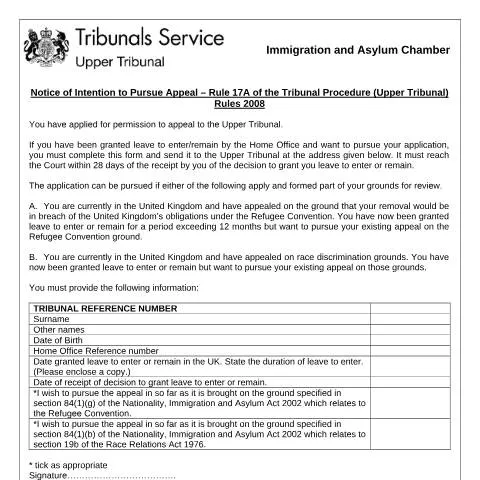
The Notice of Intention to Pursue Appeal under Rule 17A exists precisely for these complex scenarios. This document serves as your formal declaration that despite receiving permission to stay, you wish to continue your Upper Tribunal appeal on specific statutory grounds. The decision carries significant implications for your long-term status, future applications, and legal standing in the UK.
Understanding when and how to use this notice requires careful consideration of both the immediate benefits of your granted leave and the potential advantages of pursuing your original grounds of appeal to their conclusion.
The Two Statutory Pathways That Trigger This Process
Not every immigration appeal can be pursued following a grant of leave. The notice applies exclusively to two specific scenarios, each grounded in distinct areas of UK immigration and anti-discrimination law.
Refugee Convention Appeals Under Section 84(1)(g)
The first pathway concerns appeals based on the Refugee Convention ground under section 84(1)(g) of the Nationality, Immigration and Asylum Act 2002. This applies when you initially appealed on the basis that your removal from the UK would breach the country's obligations under the 1951 Refugee Convention.
Consider this scenario: you applied for asylum, were refused, and appealed arguing that return to your country of origin would expose you to persecution. During the appeal process, the Home Office grants you leave to remain for 18 months on different grounds—perhaps under the family or private life provisions of Article 8 ECHR. While this resolves your immediate immigration status, it doesn't provide the recognition as a refugee that your original claim sought.
Pursuing the Refugee Convention ground to conclusion can establish important precedents for future applications and provide clearer protection against removal. The granted leave must exceed 12 months for this pathway to apply, reflecting the legislation's recognition that substantial periods of leave merit consideration alongside ongoing appeals.
Race Discrimination Appeals Under Section 84(1)(b)
The second pathway addresses appeals brought under section 84(1)(b), which relates to race discrimination provisions formerly contained in section 19b of the Race Relations Act 1976. These appeals argue that the immigration decision itself was tainted by racial discrimination.
Unlike refugee appeals, race discrimination cases don't require the granted leave to exceed any specific duration. The rationale differs fundamentally: while refugee status concerns future protection needs, race discrimination appeals address the process by which decisions were made. A finding of discrimination could have implications beyond the individual case, potentially affecting Home Office decision-making procedures and providing important legal precedents.
Navigating the Critical 28-Day Window
The most unforgiving aspect of this process is the strict 28-day deadline that begins running from your receipt of the decision granting leave to enter or remain. This timeframe is calculated from when you actually receive the decision, not when it was made or posted.
The Upper Tribunal interprets this deadline strictly. Unlike some immigration procedures where delays might be excused due to exceptional circumstances, the 28-day limit for submitting your notice reflects the tribunal's need to manage cases efficiently while balancing your right to pursue legitimate grounds of appeal.
| Timeline Stage | Key Consideration | Action Required |
|---|---|---|
| Day 1-7 | Assess strategic value of continuing appeal | Review original grounds and new grant conditions |
| Day 8-21 | Gather required documentation | Obtain copy of leave decision, locate tribunal reference |
| Day 22-28 | Submit notice to Upper Tribunal | Send completed form to Leicester address |
Calculating the 28-day period requires careful attention to when you actually received the Home Office decision. If the decision was posted to you, the date of receipt typically falls within 1-2 working days of posting for standard UK addresses. However, if you've recently moved or if postal delays occur, you must be able to demonstrate the actual receipt date.
Strategic Considerations Behind the Decision to Continue
The choice to pursue an appeal after receiving leave involves balancing immediate security against longer-term strategic objectives. Your granted leave provides immediate protection from removal and typically includes work authorization, but it may not address the fundamental issues that prompted your original appeal.
Refugee Convention Recognition Benefits
Achieving recognition under the Refugee Convention provides several advantages beyond mere leave to remain. Refugee status typically leads to five years' leave initially, with a clear pathway to settlement. More importantly, it establishes your protection needs formally, making future removal significantly more difficult even if circumstances change.
Consider also the implications for family reunion. Refugees enjoy more favorable family reunion provisions than those with other forms of leave. If you have family members abroad whom you hope to bring to the UK, refugee recognition could prove crucial to their cases.
The precedential value cannot be overlooked either. A successful Refugee Convention appeal establishes legal findings about conditions in your country of origin that may benefit others in similar situations, while also creating a formal record of persecution risks that could prove valuable in future proceedings.
Race Discrimination Claims and Systemic Change
Race discrimination appeals serve different strategic purposes. While they won't typically change your immigration status—since you've already been granted leave—they address the integrity of the decision-making process itself.
A successful discrimination claim can result in policy changes within the Home Office, compensation, and important legal precedents. For individuals who believe their cases were handled improperly due to racial bias, pursuing these claims serves both personal vindication and broader systemic accountability.
Documentation Requirements and Procedural Precision
The notice itself requires specific information that demonstrates both your eligibility to continue the appeal and your clear intent regarding which grounds you're pursuing. The Upper Tribunal uses this information to update case records and schedule appropriate proceedings.
Your tribunal reference number serves as the primary case identifier, linking your notice to existing appeal records. This alphanumeric code appears on all previous tribunal correspondence and must be quoted accurately to ensure proper case management.
Personal details—surname, other names, date of birth, and Home Office reference number—must match exactly with information in your original appeal and Home Office records. Discrepancies can cause administrative delays or, in worst cases, result in your notice being rejected as invalid.
The date you were granted leave to enter or remain, along with the duration of that leave, provides crucial information for the tribunal's assessment of whether your case falls within the relevant statutory provisions. For Refugee Convention appeals, this confirms that your leave exceeds the required 12-month threshold.
You must provide a copy of your leave decision alongside the notice. This documentation proves both the fact of your grant and its timing, establishing the validity of your 28-day submission window.
The Checkbox Decision: Declaring Your Continuing Grounds
The notice requires you to tick one of two boxes, each corresponding to a specific statutory ground under the Nationality, Immigration and Asylum Act 2002. This selection isn't merely administrative—it determines how the Upper Tribunal will process your continued appeal and what legal standards will apply.
Ticking the section 84(1)(g) box indicates you're continuing on Refugee Convention grounds. The tribunal will focus on whether your removal would breach the UK's international obligations under the 1951 Convention and its 1967 Protocol. This involves detailed analysis of country conditions, your personal circumstances, and the specific risks you would face upon return.
Selecting the section 84(1)(b) box signals your intent to pursue race discrimination grounds under what was formerly section 19b of the Race Relations Act 1976. The tribunal will examine whether racial considerations improperly influenced the original Home Office decision, requiring analysis of decision-making processes, comparative treatment, and evidence of discriminatory practice.
You cannot tick both boxes unless your original appeal genuinely included both grounds. The notice reflects your existing appeal grounds rather than creating new ones, so your selection must align with the arguments you initially presented to the First-tier Tribunal.
Submission Protocols and Administrative Safeguards
The Upper Tribunal's Leicester processing center at the Arnhem Support Centre handles all notices under Rule 17A. The PO Box system ensures secure receipt and proper case allocation, but requires careful attention to addressing and timing.
Postal submission remains the standard method, with the tribunal calculating receipt dates based on standard Royal Mail delivery times unless you can demonstrate exceptional postal delays. For time-sensitive submissions near the 28-day deadline, consider using tracked postal services that provide delivery confirmation.
The tribunal's confirmation process serves multiple functions beyond simple acknowledgment. You'll receive written confirmation of receipt along with the official receipt date, which becomes crucial if any disputes arise about timing. This confirmation also indicates whether the tribunal has accepted your notice as valid or identified any deficiencies requiring correction.
Sending copies to both the Home Office at the address specified on your leave decision and retaining personal copies creates an administrative trail that protects against processing errors or lost documentation. The Home Office copy ensures they're aware of your continuing appeal, preventing any confusion about your status or intentions.
Beyond Submission: What Happens Next in Your Appeal Journey
Once the Upper Tribunal accepts your notice, your appeal continues under the existing case management directions, but with updated status reflecting your grant of leave. This procedural continuation means previous evidence, submissions, and legal arguments remain part of your case file.
The tribunal may issue updated directions for case management, particularly if your change in circumstances affects hearing requirements or evidence needed. For instance, if you've been granted family life-based leave while pursuing refugee recognition, the tribunal might request updated evidence about ongoing protection needs versus family circumstances.
Timing for final hearings depends on current tribunal workloads and the complexity of outstanding issues in your case. However, your notice demonstrates active case management and prevents administrative closure that might otherwise occur following your grant of leave.
The strategic implications of this choice extend well beyond the immediate appeal process. Whether you succeed or fail in your continuing grounds, the formal pursuit of these claims creates legal precedents and factual findings that may prove valuable in future immigration applications, family reunion cases, or other legal proceedings. Understanding these longer-term consequences ensures you make informed decisions about whether pursuing your appeal aligns with your broader immigration strategy in the UK.
Procedural Requirements and Case Management Directions
Once you've submitted your notice of intention to pursue an appeal to the Upper Tribunal Immigration and Asylum Chamber, the tribunal will issue case management directions that set out the procedural framework for your appeal. These directions are legally binding and failure to comply can result in your appeal being struck out or refused.
The Upper Tribunal typically issues standard directions within 14 days of receiving your notice. However, the specific requirements vary significantly depending on whether you're appealing a First-tier Tribunal decision, challenging a deportation order, or pursuing a judicial review-type appeal. For asylum cases, additional security considerations may apply, potentially extending initial processing times.
Fill in your form directly online
No printing: type your details into the boxes of the official form, tick, then download the PDF ready to send.
- 1Type into the form boxes
- 2Tick in one click
- 3Save and download the PDF
Standard case management directions usually require you to file a detailed statement of grounds within 28 days. This statement must identify specific legal errors in the original decision, cite relevant case law, and explain why the First-tier Tribunal's determination was legally flawed. Unlike the brief grounds in your initial notice, this statement requires comprehensive legal analysis supported by evidence and authorities.
The tribunal may also direct you to file an appeal bundle containing all relevant documents, including the original decision notice, evidence submitted to the First-tier Tribunal, and any new evidence you wish to rely upon. Each document must be paginated and indexed according to the Upper Tribunal's practice directions. Electronic bundles are increasingly required, particularly for complex cases or those involving multiple appellants.
If your case involves country guidance or significant legal precedent, the tribunal may issue special directions requiring you to identify similar cases, provide expert evidence on country conditions, or address specific legal questions. These directions often extend standard time limits and may require case management hearings before substantive consideration begins.
Time extensions are possible but must be requested before the original deadline expires. Applications for extensions must demonstrate good reasons such as difficulty obtaining legal representation, delays in receiving case papers, or complexity requiring additional preparation time. The Upper Tribunal applies strict scrutiny to extension requests, particularly in cases where delays could affect removal directions or detention reviews.
Fee Structures and Financial Support Mechanisms
The fee structure for Upper Tribunal Immigration and Asylum Chamber appeals varies considerably based on the type of appeal and your circumstances. Understanding these fees is crucial as payment is typically required before your appeal can proceed, though several exemption and remission schemes may apply.
Standard appeal fees range from £154 for paper-only appeals to £770 for oral hearings involving judicial review-type challenges. Deportation appeals carry higher fees, often exceeding £1,090, while appeals against refusal of human rights or asylum claims typically fall within the mid-range bracket. These fees are subject to annual review and may change without notice, so always verify current amounts with HM Courts & Tribunals Service before submitting payment.
Fee remission is available if you receive certain benefits including Universal Credit, Jobseeker's Allowance, Income Support, or Working Tax Credit below specified thresholds. You must complete form EX160 alongside your appeal notice, providing evidence of benefit entitlement or low income. Remission decisions are made separately from appeal considerations and can add several weeks to initial processing times.
Exceptional fee remissions may be granted where payment would cause exceptional hardship, even if you don't qualify for standard remissions. These applications require detailed financial disclosure including bank statements, proof of essential expenditure, and evidence of attempts to obtain legal aid or other funding. The Upper Tribunal exercises discretion cautiously, requiring compelling evidence that the fee would genuinely prevent access to justice.
Legal aid availability is extremely limited for Upper Tribunal appeals, typically restricted to cases involving potential torture, trafficking, or where exceptional funding criteria are met. Most appellants must fund representation privately or seek assistance from charitable organizations. Some solicitors offer conditional fee arrangements or payment plans, though these vary significantly between firms.
If your appeal succeeds, you may be entitled to recover certain costs from the Home Office, including tribunal fees and reasonable legal expenses. However, cost recovery is not automatic and requires specific application following successful determination. The Upper Tribunal applies strict criteria for cost awards, typically requiring evidence that the original decision was wholly unreasonable or that the respondent's conduct unnecessarily increased costs.
Strategic Considerations for Complex Immigration Appeals
Navigating Upper Tribunal appeals requires careful strategic planning, particularly for cases involving multiple legal issues, family members, or time-sensitive circumstances such as pending removal directions. Understanding how different appeal routes interact with ongoing immigration processes is essential for achieving optimal outcomes.
Timing your appeal strategically can significantly impact success prospects and practical consequences. If you're subject to removal directions, filing your notice of intention may not automatically suspend removal unless you also apply for an injunction or interim relief. The Upper Tribunal cannot grant stays of removal directly; these must be sought through judicial review proceedings in the Administrative Court, often requiring urgent applications and substantial evidence of arguable legal error.
Cases involving family members present particular complexity, as each person typically requires separate appeal rights even where circumstances are closely connected. However, the Upper Tribunal may agree to hear related appeals together if this would promote efficiency and avoid conflicting decisions. Joint hearings are more likely where appeals raise similar legal issues or depend on shared evidence, such as country guidance cases or relationship authenticity challenges.
Country guidance cases require special strategic consideration as they establish binding precedent for similar future cases. If your appeal could potentially establish or challenge existing country guidance, the Upper Tribunal may designate it as a country guidance case, involving additional procedural requirements including expert evidence, detailed country information, and potentially intervening parties representing broader interests.
The interaction between Upper Tribunal appeals and other legal proceedings requires careful coordination. If you have pending judicial review applications, human rights claims, or applications for leave to remain, these may affect the scope and timing of your appeal. Sometimes it's strategically advantageous to resolve other applications before pursuing your Upper Tribunal appeal, particularly where success in other proceedings could render the appeal unnecessary.
Evidence gathering for Upper Tribunal appeals differs significantly from First-tier Tribunal procedures. While you cannot generally introduce new evidence without permission, demonstrating that evidence was not previously available or that circumstances have materially changed may justify admission of fresh material. Medical evidence, country condition updates, and changes in personal circumstances often warrant consideration, but require compelling justification for late introduction.
Expert witness evidence plays a crucial role in many Upper Tribunal appeals, particularly those involving country conditions, medical issues, or cultural practices. The Upper Tribunal applies strict criteria for expert evidence admissibility, requiring demonstrated expertise, impartiality, and relevance to legal issues under consideration. Expert reports must comply with detailed practice directions covering methodology, source materials, and declaration of independence from the parties involved.