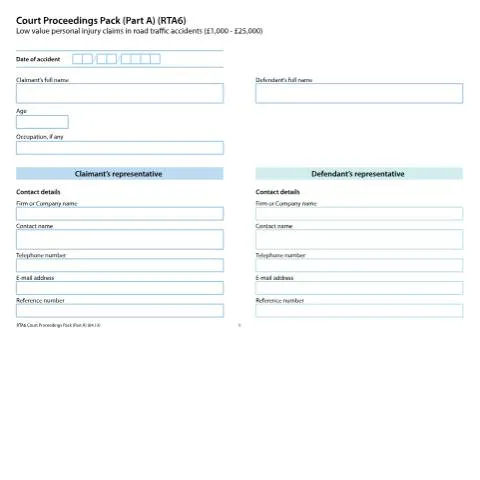
Navigating the RTA6 and RTA7 Court Proceedings Pack: A Practical Approach
When involved in a road traffic accident resulting in personal injury, understanding the complexities of legal documentation is crucial. The RTA6 and RTA7 forms, essential components of the Court Proceedings Pack from HM Courts & Tribunals Service, serve a pivotal role in the progression of low value personal injury claims ranging from £1,000 to £25,000. This guide delves deeply into the practical aspects surrounding these forms, providing clarity on their function, completion, submission, and what to expect following their submission.
The Context of RTA Claims
Pursuing a personal injury claim following a road traffic accident can often feel overwhelming, especially for claimants unfamiliar with legal processes. When those involved seek to claim compensation for injuries or losses sustained due to someone else's negligence, adherence to specific legal protocols is mandatory. The RTA6 and RTA7 forms are designed to facilitate this process, ultimately guiding both claimants and defendants through the courts efficiently.
A Brief Overview of the RTA6 and RTA7 Forms
- RTA6 (Court Proceedings Pack Part A): This form is primarily for detailing the claim made by the claimant, including losses, evidence, and the claimant’s statement of truth.
- RTA7 (Court Proceedings Pack Part B): This part focuses on offers made by both parties, allowing for the submission of final offers to be considered by the court.
Who Needs to Complete These Forms?
Both forms are specifically intended for individuals pursuing claims that fall within the low value personal injury bracket due to road traffic accidents. Typically, the following profiles are involved:
- Claimants: Individuals seeking compensation for injuries or losses incurred in an accident.
- Defendants: Other parties involved in the accident, usually responsible for the damages claimed by the claimant.
In certain instances, particularly where the claimant is underage or has limited capacity, a legal representative or guardian may need to fill out the forms on their behalf.
Filling Out the RTA6 Form: Key Considerations
Completing the RTA6 form requires careful attention to detail, as inaccuracies may lead to delays or rejection of the claim. Here are some guiding principles to follow:
- Accurate Personal Information: Ensure all personal details, including name, age, and occupation, are correct. Any discrepancies may complicate the process.
- Detailing Losses: The form requires a comprehensive list of losses, including medical expenses, loss of earnings, and other damages. Each claim item must be accompanied by supporting evidence.
- Statutory Interest Rates: Familiarize yourself with applicable interest rates for claims, as these can significantly affect the overall compensation amount.
Special attention should be given to the "Statement of Truth" section. This legally binds the claimant to the accuracy of the information provided and must be signed by the claimant or their representative.
Understanding the RTA7: Offers and Counteroffers
The RTA7 form provides a platform for both parties to present their final offers after substantial negotiation. It is crucial to understand how to complete the offer section effectively.
- Separation of Offers: The RTA7 clearly distinguishes between the claimant’s and defendant's offers. Each party must outline their respective offers independently.
- Fixed Costs Breakdown: This section allows for the inclusion of fixed costs incurred at both stages of the legal process, ensuring clarity and transparency in financial expectations.
- Judicial Involvement: The final decisions on offers may eventually require judicial intervention if both parties cannot reach an agreement.
Submission Process: What to Expect
Once completed, the RTA6 and RTA7 forms must be submitted to the relevant court. Here is a step-by-step outline of the submission process:
- Review and Final Checks: Before submission, review all entries for accuracy and completeness.
- Sealing the Envelope: It is required to submit both forms in a sealed envelope. This is a procedural formality to protect the confidentiality of the claims.
- Filing at the Court: Deliver the sealed forms to the court office. Ensure to receive confirmation of your submission, as this may be necessary for future reference.
Key Tips for Successful Submission
- Track Your Submission: Keep a copy of all submitted documents and any receipts or confirmation notices from the court.
- Deadlines Matter: Be mindful of submission deadlines, particularly those set out in the pre-action protocols.
- Follow Up: After submission, it is advisable to follow up with the court to ensure your claim has been logged and is moving forward.
Post-Submission: Tracking Progress and Communication
After the forms have been successfully submitted, the journey is not over. Claimants must stay informed regarding the progress of their case:
- Anticipate Timelines: While the court will provide timelines, be prepared for possible delays due to court backlogs or additional evidence requests.
- Communications from the Court: Expect correspondence from the court regarding hearings, mediation sessions, or any required actions from either party.
- Engage with Legal Counsel: Throughout the process, maintaining communication with your legal representative is critical. They can provide updates and advise on any necessary adjustments to your claims.
Special Circumstances: Navigating Complex Claims
Certain situations may complicate the standard claim process involving the RTA6 and RTA7 forms. Here are some notable examples:
- Involvement of Minors: Claims involving individuals under the age of 18 require additional considerations regarding representation and consent.
- Claims Involving Multiple Defendants: In cases where more than one party is involved, the documentation will need to reflect the contributions and liabilities of each party.
- Challenging Liability: If the defendant contests liability, the case may enter a more complex phase, requiring additional evidence and potentially extending timelines.
Documentation for Complex Cases
| Scenario | Documents Needed | Potential Delays |
|---|---|---|
| Claim Involving a Minor | Proof of guardianship, consent forms | Additional review time |
| Multiple Defendants | Detailed liability agreements, evidence from all parties | Complexity of negotiations |
| Contested Liability | Additional accident reports, witness statements | Longer court hearings |
The Regulatory Framework Behind RTA Forms
The development and implementation of the RTA6 and RTA7 forms are governed by a legal framework designed to streamline the claims process while ensuring fairness and transparency. The primary regulations include:
- Pre-Action Protocols: These serve as guidelines to ensure parties have exchanged sufficient information before court proceedings commence.
- Data Protection Act 2018: This governs the handling of personal information disclosed within the claims process, ensuring that data is stored and processed legally.
This regulatory landscape not only facilitates a structured approach to claims but also protects the interests of all parties involved.
Final Considerations: Staying Informed and Prepared
Throughout the process of submitting RTA6 and RTA7 forms, maintaining awareness of your rights and responsibilities is paramount. A proactive approach can significantly influence the outcome of your claim. Here are actionable steps to stay prepared:
- Educate Yourself: Familiarise yourself with the court's processes and the specifics of your case. Knowledge is a crucial tool in navigating legal proceedings.
- Seek Professional Guidance: If navigating through these forms proves to be challenging, consider consulting legal professionals who specialise in personal injury claims.
- Document Everything: Keeping detailed records of all communications and submissions can be invaluable in the event of disputes or delays.
By following these guidelines and understanding the nuances of the RTA6 and RTA7 forms within the broader context of personal injury claims, claimants can approach their legal challenges with greater confidence and clarity.
Understanding the Court Proceedings Pack: Key Components of Form RTA6 and RTA7
The Court Proceedings Pack is an essential resource for anyone engaged in a road traffic accident claim in the UK. Comprising Form RTA6 and Form RTA7, it is critical to understand the specific functions of each section, as they play a pivotal role in navigating the legal process effectively.
Form RTA6 - Initial Claim Notification
Form RTA6 serves as the initial notification of a claim to be sent to the defendant's insurer. It essentially outlines the basic details of the accident, including the date, location, and circumstances, along with the claimant's information and the nature of injuries and damages incurred. Here are the crucial elements that need to be provided:
Claimant and Defendant Details: Clearly state the full names, addresses, and any relevant contact information. Make sure to include your National Insurance number for identification purposes.
Accident Details: Provide a detailed description of the accident. Include diagrams or photographs if possible, as these can significantly bolster your case. Ensure that the details align with any police reports or medical documentation.
Injuries and Damages: Specify all injuries sustained and the impact they have had on your daily life. It is vital to document both physical and psychological effects, as this can influence the compensation amount.
Financial Losses: Include all financial losses related to the accident, such as medical expenses, lost wages, and any necessary adjustments to your home or vehicle. Proper documentation, such as receipts and bank statements, will enhance your claim's credibility.
Filling out Form RTA6 accurately is vital, as any discrepancies can lead to delays or even the denial of your claim. Once completed, you must send it to the defendant's insurer, which typically has a specified timeframe to respond.
When and How to Use Form RTA7: Responding to the Claim
Form RTA7 is the defendant’s response to the claim outlined in Form RTA6. Understanding how to properly complete and submit this form is equally critical for defendants seeking to contest or negotiate a claim.
Acknowledgment of Claim: Upon receiving Form RTA6, the defendant (or their insurer) must complete RTA7 to acknowledge receipt of the claim. This form allows them to either accept liability, deny it, or propose an alternative resolution.
Fill in your form directly online
No printing: type your details into the boxes of the official form, tick, then download the PDF ready to send.
- 1Type into the form boxes
- 2Tick in one click
- 3Save and download the PDF
Timeline for Response: The defendant typically has a maximum of 21 days from the receipt of Form RTA6 to respond with Form RTA7. Timely submissions are crucial to prevent further complications or automatic findings of liability against them.
Options for Response:
- Accept Liability: If the defendant accepts liability, they must state this clearly and outline how they intend to resolve the claim. This may involve direct negotiations regarding compensation.
- Deny Liability: If the defendant denies liability, they must provide a detailed reason for this denial. It is advisable to include any evidence supporting their position, such as witness statements or expert reports.
- Counterclaims: In some cases, a defendant may wish to make a counterclaim against the claimant. This should be clearly articulated in Form RTA7 and supported by relevant documentation.
Legal Representation: It is highly recommended for defendants to consult legal representation when completing Form RTA7, particularly when denying liability or making a counterclaim. A solicitor can provide invaluable insight into the legal implications of the options available and help navigate the complexities of road traffic accident claims.
Submitting Form RTA7 is a significant step in the legal process. Whether you are accepting or disputing liability, ensure that all information is accurate, and be mindful of the potential impact on any subsequent negotiations or court proceedings.
Navigating Disputes: What Happens After Submissions of Forms RTA6 and RTA7
Once Forms RTA6 and RTA7 have been submitted, the next steps can vary significantly based on the responses and interactions between the parties involved. Here are key considerations to keep in mind:
Negotiation Stage: After both forms have been exchanged, a negotiation phase may ensue. This is where both parties discuss the claim's merits and propose settlement offers. It is common for this to involve back-and-forth communication facilitated by their respective insurers or legal representatives.
Mediation and Alternative Dispute Resolution (ADR): If negotiation fails, parties may consider mediation or ADR. This involves a neutral third party helping facilitate a resolution without escalating to court. Mediation can save time and costs, making it an attractive option for both claimants and defendants.
Court Proceedings: If a resolution cannot be reached through negotiation or mediation, the case may proceed to court. The claimant must file a claim with the relevant court, and the case will be assigned a court date. It is essential to gather all relevant documentation, including Forms RTA6 and RTA7, medical reports, and witness statements to present a strong case.
Court Directions and Timelines: Once the case is in court, the judge will provide directions regarding timelines and documentation. Adhering to these timelines is crucial to avoid any negative repercussions on your case. Be prepared for hearings, and understand the potential outcomes, including the possibility of appeals.
Final Considerations: Throughout this process, it is vital for both claimants and defendants to keep detailed records of all communications and documentation exchanged. This not only aids in the case but can also be beneficial for any potential appeals or future claims.
Being well-prepared and informed about the implications of Forms RTA6 and RTA7 can significantly affect the outcome of road traffic accident claims. Whether you are a claimant or defendant, understanding these forms and the subsequent processes will empower you to navigate the legal landscape confidently.