When the Court of Protection Issues Notice: Understanding Your Position as a Notified Person
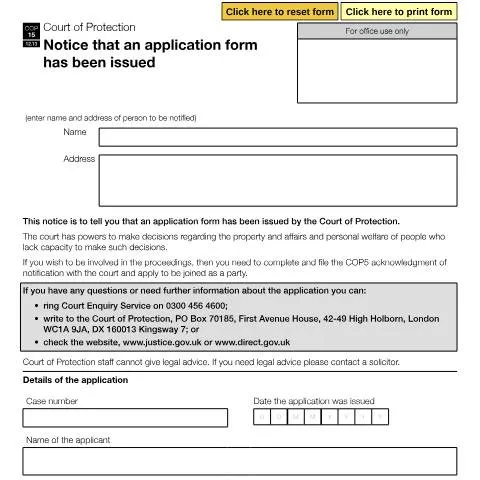
Receiving a Form COP15 through your letterbox marks a significant moment – you're being formally notified that someone has applied to the Court of Protection regarding a person you know. This isn't merely administrative housekeeping; it's your legal gateway to participate in proceedings that could fundamentally alter how decisions are made about someone's property, finances, or personal welfare. The Court of Protection recognises that certain individuals have legitimate interests in these matters and must be given the opportunity to have their voices heard before life-changing orders are made.
The COP15 serves as both an information document and a call to action. Unlike many court notices that simply inform, this form specifically invites you to consider whether you wish to become actively involved in the proceedings. Your connection to the person who allegedly lacks capacity – whether as a family member, close friend, or someone with a professional relationship – has been deemed significant enough that the court believes you should know about the application and have the chance to participate.
Decoding the Application Details: What the COP15 Reveals
The form provides crucial intelligence about the nature of the application before you. The section detailing whether the court's jurisdiction relates to property and affairs, personal welfare, or both categories reveals the scope of decisions at stake. Property and affairs applications typically involve managing bank accounts, selling property, making investment decisions, or handling benefits. Personal welfare matters encompass where someone lives, what medical treatment they receive, and day-to-day care arrangements.
Pay particular attention to the orders the court has been asked to make section. This isn't legal jargon – it's the concrete outcome the applicant wants. They might be seeking appointment as a deputy with ongoing decision-making powers, or requesting specific one-off decisions about medical treatment or property sales. The distinction matters enormously for your potential involvement.
| Type of Application | Typical Orders Sought | Your Potential Concerns |
|---|---|---|
| Property and Affairs | Deputyship appointments, property sales, investment decisions | Financial management approach, asset protection, inheritance implications |
| Personal Welfare | Residence decisions, care arrangements, medical treatment | Quality of care, family contact, personal preferences being respected |
| Both Jurisdictions | Comprehensive deputyship with wide-ranging powers | Concentration of decision-making power, accountability measures |
Your Connection Status and What It Means for Participation Rights
The COP15 identifies your specific connection to the person who allegedly lacks capacity, and this relationship determines both why you're being notified and what role you might play in proceedings. The Court of Protection follows strict rules about who must be notified, based on the Mental Capacity Act 2005 and court rules.
If you're listed as a family member, you typically have strong grounds to seek party status, particularly if you disagree with the application or believe alternative arrangements would better serve the person's interests. Close friends or those with significant ongoing relationships may also have legitimate interests, especially in personal welfare matters where your knowledge of the person's wishes and feelings could be crucial.
Professional connections – perhaps as a former attorney under a power of attorney, a healthcare professional, or someone involved in the person's care – bring different considerations. Your expertise or professional knowledge might be valuable to the court, but your interest in becoming a party depends on whether you have concerns about the proposed arrangements that go beyond your professional role.
Assessing Whether Active Participation Serves Your Interests
Before rushing to complete a COP5 acknowledgment form, carefully consider what active participation would involve. Becoming a party to Court of Protection proceedings isn't a passive role – you'll receive all court documents, may need to file your own evidence, and could face costs implications if proceedings become contested.
Your decision should be driven by substantive concerns rather than mere curiosity. Do you genuinely believe the applicant isn't the right person to make decisions? Are you aware of the person's previously expressed wishes that conflict with what's being proposed? Do you have serious concerns about their welfare under the proposed arrangements?
The COP5 Response Mechanism: Your Route to Party Status
The COP15 specifically directs you to complete and file a COP5 acknowledgment of notification if you wish to be involved in proceedings. This isn't merely an expression of interest – it's your formal application to become a party, which gives you full participation rights including the ability to file evidence, attend hearings, and be represented by solicitors.
The COP5 form requires you to specify the basis for your application to be joined as a party. The court will consider factors including your relationship with the person, whether you have a genuine interest in the outcome, and whether your participation would assist the court. Simply being notified doesn't guarantee party status – you must demonstrate legitimate reasons for involvement.
Strategic Timing Considerations
While there's no absolute deadline for filing a COP5, timing matters significantly. Early participation allows you to influence the direction of proceedings from the outset. If you wait until orders are made and then seek to challenge them, you face a much more difficult path involving applications to set aside or vary orders.
Consider also that the court may make interim orders while the main application is pending. If you have concerns about immediate decisions affecting the person's welfare or finances, prompt response becomes crucial to ensure your voice is heard before such orders are made.
Alternative Engagement Routes When Full Party Status Isn't Required
Not every concern or interest requires becoming a full party to proceedings. The Court of Protection has various mechanisms for gathering information and views from interested persons without formal party status.
You might provide a witness statement about the person's previously expressed wishes or your observations about their capacity and needs. This allows you to contribute valuable information without the ongoing responsibilities and potential costs of party status. The court actively seeks evidence about what the person would have wanted and what arrangements would be in their best interests.
The Special Position of Family Members
Family members often find themselves in complex positions when COP15 notices arrive. You might support the overall application but have concerns about specific aspects, or you might prefer alternative arrangements that better reflect family dynamics or the person's known preferences.
Remember that the court's paramount concern is the person's best interests, not family harmony or traditional expectations about who should be involved in decision-making. Your family relationship gives you important insights into the person's character, values, and preferences, but it doesn't automatically make your views more important than other evidence about their best interests.
Navigating the Court System: Practical Steps After Receiving COP15
The contact details provided on the COP15 – the Court Enquiry Service on 0300 456 4600 and the Court of Protection's postal address – serve different purposes. The telephone service can clarify procedural questions about forms, deadlines, and court processes, but explicitly cannot provide legal advice about whether you should become involved or what position to take.
If you're considering active participation, obtaining legal advice early proves invaluable. Court of Protection proceedings involve complex legal principles around capacity, best interests, and the court's powers. A solicitor experienced in this area can help you understand whether your concerns justify the costs and commitment of becoming a party, or whether other approaches might achieve your objectives more efficiently.
Understanding the Broader Procedural Context
Your COP15 notice fits within a structured court process designed to balance efficiency with fairness. The applicant will have filed detailed evidence supporting their application, including capacity assessments and evidence about the person's needs and circumstances. Other parties may already be involved, including the Official Solicitor if the person lacks capacity to instruct solicitors.
The court may hold case management hearings to determine how the case should proceed, whether expert evidence is needed, and what issues need to be resolved. Your early involvement helps ensure these directions take account of your concerns and that any expert assessments address the points you consider important.
Managing Costs and Legal Representation Considerations
Court of Protection proceedings operate under specific costs rules that differ from ordinary civil litigation. The person who lacks capacity is generally protected from adverse costs orders, but other parties may face liability for legal costs if their participation is deemed unreasonable or if they pursue hopeless arguments.
However, the court recognises that family members and others with legitimate concerns should be able to participate without prohibitive costs risks. Legal aid may be available in exceptional circumstances, and the court has discretion to make protective costs orders in appropriate cases.
Many solicitors experienced in Court of Protection work offer initial consultations to help you understand the strength of your position and likely costs implications. This investment in early legal advice often proves cost-effective by helping you make informed decisions about your level of involvement.
The Role of Family Mediation and Alternative Approaches
Before formal court proceedings progress, consider whether family discussions or mediation might resolve concerns more constructively. The Court of Protection encourages parties to reach agreements where possible, and may stay proceedings to allow time for negotiations.
Mediation works particularly well when family members have different views about care arrangements or who should be appointed as deputy, but share common concerns about the person's welfare. Professional mediators experienced in capacity and care issues can help families find solutions that avoid the stress and costs of contested court proceedings.
Long-term Implications and Ongoing Responsibilities
Your response to the COP15 notice sets the foundation for your ongoing relationship with any orders the court makes. If you become a party but the court ultimately makes orders you opposed, you retain rights to seek variations if circumstances change or to raise concerns about how deputies exercise their powers.
Conversely, if you choose not to participate actively but later develop concerns about decisions being made, you face higher hurdles to challenge orders or seek court intervention. The court expects interested persons to raise concerns promptly rather than waiting until problems develop.
Consider also the practical implications for your ongoing relationship with the person and their appointed decision-makers. Constructive participation in court proceedings, even when you don't achieve everything you hoped for, often leads to better working relationships with deputies and more collaborative approaches to ongoing care and support.
The COP15 notice represents both an opportunity and a responsibility – the chance to ensure the court has complete information about the person's needs, wishes, and circumstances, balanced against the commitment required for meaningful participation in complex legal proceedings. Your decision should reflect both your genuine concerns about the person's welfare and your realistic assessment of what active involvement can achieve.
Understanding the Court of Protection's Assessment Process Following COP15 Submission
Once you've submitted Form COP15, the Court of Protection initiates a structured assessment process that determines how your case will proceed. This evaluation isn't merely administrative—it involves judicial consideration of whether the proposed proceedings serve the best interests of the person who lacks capacity.
The court typically assigns cases to different tracks based on complexity and urgency. Straightforward property and financial affairs matters may follow an expedited pathway, whilst cases involving serious medical treatment decisions or deprivation of liberty often require more extensive judicial scrutiny. Your COP15 submission helps court staff make this initial categorisation, which directly impacts timescales and procedural requirements.
During the assessment phase, the court may request additional documentation beyond what you've provided with your COP15. For instance, if you're seeking to become a deputy for someone's financial affairs, the court might require recent bank statements, evidence of the person's assets, or professional assessments of their capacity. Medical treatment cases often necessitate detailed clinical reports from treating consultants or independent medical experts.
Fill in your form directly online
No printing: type your details into the boxes of the official form, tick, then download the PDF ready to send.
- 1Type into the form boxes
- 2Tick in one click
- 3Save and download the PDF
The court also considers whether alternative dispute resolution might be appropriate. In some family disputes over care arrangements, the court may suggest mediation before formal proceedings commence. This approach reflects the court's preference for resolving matters with minimal intrusion into the protected person's life, whilst ensuring their welfare remains paramount.
Particularly complex cases may trigger the court's case management powers early in the process. The court might issue directions requiring specific parties to file evidence by certain dates, or mandate that particular professionals become involved. For example, in cases involving significant financial decisions, the court may appoint the Official Solicitor to represent the person's interests, adding another layer to the proceedings you've initiated through your COP15 submission.
Rights and Responsibilities of Involved Parties During COP15 Proceedings
The Court of Protection operates under specific principles that create distinct rights and obligations for everyone involved in proceedings initiated by Form COP15. Understanding these responsibilities helps ensure your case progresses smoothly whilst protecting the interests of the person at the centre of the proceedings.
As the applicant who submitted COP15, you assume primary responsibility for advancing the case. This includes responding promptly to court directions, providing accurate and complete information, and notifying the court of any material changes in circumstances. If you're seeking appointment as a deputy, you're also under ongoing obligations to act in the person's best interests and within the scope of any order the court might make.
Family members and other interested parties have rights to participate in proceedings, but these rights come with corresponding responsibilities. The Mental Capacity Act 2005 requires that people close to the protected person are consulted where practicable. However, the court may limit participation if it considers that involvement wouldn't serve the person's best interests or would cause unnecessary delay or expense.
The person who lacks capacity retains certain fundamental rights throughout proceedings, even when they cannot actively participate. They have the right to legal representation, often provided through the Official Solicitor when no suitable alternative exists. The court must consider their past and present wishes, feelings, beliefs and values when making decisions. Where possible, the court seeks to maximise their participation through appropriate support or communication aids.
Professional parties, including social workers, medical practitioners, and legal representatives, operate under specific duties when involved in Court of Protection proceedings. They must provide frank and objective evidence, avoid conflicts of interest, and maintain appropriate professional boundaries. Solicitors representing parties must ensure their clients understand the implications of decisions and the ongoing nature of the court's supervisory role.
The court itself exercises ongoing supervisory jurisdiction, meaning its involvement doesn't necessarily end with the initial order. Deputies appointed following COP15 proceedings must file annual reports and seek permission for significant decisions outside their authority. This continuing oversight ensures protection remains effective and proportionate to the person's changing needs and circumstances.
Navigating Potential Complications and Objections in COP15 Cases
Court of Protection proceedings initiated through Form COP15 can encounter various complications that applicants should anticipate and prepare to address. Understanding common objection patterns and procedural challenges helps you respond effectively when they arise.
Family disputes represent one of the most frequent sources of complication. When relatives disagree about proposed arrangements for someone who lacks capacity, the court must carefully balance competing perspectives whilst focusing on the person's best interests. These disagreements often centre on where someone should live, what medical treatment they should receive, or who should manage their financial affairs. The court may require detailed evidence from multiple family members and professional witnesses to resolve such disputes.
Capacity assessments can become contentious, particularly when different professionals reach conflicting conclusions about someone's ability to make specific decisions. The court may order independent assessments or require assessors to meet and discuss their findings. In some cases, the court arranges for the person to be interviewed by a judge, though this occurs only when it might provide valuable insight without causing distress.
Financial complications often arise when the proposed arrangements involve significant assets or complex financial structures. The court scrutinises applications for deputyship orders covering substantial estates, requiring detailed evidence of the person's financial position and the applicant's suitability to manage these affairs. Cases involving business interests, property portfolios, or pension arrangements may require specialist professional input and extended timescales.
Jurisdictional challenges can emerge, particularly in cases with international elements. When someone lacks capacity but has assets or family connections abroad, determining which court has authority becomes crucial. The court must consider factors including the person's habitual residence, the location of their assets, and applicable international conventions. These cases often require specialist legal input and coordination with foreign authorities.
Emergency situations can disrupt normal COP15 procedures when urgent decisions become necessary before the court can fully consider the application. The court maintains emergency procedures for situations requiring immediate intervention, such as urgent medical treatment decisions or protection from financial abuse. However, emergency orders are typically time-limited and subject to review once full proceedings can be properly conducted.
Resource constraints within the Court of Protection system can also affect case progression. High caseloads and limited judicial resources sometimes result in delays, particularly for non-urgent matters. The court prioritises cases based on urgency and risk factors, meaning straightforward administrative matters may experience longer waiting times than cases involving immediate welfare concerns.