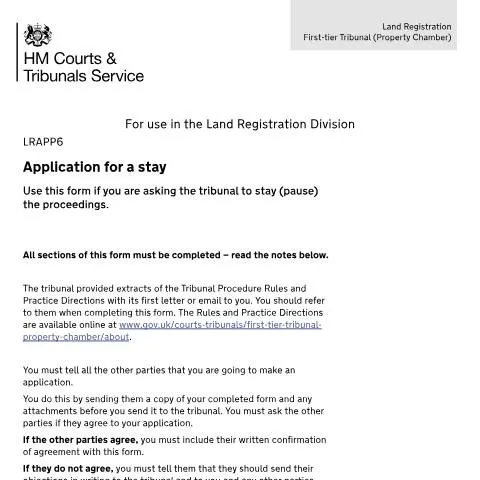
A Comprehensive Guide to the LRAPP6: Navigating the Application to Pause Proceedings
Imagine you're embroiled in a property dispute, and circumstances compel you to pause proceedings temporarily. The LRAPP6 Application for a Stay serves as your formal request to the tribunal to halt the process, keeping in mind that this is not just a simple form but a crucial step with significant implications. Understanding the nuances of this document is vital for anyone involved in the property chamber of the First-tier Tribunal.
Who Should Consider Submitting the LRAPP6?
The LRAPP6 is not a one-size-fits-all solution; it primarily pertains to individuals and representatives engaged in property disputes within the First-tier Tribunal (Property Chamber). The following profiles typically find themselves needing to submit this application:
- The Applicant: The individual or entity who has initiated the proceedings.
- The Respondent: The party responding to the application.
- Representatives: Individuals or firms representing either the applicant or respondent, particularly in complex situations.
It's crucial to note that those who are not directly involved in the proceedings cannot submit this application. If you find yourself in a different role, check if your situation qualifies for this particular form.
A Step-by-Step Journey: The Timeline of the LRAPP6 Process
Understanding the timeline from the moment you decide to apply for a stay to the tribunal's final decision is essential. This process unfolds as follows:
- Assessment of Need: Determine why it's necessary to pause proceedings. Valid reasons might include pending negotiations, awaiting crucial evidence, or health-related issues.
- Notification to Other Parties: Before submitting your application, you must inform all other relevant parties. This is done by sending them a copy of your completed LRAPP6.
- Submission of the Application: Once notified, submit the LRAPP6 form along with any supporting evidence to the tribunal.
- Tribunal Review: The tribunal will review your application, considering the reasons for the stay and the opinions of other parties.
- Outcome Notification: You will be informed whether your application has been granted or denied, along with potential next steps.
Delving into the Details: Completing the LRAPP6 Application
Filling out the LRAPP6 correctly is paramount for the success of your application. Here are the critical sections you will need to complete:
- Case Reference Number: This unique identifier links your application to the tribunal’s records.
- Party Identification: Clearly specify whether you are the applicant, respondent, or representative. This clarity ensures that the tribunal understands your position in the proceedings.
- Last Directions Order: Include the date of the last order made by the tribunal, as this information helps contextualize your application.
- Duration of the Stay: Be explicit about how long you are asking for the stay and provide justifications for this duration.
- Supporting Evidence: Attach any documents or files that substantiate your request for a stay, as this evidence can significantly influence the tribunal's decision.
- Statement of Truth: This declaration, signed and dated, is crucial to affirm the accuracy of the information provided in your application.
The Importance of Communication: Notifying Other Parties
One of the most critical aspects of submitting the LRAPP6 is ensuring that all other parties involved in the proceedings are notified. This isn't merely a formality; it is a legal requirement. You need to:
- Send them a copy of your completed application before you submit it to the tribunal.
- Request their agreement on the application. If they agree, obtain written confirmation and attach it to your LRAPP6.
- If they disagree, inform them that they must submit their objections to both the tribunal and yourself, establishing a transparent dialogue.
Understanding this communication process is vital, as your application could be dismissed if you fail to notify other parties adequately.
What Happens After Submission?
Once you have submitted the LRAPP6 and all necessary documentation, several things can occur:
- Tribunal Review: The tribunal will examine your application along with any objections raised by other parties. They will consider the evidence provided and the need to pause the proceedings.
- Decision Notification: The tribunal will notify you whether the stay has been granted or denied. This could come via email or postal mail, depending on the communication preferences established during the proceedings.
- Potential Hearings: In some cases, the tribunal may schedule a hearing to further discuss the application, especially if there are significant objections from other parties.
Special Circumstances: When is the LRAPP6 Vital?
Certain situations may necessitate the urgent use of the LRAPP6 application. These include:
- Health Issues: If an applicant or key witness is facing health-related challenges that impact their ability to participate, a stay may be warranted.
- Awaiting Evidence: Sometimes, critical evidence is pending, which could significantly affect the outcome of the proceedings.
- Negotiations: If both parties are in negotiation, pausing the proceedings can provide necessary time to reach a settlement.
- External Factors: Events such as natural disasters, legal changes, or other unforeseen circumstances may also justify applying for a stay.
Identifying these specific circumstances can strengthen your case for obtaining a stay and highlight your awareness of the legal process.
Avoiding Pitfalls: Common Missteps in the Application Process
While the LRAPP6 application is straightforward, certain pitfalls could hinder your progress. Here's what to watch out for:
- Incomplete Information: Ensure every section of the form is filled out accurately. Missing fields can lead to delays or outright rejection.
- Failure to Notify Other Parties: Neglecting this step is one of the most common errors and can result in your application not being considered.
- Insufficient Evidence: If your reasoning for the stay is not backed up by appropriate documentation, the tribunal may question its validity.
- Ignoring Deadlines: Pay close attention to any timeframes mentioned in your tribunal correspondence. Missing a deadline can severely impact your case.
Understanding the Implications of a Stay on Proceedings
Granting a stay can have several implications for your case. While it pauses proceedings, it does not eliminate them. Key points to consider include:
- Temporary Relief: A stay provides a necessary pause, but it is not a definitive resolution. Parties must be prepared for subsequent hearings or actions once the stay period concludes.
- Negotiation Opportunities: The pause often allows parties to explore settlements, which can lead to a resolution without further tribunal involvement.
- Potential for Renewed Applications: Should circumstances change, you may find it necessary to reapply for a stay or challenge a decision made during or after the pause.
In essence, understanding the LRAPP6 and its ramifications is crucial for anyone involved in property proceedings. It acts as a formal request for a pause, giving you the breathing room necessary to manage the complexities of your case.
Next Steps: Making Your Application Count
As you prepare to complete your LRAPP6 application, remember that thoroughness and clarity are your best allies. Ensuring that all parties are informed, that your reasons for the stay are well-documented, and that the form is correctly filled out will increase your chances of a successful application.
Filing this form may seem like a straightforward task, but its implications can significantly affect the trajectory of your property dispute. Approach it with diligence and care, and you will be better positioned to navigate the complexities of your case within the tribunal.
Understanding the Grounds for Pausing Proceedings
When considering an application to pause proceedings using Form LRAPP6, it’s essential to have a clear understanding of the legitimate grounds on which such an application can be made. The reasons can vary and may include personal circumstances, the need for further evidence, or the potential for a settlement outside of court. Regardless of the reason, it is crucial to articulate the rationale clearly in your application to increase the likelihood of a favourable outcome.
Fill in your form directly online
No printing: type your details into the boxes of the official form, tick, then download the PDF ready to send.
- 1Type into the form boxes
- 2Tick in one click
- 3Save and download the PDF
One common ground for pausing proceedings might be the need for additional time to gather crucial documentation or witness statements. If you can demonstrate that the evidence is necessary for the just resolution of the case and that it cannot be reasonably obtained within the standard timeline, the court may consider your request favourably.
Another essential factor to consider is whether there are ongoing negotiations between parties that could lead to a settlement. If parties are actively engaging in discussions to resolve their disputes amicably, it may be in the interest of justice to pause proceedings temporarily, allowing time for such negotiations to bear fruit. In your application, provide details of any settlement discussions, including timelines and the nature of the dialogue, to strengthen your case.
Filling Out Form LRAPP6: Tips for Success
Properly completing Form LRAPP6 is vital to ensure your application to pause proceedings is processed efficiently. Here are some practical tips to assist you in filling out the form correctly:
- Follow the Instructions: Always read the instructions provided with Form LRAPP6 carefully. Understanding what is required in each section will help you avoid common pitfalls and omissions that could delay your application.
- Be Clear and Concise: When detailing your reasons for requesting a pause, clarity is key. Use straightforward language and avoid jargon where possible. Each point should be concise yet sufficiently detailed to convey your position effectively.
- Consistency is Crucial: Make sure the information you provide in Form LRAPP6 is consistent with any accompanying documents. Inconsistencies may lead to questions from the court and could jeopardise the acceptance of your application.
- Keep Records: Maintain a copy of the completed Form LRAPP6 and any documents submitted alongside it. This will be invaluable for future reference and may serve as a point of evidence if needed.
- Seek Legal Advice if Necessary: If you’re unsure about any aspect of completing the form or the implications of your application, consider seeking professional legal advice. A lawyer with experience in civil proceedings can provide tailored guidance to strengthen your application.
After Submission: What to Expect
Once you have submitted Form LRAPP6, it is crucial to understand the next steps and what you can expect from the process. After your application is lodged with the relevant court, it will be reviewed by the judge assigned to your case.
Typically, the court may schedule a hearing to consider your application to pause the proceedings. During this hearing, you may have the opportunity to present your case in person, explaining why you believe it is just to grant a pause. The opposing party will also have the chance to argue against your application. It's essential to be prepared for this hearing by reviewing your arguments and anticipating counterarguments.
After the hearing, the judge will decide whether to grant or deny your application. If granted, the court will specify the duration of the pause and any conditions that may apply during this period. If denied, the proceedings will resume, and you will need to be prepared to move forward with your case.
In either outcome, keep an eye on any deadlines or follow-up actions that may be required to ensure compliance with the court's directions. Efficient management of these timelines is critical in maintaining the progress of your case.