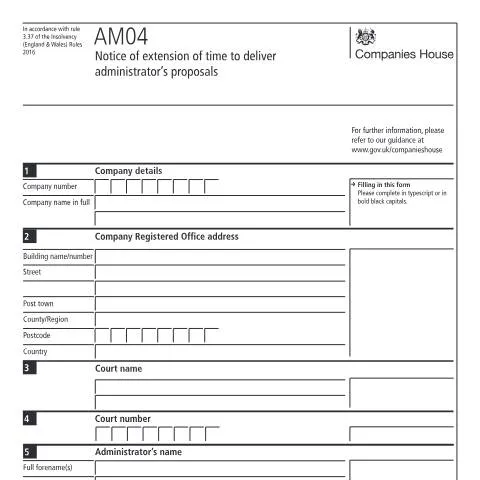
Navigating the AM04: A Practical Guide to Notification of Extension for Administrator's Proposals
In the intricate world of corporate insolvency within the UK, administrators are tasked with the critical role of managing a company’s affairs when it enters administration. The AM04 document, formally known as the "Notice of Extension of Time to Deliver Administrator's Proposals," serves as an essential tool for administrators seeking an extension on the timeframe to deliver their proposals. Understanding this document is crucial for ensuring compliance with the Insolvency (England & Wales) Rules 2016 and for protecting the interests of all stakeholders involved.
Understanding the Purpose and Scope of the AM04
The AM04 is not merely a bureaucratic requirement; it plays a pivotal role in the administration process. Administrators may find themselves in situations where additional time is necessary to prepare their proposals adequately. The AM04 allows them to formally request this extension, thereby providing clarity and ensuring adherence to the legal framework governing insolvency in England and Wales.
Context of Use
- Insolvency Proceedings: The AM04 is particularly relevant during insolvency proceedings, where the timely delivery of proposals is essential to the future of the company.
- Stakeholder Communications: This notice helps maintain transparency with creditors and other interested parties by clarifying timelines and expectations.
- Legal Compliance: Submitting the AM04 ensures compliance with the Insolvency (England & Wales) Rules, which mandate the timely delivery of proposals.
Key Elements of the AM04 Document
While the AM04 might seem straightforward, it contains specific elements that administrators must understand to navigate its use effectively. Here, we'll outline the critical components of the document.
- Company Information: Details such as the full company name and registration number are required. This ensures that the notification pertains to the correct entity.
- Administrator Details: The name and contact information of the administrator must be included, as they are the ones responsible for filing the notice.
- Extension Dates: Precise dates for the initial deadline and the requested new deadline for delivering proposals must be clearly stated.
- Signature Requirements: The notice must be signed and dated by the administrator, which validates the request for an extension.
Step-by-Step Utilization of the AM04
Filing the AM04 may seem daunting, but understanding the step-by-step process can simplify the task. Here’s how administrators can effectively utilize the AM04:
- Review Timing Needs: Assess whether additional time is genuinely required to prepare the proposals. Consider factors such as complexity, stakeholder consultations, and information gathering.
- Complete the AM04: Gather all necessary information, including the company and administrator details, and fill out the AM04 accurately. Ensure that the dates are clear and correctly formatted.
- Sign and Date: The administrator must sign and date the notice to authenticate it. This step is critical; the absence of a signature could invalidate the request.
- Submit to Companies House: Send the completed AM04 to Companies House. While it can be sent to any of their addresses, using the Cardiff office is typically advised for faster processing.
Common Misinterpretations and Pitfalls to Avoid
Despite its importance, the AM04 is often misunderstood, leading to potentially costly mistakes. Here are common misinterpretations along with advice on how to avoid them:
Misinterpretation of Timeframes
One common error is misunderstanding the timeline. Administrators must recognize that the request for an extension should be made before the initial deadline for delivering proposals. Failing to do so may result in legal ramifications.
Incomplete Submissions
Another pitfall is submitting the AM04 without the necessary details. Information such as the company name, registration number, and administrator's details must be complete and accurate. Incomplete forms may be rejected, leading to further delays.
Neglecting to Sign
The absence of a signature can render the AM04 invalid. Administrators should always double-check that they have signed and dated the document before submission.
Who Stands to Gain from the AM04?
The AM04 is designed for a specific audience within the corporate structure:
- Company Administrators: Primary users of the AM04, they must manage the company’s affairs and protect the interests of creditors while ensuring legal compliance.
- Creditors: Creditors benefit indirectly from the AM04 as it helps maintain transparency regarding the insolvency process and expected timelines.
- Legal Advisors: Solicitors and other legal professionals assisting administrators will find the AM04 crucial for advising on compliance and procedural integrity.
Frequently Encountered Questions Regarding the AM04
As administrators navigate the complexities of the AM04, certain questions frequently arise. Addressing these inquiries can ensure smoother compliance:
How long can an extension be requested for?
The regulations do not specify a maximum time for extensions; however, the administrator should ensure that the requested period is justifiable based on the circumstances surrounding the company’s administration.
Is there a fee associated with filing the AM04?
No fee is required to submit the AM04 document to Companies House, which is an important consideration for administrators managing costs during insolvency proceedings.
What happens if the proposals are not delivered on time?
Failure to deliver the administrator's proposals on time, even with an AM04 filed, can lead to complications, including possible legal actions by creditors or a court hearing to address compliance issues.
Conclusion: Embracing the AM04 as a Tool for Effective Administration
The AM04 is not just a statutory requirement; it represents an opportunity for administrators to navigate the complex landscape of corporate insolvency more effectively. By understanding its purpose, accurately completing the document, and avoiding common pitfalls, administrators can ensure that their proposals are timely and compliant with the law.
In an environment where every detail matters, harnessing the functionalities of the AM04 can facilitate smoother administration processes, ultimately safeguarding the interests of the company and its stakeholders. Whether one is a seasoned administrator or new to the field, the AM04 stands out as an essential tool in the insolvency toolkit.
Understanding the Process for Extending Timeframes
In the context of UK insolvency law, the process of extending timeframes for delivering administrator's proposals is nuanced and requires careful adherence to statutory obligations. When an administrator is appointed, they typically have a limited period, usually not exceeding eight weeks from the date of their appointment, to propose a course of action for the affected company. However, there are circumstances under which this timeframe can be extended.
It is essential to understand that an extension is not automatically granted; the administrator must provide valid reasons for the extension, which could include the complexity of the case, the need for additional investigations, or efforts to secure a better outcome for creditors. The extension must be formally documented, and the Notice of Extension must be submitted through the appropriate channels.
Administrators should ensure they communicate clearly with creditors regarding the reasons for the extension. Transparency at this stage is crucial as it helps to build trust and ensures that all parties are aware of the ongoing processes. It’s also advisable for administrators to consult with insolvency practitioners or legal advisors to ensure compliance with the Insolvency Act 1986 and relevant regulations.
Key Considerations for Stakeholders
The extension of time to deliver administrator’s proposals affects various stakeholders, including creditors, company directors, and employees. Each group has its interests and concerns that need to be addressed during this period.
For creditors, the extension often raises questions about the management of their debts and the financial recovery prospects. Creditors should actively monitor the progress of the administration and stay informed about any developments. They have the right to seek updates from the administrator and can challenge any proposed extensions if they feel that their interests are being compromised.
Directors of the company may also have concerns about the impact of the extension on their responsibilities and potential liabilities. It's essential that they remain engaged with the administrator and understand how the extension might affect their ongoing obligations, particularly regarding the company’s financial status.
Moreover, employees may be directly impacted by the company's financial situation. If the company's proposals are delayed, employees might experience uncertainty regarding their jobs and entitlements. Communication from the administrator about the implications of the extension for employees is vital.
Best Practices for Filing Notice of Extension
Filing the Notice of Extension correctly is crucial for the administrator to maintain compliance with legal requirements. Here are some best practices to consider when preparing to submit the AM04 form:
- Clarity and Precision: The form should be filled out with precise information, including the date of the original appointment, the reasons for the extension, and the new proposed deadline. Any ambiguity can lead to complications.
- Supporting Documentation: Providing supporting documents can strengthen the case for an extension. This may include reports justifying the need for additional time or correspondence with creditors illustrating their concerns.
- Timely Submission: It’s vital to submit the Notice of Extension within the designated timeframe to avoid any regulatory penalties. Administrators should keep track of all relevant deadlines related to the administration process.
- Engagement with Creditor Committees: If a creditors' committee has been formed, it is beneficial to engage with them during the extension process. Their feedback can be invaluable in shaping an effective proposal.
By following these best practices, administrators can enhance the likelihood of their extension request being approved, ultimately leading to a more successful outcome for all stakeholders involved in the administration process.