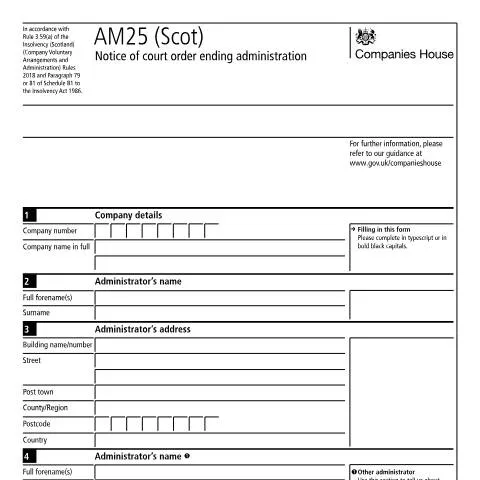
Navigating the AM25 (Scot): A Practical Guide to Ending Administration
In the complex world of business operations in Scotland, understanding the administrative procedures surrounding insolvency is crucial. One of the key documents in this context is the Notice of Court Order Ending Administration, known as AM25 (Scot). This document is essential for administrators managing the transition from administration back to your regular business operations.
The Role of AM25 (Scot) in Business Recovery
When a company enters administration, it is typically under the supervision of an administrator tasked with ensuring the best possible outcome for creditors. Once a court order is issued to end this administration, the AM25 (Scot) form serves as an official declaration of this change. It is a necessary step to ensure that the registry at Companies House accurately reflects the current status of the company.
This form is particularly significant because it encapsulates the conclusion of an administration process, which can have various implications:
- The company can begin to operate normally again, subject to any conditions set forth by the court.
- Creditors can have transparency about the company's new status.
- It allows for potential future financing, as the company's financial health may be reassessed.
Key Elements of the AM25 (Scot) Document
The AM25 (Scot) comprises several important sections, each designed to gather relevant information regarding the conclusion of administration:
- Company Details: This section requires the full name and registration number of the company, ensuring clarity and proper identification in the public records.
- Administrator's Information: The administrator responsible for the administration process must provide their full name and address. If there are multiple administrators, additional sections are available.
- Details of the Court Order: It necessitates the date the court order was issued and the date administration officially ended. These dates are pivotal for maintaining accurate records.
- Attachments: A copy of both the court order and the final progress report must accompany the form. This preserves the administrative continuity and offers insight into the process that led to the order's issuance.
- Signature and Date: The administrator's signature confirms the accuracy of the details provided. It also solidifies the authority of the document in legal terms.
Who Needs to File the AM25 (Scot)?
Understanding who must file the AM25 (Scot) is essential for ensuring compliance with Scottish insolvency laws. The responsibility predominantly falls on the administrator handling the company during its period of administration. It's also pertinent for:
- Company directors: They should be aware of the end of administration as it impacts their duties and responsibilities.
- Creditors: Those with vested interests in the company will benefit from knowing when the administration ends for their financial planning.
- Potential investors: Knowledge of the business’s recovery status can inform investment decisions.
Understanding the Implications of Ending Administration
When the AM25 (Scot) is submitted, it marks a significant turning point for the company. However, several implications arise from this transition:
- Renewed Business Operations: The company can engage in regular business activities, though certain conditions may apply based on the court's directive.
- Creditor Relations: The end of administration allows for clearer communication with creditors, who may need to reevaluate their strategies based on the new status.
- Financial Reporting Obligations: Companies must remain vigilant in meeting their reporting requirements to Companies House, as failure to do so can lead back to administrative processes.
Step-by-Step Guide to Using the AM25 (Scot)
To ensure that the process of notifying Companies House is seamless, follow these structured steps:
- Gather Company Information: Ensure you have the company's full name and registration number readily available.
- Complete the Administrator's Details: Accurately fill in your full name and address, ensuring that all information is up to date.
- Provide Court Order Details: Input the relevant dates, including both the date the court order was issued and the date the administration ended.
- Attach Supporting Documents: Include a copy of the court order and the final progress report to substantiate the filing.
- Sign and Date the Form: Your signature is necessary to validate the information provided.
- Submit the AM25 (Scot): Send the completed form to Companies House. Although you can send it to any of their addresses, it's recommended to send it to the Edinburgh office for expediency.
Connecting the AM25 (Scot) with Other Documentation
The AM25 (Scot) does not exist in isolation; it interacts with several other documents in the insolvency framework:
- Final Progress Report: This document outlines the administrator's actions during the administration and is critical in justifying the court order conclusion.
- Statement of Affairs: If prepared, this must be reconciled with the final progress report to ensure consistency in reporting.
- Notice of Appointment of Administrator: This earlier document outlines the initiation of administration, serving as a reference point for the AM25 (Scot).
Understanding how these documents relate can provide deeper insights into the overall administration process and highlight areas where transparency is essential.
Limitations and Considerations When Using AM25 (Scot)
While the AM25 (Scot) is a powerful tool for finalising the administration process, there are limitations and considerations to keep in mind:
- Errors in Submission: Incorrect information can lead to the form being returned, delaying the administration conclusion.
- Public Record Implications: All information provided will appear on the public register, making it essential to ensure accuracy.
- Legal Obligations Post-Submission: Once the administration ends, companies may have new legal and financial obligations they must adhere to, requiring thorough understanding and compliance.
Practical Tips for Streamlining the Process
To maximise efficiency when dealing with the AM25 (Scot), consider the following practical tips:
- Prepare Early: Gather all necessary documents well ahead of time to avoid last-minute obstacles.
- Double-Check Information: Ensure all details, especially dates and names, are correct to prevent unnecessary complications.
- Use Clear Language: When drafting any accompanying letters or explanations, use plain language to enhance understanding.
- Seek Professional Guidance: If uncertain about any step in the process, consult with a qualified insolvency practitioner for tailored advice.
Final Reflections on the AM25 (Scot) Process
The AM25 (Scot) document is more than just a form; it signifies a significant change in a company's operational status. By understanding the intricacies of the AM25 (Scot), businesses can navigate their return to normalcy with greater confidence and clarity. Ensuring compliance with all stipulations and understanding the relationships between various documents can make this transition smoother and more efficient.
It's essential for all stakeholders—from administrators to creditors—to comprehend this process thoroughly. By engaging proactively with the AM25 (Scot), you contribute to fostering transparency and stability within the business landscape.
Understanding the Administration Process in Scotland
Before delving into the specifics of the AM25 (Scot) notice, it is crucial to understand the broader context of the administration process in Scotland. Administration is a form of corporate insolvency that aims to rescue a company, either by restructuring its debts or by selling its assets for the benefit of creditors. This process can be initiated by the company itself or by a creditor, and it is governed by the Insolvency Act 1986, alongside the Bankruptcy (Scotland) Act 1985.
Fill in your form directly online
No printing: type your details into the boxes of the official form, tick, then download the PDF ready to send.
- 1Type into the form boxes
- 2Tick in one click
- 3Save and download the PDF
In Scotland, administration is overseen by licensed insolvency practitioners, who are responsible for managing the company throughout the process. The primary goal during this period is to achieve the best outcome for creditors and to attempt to save the company from liquidation. The administration process can vary in length, with some cases being resolved in a matter of months, while others may take years, depending on the complexity of the case and the financial situation of the company.
Once the administrator determines that the company is neither viable nor can be saved, they will move towards ending the administration process. This leads us to the AM25 notice, which is a formal requirement for notifying relevant parties, including creditors and the court, about the termination of the administration.
Key Requirements for Filing the AM25 Notice
Filing the AM25 notice properly is essential to ensure legal compliance and to protect the interests of all parties involved. The notice must be completed accurately, adhering to the specific guidelines set out by the relevant insolvency legislation. Here are some key requirements to consider when preparing the AM25 notice:
- Completion of the Notice: The AM25 form must be filled out in full, including all necessary information such as the company’s name, registration number, and the details of the administration process.
- Signature of the Administrator: The notice must be signed by the administrator or an authorised representative. This signature confirms that the information provided is accurate and true.
- Submission Timeline: The AM25 notice must be submitted within seven days of the court order ending the administration. Delays may result in penalties or complications.
- Attachments Required: Along with the AM25 form, relevant supporting documents must be attached. This may include the court order and financial statements that provide a clear view of the company's position at the end of the administration period.
It is advisable to keep copies of all submitted documents for your records, as this may be important for any future inquiries or disputes that arise following the completion of the administration process.
Consequences of Failing to Submit the AM25 Notice
Failing to file the AM25 notice can lead to serious consequences for the company and the administrator. Understanding these implications can help ensure compliance and protect the interests of the creditors and other stakeholders involved:
- Legal Repercussions: If the AM25 notice is not filed timely, the administrator may face legal action from creditors who could claim that their rights have been compromised during the administration period.
- Financial Penalties: The administrator may be subject to fines imposed by the court or regulatory bodies for not adhering to the required filing procedures.
- Impact on Future Roles: Failure to fulfill administrative duties can affect the administrator's reputation and future employment opportunities within the insolvency profession.
- Creditor Distrust: Not filing the AM25 may lead to a loss of trust from creditors, which can complicate future business dealings should the company attempt to re-establish itself after the administration period.
It is thus of utmost importance for insolvency practitioners to understand the obligations that come with ending an administration process and to act in a timely and compliant manner to protect all interested parties.