Navigating the Administrator's Appointment: Context and Significance
In the realm of business, encountering financial difficulty can be daunting. When a company reaches the point of insolvency, appointing an administrator becomes a crucial step in mitigating potential losses and restructuring the business. The Notice of Administrator’s Appointment (2.12B(CH)), filed with Companies House, serves as an official document to communicate this appointment, ultimately impacting creditors, stakeholders, and the business itself.
Understanding the Framework of the Appointment Notice
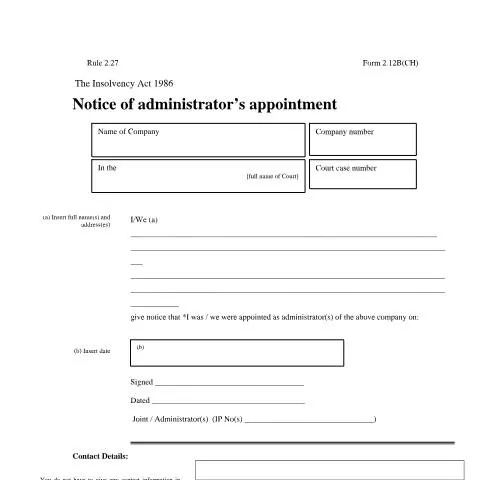
The Notice of Administrator’s Appointment is governed by the Insolvency Act 1986, which lays the groundwork for administrative procedures in the UK. This document provides vital information about the administrator appointed, the company in question, and the date of the appointment, all of which are critical for creditors and interested parties.
When filing this notice, the individual or individuals appointed as administrators must provide:
- Company Name: The legal name under which the company operates.
- Company Number: The unique identifying number assigned by Companies House.
- Court Name and Case Number: If applicable, this indicates the court where insolvency proceedings are being handled.
- Appointment Date: The official date the administrator was appointed.
- Signature: A signed declaration from the appointed administrator(s).
Who Stands to Benefit from the Notice?
The implications of filing a Notice of Administrator’s Appointment extend beyond just informing Companies House. Here are the key stakeholders:
- Creditors: They gain transparency regarding the management of the failing company and can adjust their strategies accordingly.
- Employees: Understanding the status of the company can help employees gauge job security and potential redundancies.
- Investors: Investors need to be informed about significant changes in the company’s structure to make educated decisions about their investments.
- The Public: Maintaining an open record through Companies House allows the public to stay informed about corporate health and governance.
Procedures and Protocols Surrounding the Appointment
Filing the Notice of Administrator’s Appointment is an integral part of the insolvency process, but it is crucial to follow the correct procedures to ensure compliance with the law. Here are the steps involved:
- Preparation of Required Information: Gather all necessary details about the company, the administrators, and the insolvency proceedings.
- Completion of the Notice: Fill out the 2.12B(CH) form accurately, ensuring all required fields are completed.
- Submission to Companies House: Send the signed notice to Companies House at their Cardiff address. The notice can be submitted in person or through postal mail.
It’s important to note that failure to submit the notice may impede the administrator’s ability to act effectively, as the appointment must be made official for legal purposes.
Key Concepts to Navigate the Process
Understanding several key concepts is essential for anyone involved in the administration process. Here are some important terms:
- Insolvency: This refers to the inability of a company to pay its debts as they fall due.
- Administrator: A licensed insolvency practitioner appointed to manage the company’s affairs, business, and property.
- Moratorium: A temporary period during which creditors cannot take legal action against the company.
- Creditors’ Committee: A group formed to represent the interests of the creditors during the administration period.
Interconnections with Other Documents in the Process
The Notice of Administrator’s Appointment is often just one part of a broader insolvency procedure. It is interconnected with various other documents and forms. Understanding these relationships can aid stakeholders significantly:
| Document | Purpose |
|---|---|
| Insolvency Practitioner’s Statement | Details the circumstances leading to the appointment and the proposed course of action. |
| Notice to Creditors | Informs creditors about the administration and their rights during the process. |
| Progress Reports | Regular updates on the status of the administration and outcomes expected. |
| Final Report | Summarizes the administration’s results and the financial position of the company. |
Common Misunderstandings Regarding the Role of the Administrator
With the complexities of administration, misunderstandings can arise. Here are some common misconceptions:
- The Administrator is Solely for Liquidation: While an administrator may oversee liquidation, their primary role is to attempt to rescue the company as a going concern, if feasible.
- All Creditors’ Interests are Ignored: An administrator must act in the best interests of all creditors, balancing the needs and claims of different parties.
- Filing the Notice is Optional: The notice is a legal requirement and failing to file it can lead to complications, including challenges to the validity of the appointment.
Practical Considerations for Administrators and Stakeholders
When navigating the complexities of administration, both administrators and stakeholders should consider the following practical aspects:
- Timeliness: Promptly filing the notice can significantly influence the outcomes of the administration.
- Clear Communication: Keeping all stakeholders informed fosters trust and transparency during challenging times.
- Professional Advice: Consulting a legal or financial expert can provide valuable insight into the best course of action.
In the tumultuous landscape of insolvency, understanding the role of the Notice of Administrator’s Appointment is paramount. This document serves not only as a notification to Companies House but also as a critical communication tool for stakeholders, providing transparency and clarity in an otherwise uncertain situation.
Understanding the Role of an Administrator
When a company's financial situation becomes dire, an administrator is appointed to manage its affairs, protect its assets, and attempt to rescue it as a going concern. An administrator is typically a licensed insolvency practitioner. Their primary responsibility is to act in the best interests of all creditors, making key decisions regarding the company’s operations. This role is not merely a matter of overseeing financial transactions; it involves strategic planning, negotiation with creditors, and sometimes, a comprehensive restructuring effort to restore the company's viability.
Understanding the implications of an administrator's appointment is crucial for stakeholders, including employees, shareholders, and creditors. Employees may be concerned about job security, shareholders need clarity on their investment's potential for recovery, and creditors will want to know how their debts will be managed. Clear and open communication during this period is essential to maintain trust and transparency.
Moreover, the administrator is required to prepare a statement of affairs which outlines the company's financial position, including its assets and liabilities. This document is vital for ongoing discussions with creditors and helps in formulating a strategy that aims to repay debts where possible. The administrator’s actions are guided by the Insolvency Act 1986 and relevant supplementary regulations, ensuring compliance with UK law.
Legal Framework Surrounding Notices of Appointment
The process for giving notice of an administrator's appointment is governed by specific legal requirements under the Insolvency Act 1986. According to the Act, once an administrator is appointed, they must notify various stakeholders, including Companies House, creditors, and employees, within certain timescales. The notification serves multiple purposes: it officially marks the beginning of the administration process, informs relevant parties about the appointment, and outlines the administrator's role.
Fill in your form directly online
No printing: type your details into the boxes of the official form, tick, then download the PDF ready to send.
- 1Type into the form boxes
- 2Tick in one click
- 3Save and download the PDF
It is crucial that the notice contains all necessary information about the administrator, including their name, professional qualifications, and contact details. The Act stipulates that the notice must be filed with Companies House within 7 days of the appointment. Failure to comply with these requirements can lead to complications, such as penalties or challenges to the validity of the administration process.
The notice should also include details regarding the company's financial position and the rationale for entering administration. This transparency helps to build confidence among creditors and can facilitate smoother negotiations regarding debt recovery plans. In cases of urgent appointments, where there is a risk of asset dissipation, the administrator may need to act quickly to secure assets and prevent further losses.
Implications of Notifying Stakeholders
Notifying stakeholders about an administrator’s appointment is not merely a procedural formality; it has significant implications for all involved parties. For creditors, this notice provides insight into the company's financial standing and the anticipated process for recovering their debts. It also outlines how their claims will be treated and the potential for dividend payments. Understanding these elements is essential for creditors to make informed decisions moving forward.
For employees, the appointment of an administrator may raise concerns about job security. They need to be informed about their rights, potential redundancies, and how their employment will be handled during the administration process. Typically, employees are protected under certain regulations, and their wages may be prioritized as unsecured creditors. Keeping employees informed can help alleviate anxiety and foster a sense of trust amid uncertainty.
Furthermore, shareholders need to be aware of their position in the hierarchy of creditors. In most cases, shareholders are the last to be compensated in an insolvency scenario, but understanding the full scope of their investment’s potential recovery is vital. Early notification allows shareholders to engage with the administrator, potentially influencing decisions regarding the company's future direction.
In summary, the act of notifying stakeholders after an administrator's appointment is a strategic communication effort that impacts the entire administration process. Ensuring that all parties are informed helps to facilitate smoother negotiations, enhances transparency, and ultimately contributes to the possibility of a successful turnaround or controlled winding-up of the company.