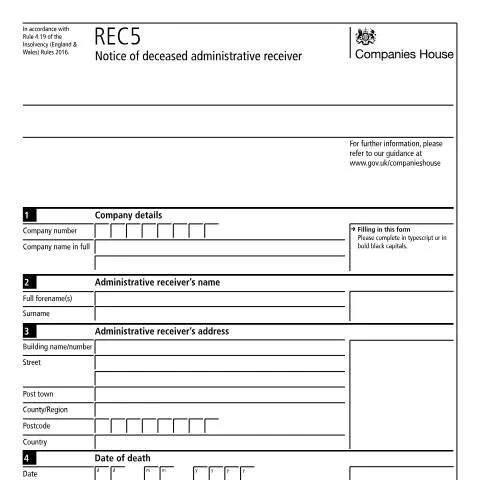
Understanding the Importance of the REC5 Notice
The REC5 notice, or the 'Notice of Deceased Administrative Receiver,' plays a pivotal role in the administrative proceedings following the unfortunate event of an administrative receiver's death. It serves as an official communication to Companies House to inform them of the administrative receiver’s passing, ensuring that the company's affairs are properly managed and that legal obligations are upheld. This notice is crucial for maintaining the integrity of the company’s records and facilitating smooth transitions in the management of corporate assets.
Key Elements of the REC5 Notice
When dealing with the REC5 document, specific components must be understood clearly to avoid any potential confusion or miscommunication. Each section of the notice serves a distinct purpose:
- Company Details: This section requires the full name and registered company number of the business, ensuring that Companies House can accurately identify the corresponding records.
- Administrative Receiver Information: Here, the name and address of the deceased administrative receiver must be provided. This information is vital for establishing the deceased's role and responsibilities within the company.
- Date of Death: Accurately documenting the date of death is essential, as this date will affect timelines for any ongoing proceedings related to the company's administration.
- Delivering the Notice: The notice must be signed by the individual delivering it, whether they are a surviving joint administrative receiver, a member of the deceased's firm, or a personal representative.
The Scope and Limitations of the REC5 Notice
While the REC5 notice is a critical document, it is essential to recognize its scope and limitations. This document only addresses the notification of the death of an administrative receiver and does not encompass other procedural matters, such as the appointment of a new receiver or the management of the company's ongoing operations. Understanding these limits is crucial to ensure that the appropriate actions follow the notice.
For instance, once the REC5 notice is filed, it does not automatically initiate the appointment of a new administrative receiver. That responsibility typically falls to either the surviving joint administrative receiver or other corporate officers as designated by the company's governing documents. Therefore, parties involved must be proactive in ensuring that the company’s interests are safeguarded after such a significant change in management.
Interconnections with Other Documents and Processes
The filing of the REC5 notice does not exist in isolation; it is part of a broader framework of insolvency and administrative law within the UK. Several interrelated documents and processes may come into play:
- Insolvency Notice (IN01): This form is often used alongside the REC5 notice. While REC5 communicates the death of the receiver, the IN01 might be needed to appoint a replacement.
- Notice of Appointment of Administrative Receiver (REC1): After notifying Companies House of a death, the subsequent appointment notice is critical for operational continuity.
- Company Accounts and Returns: The effects of the death may also necessitate changes in the filing of accounts or other statutory returns, which should be monitored closely.
Identifying the Public Targeted by the REC5 Notice
The recipients of the REC5 notice can vary widely, depending on the nature of the company and the administrative receiver's role. Understanding who needs to be notified is vital for compliance and corporate governance. Here are key audience segments:
- Surviving Administrative Receivers: If there are multiple administrative receivers, those who continue to serve must ensure they comply with the notification protocols.
- Corporate Officers: Directors and officers of the company have a vested interest in ensuring all legal obligations are met and that the company’s administration continues unobstructed.
- Company Creditors: Creditors may need to be informed about changes in the management of the company, especially if they have pending claims or interests in the company’s assets.
- Legal Representatives: Solicitors and other legal advisors may also require a copy of the REC5 notice to assist in navigating subsequent legal processes.
Avoiding Common Misinterpretations
Misinterpretations of the REC5 notice can lead to significant administrative challenges. Here are some common pitfalls and how to avoid them:
- Confusion Regarding the Role of the Deceased: Some individuals mistakenly assume that the death of an administrative receiver halts all processes. In fact, it is a change that necessitates careful management and subsequent actions.
- Timing Issues: Failing to file the REC5 notice promptly can result in delays and complications in the company’s administration, potentially affecting creditor rights and company governance.
- Insufficient Documentation: Providing incomplete or unclear information can lead to rejection of the notice by Companies House. Ensuring that all required sections are accurately completed is essential.
Practical Steps for Filing the REC5 Notice
Filing the REC5 notice involves a series of practical steps that can ensure a smooth process. Below is a checklist that can help streamline the filing:
- Gather the necessary company details, including the full name and registration number.
- Collect information regarding the deceased administrative receiver, including their full name, address, and the date of death.
- Determine who will be responsible for delivering the notice, and ensure that person is prepared to sign the document.
- Double-check all entries for accuracy, especially the company name and number, to match the records held by Companies House.
- Submit the notice via post or electronically, following the guidelines provided by Companies House.
Conclusion: The Significance of the REC5 in Corporate Governance
The REC5 notice serves as a critical tool in corporate governance, ensuring that companies maintain compliance and transparency in the face of significant changes. By understanding the nuances of this document, stakeholders can navigate the complexities of corporate administration following the death of an administrative receiver. Proper attention to this process not only facilitates legal compliance but also helps preserve stakeholder interests and corporate integrity.
Understanding the Role of an Administrative Receiver
An administrative receiver is appointed when a company enters into a secured lending arrangement where the lender can recover debts by taking control of the company's assets. This role is essential in the context of insolvency, primarily protecting the interests of creditors. The administrative receiver acts on behalf of the secured creditor, managing the company’s affairs to ensure the best possible return on the outstanding debts.
When an administrative receiver is appointed, they gain the authority to operate the business, sell assets, and even make decisions about the company's ongoing operations. This can include making staff redundancies, selling off parts of the business, or liquidating assets. Understanding this role is crucial for all stakeholders involved, including employees, unsecured creditors, and the directors of the company.
In the case of a deceased administrative receiver, it becomes necessary to follow specific protocols. The key point here is the transition of responsibilities to ensure no disruption in the handling of the company’s assets and obligations. If the administrative receiver passes away, the secured creditor must act promptly to appoint a new receiver to continue managing the company's affairs effectively.
Legal Implications Surrounding the Notice of Deceased Administrative Receiver
Notifying relevant parties about the death of an administrative receiver holds significant legal implications. According to the laws governing insolvency, such as the Insolvency Act 1986, all interested parties—including creditors, employees, and regulatory bodies—must be informed as soon as possible. This notification process is vital to maintain transparency and allow for the orderly continuation or winding down of the company’s operations.
Failure to provide timely notice could lead to legal complications, such as claims against the estate of the deceased receiver or challenges to decisions made during the period of transition. The replacement receiver would need to consider any contractual obligations entered into or claims made by third parties before the notice was given. Additionally, proper documentation must be maintained to provide a clear audit trail, which is crucial for compliance with regulatory bodies like Companies House.
Documenting the death formally using the REC5 form plays a vital role in this process. This form acts as a declaration and should be filed promptly to serve as notice to the relevant authorities, thus protecting both the interests of the creditors and the estate of the deceased receiver.
Practical Steps for Filing the REC5 Form
Filing the REC5 form involves several practical steps to ensure compliance with legal requirements. The process can be broken down into manageable stages:
Fill in your form directly online
No printing: type your details into the boxes of the official form, tick, then download the PDF ready to send.
- 1Type into the form boxes
- 2Tick in one click
- 3Save and download the PDF
Gather Required Information: Before completing the REC5 form, collect all necessary information, including the full name of the deceased administrative receiver, the date of their passing, and relevant details about the company they oversaw. This information is critical for accurately filling out the form and ensuring all parties are correctly notified.
Complete the REC5 Form: Accurately fill out the REC5 form, ensuring all information is current and precise. Mistakes or omissions can lead to delays or complications in the appointment of a new receiver. The form must include details about the receiver's replacement, ensuring a seamless transition of responsibilities.
Notify Relevant Authorities: After completing the REC5 form, it must be submitted to Companies House and other relevant authorities. This notification is crucial for maintaining the legal standing of the company and ensuring that any actions taken during the transition period are valid and enforceable.
Communicate with Stakeholders: It's also essential to communicate with all stakeholders involved, including employees, unsecured creditors, and any regulatory bodies that may have an interest in the company's operations. Providing clear and concise communication will help manage expectations and clarify the next steps in the administrative process.
Document the Transition Process: Throughout this process, maintain accurate documentation as a safeguard against any potential disputes that may arise in the future. This documentation should include copies of the REC5 form, correspondence with stakeholders, and any decisions made regarding the company's affairs during the transition.
By following these practical steps, you can ensure a smooth administrative process following the passing of an administrative receiver. This diligence not only protects the interests of creditors but also demonstrates a commitment to responsible business practices during difficult times.