Understanding the AM11 Document: A Key to Effective Company Administration
When a company in the UK undergoes changes in its administration, the necessity to appoint replacement or additional administrators often arises. This is where the AM11 document—officially known as the "Notice of appointment of replacement or additional administrator"—becomes crucial. This document is not merely a bureaucratic form; it plays a pivotal role in ensuring that the company remains compliant with the Insolvency (England & Wales) Rules 2016. Understanding this document in depth can prevent missteps that might lead to administrative delays.Contextualizing the AM11 Document
The AM11 form is rooted in the complex web of insolvency law and is specifically designed for situations that demand the appointment of new administrators. This may occur when the original administrator resigns, passes away, or is otherwise unable to fulfil their duties. By filing the AM11 document, stakeholders are officially notifying Companies House of this change, which is essential for maintaining an accurate public record.Key Components of the AM11 Document
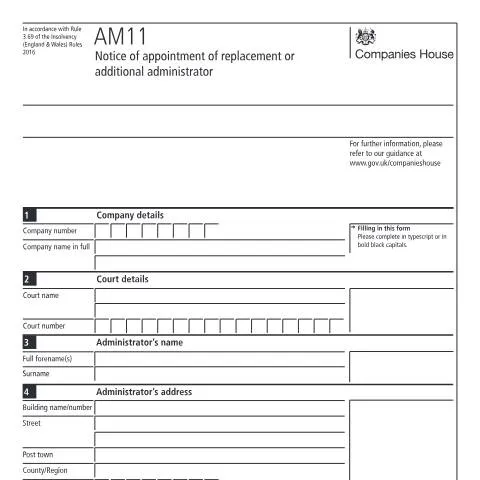
The AM11 form consists of several integral sections, each serving a distinct purpose. Familiarizing oneself with these parts can streamline the administrative process:- Company Details: This section requires the full company name and company number, critical for identifying the entity involved.
- Court Information: The court number and name must be specified, linking the appointment to the relevant legal jurisdiction.
- Administrator’s Information: Full name, address, email, and telephone number of the new administrator need to be provided.
- Insolvency Practitioner Number: This unique identifier is essential for confirming the administrator's qualifications.
- Signature: The administrator must sign and date the form, affirming the validity of the appointment.
Why Accurate Completion Matters
Every detail in the AM11 form is significant. Inaccuracies or missing information can lead to your submission being returned, which may delay the administrative processes essential for the company’s operations. It’s critical to ensure that the company name and number match the public register exactly. This attention to detail is not just a formality; it ensures that the appointment is legally recognized and protects the interests of all stakeholders.Navigating Common Misinterpretations
Understanding the AM11 form can be fraught with challenges, particularly for those new to company administration. Some common misinterpretations include:- Confusing “Replacement” with “Additional”: It's essential to clarify whether the appointment is for a replacement administrator or an additional one. This distinction can affect the legal standing of the administration.
- Underestimating the Importance of Contact Information: While providing an email address or phone number is not mandatory, doing so can facilitate communication in case Companies House needs further clarification.
- Neglecting Signature Requirements: The absence of a signature can invalidate the submission, leading to unnecessary delays and complications.
Step-by-Step Guide to Using the AM11 Document
For those unfamiliar with the process, here is a detailed step-by-step guide on utilizing the AM11 document effectively:- Gather Company Information: Ensure you have the full company name and company registration number at hand.
- Identify the Court: Locate the correct court number and name relevant to the company’s insolvency.
- Collect Administrator Details: Gather the new administrator’s full name, address, email, and telephone number. If applicable, ensure to include their insolvency practitioner number.
- Complete the Form: Fill out the AM11 in typescript or bold black capitals. Accuracy in this step is paramount.
- Signature: The new administrator must sign and date the form to validate the appointment.
- Review and Double-check: Before submission, review the filled form for accuracy and completeness.
- Submit the AM11 Document: Send it to Companies House. While it can be sent to any address, it is advisable to use the designated address for faster processing.
Understanding the Legal Framework
The AM11 operates within the framework set by the Insolvency (England & Wales) Rules 2016. It is essential to comprehend the implications of these regulations on the appointment of administrators. The rules stipulate that the appointment must be valid and lawful, and that any changes to administration should be recorded promptly to ensure transparency and compliance.Practical Considerations for Stakeholders
Certain scenarios necessitate a keen awareness of the AM11 form. Here are several considerations for different stakeholders involved:- Company Directors: Directors need to understand the legalities surrounding the appointment of administrators to avoid potential personal liabilities.
- Creditors: Creditor stakeholders must be aware of the appointment process, as it can impact their recovery prospects.
- Legal Advisors: Legal professionals assisting companies with insolvency matters should be well-versed in the nuances of the AM11 form to provide accurate guidance.
Limitations of the AM11 Document
While the AM11 is a critical document for administrators, it does not cover every aspect of administrative changes. It is important to understand its limitations:- Not a Comprehensive Solution: The AM11 does not address other obligations that may arise during the insolvency process, such as the need to inform creditors or other stakeholders.
- Scope of Authority: The form does not define the scope of authority granted to the new administrator; this must be established through other legal documentation.
Fostering Best Practices in Administration
To optimize the use of the AM11 document, stakeholders should adopt best practices that promote efficiency and compliance. Here are some strategies:- Maintain Updated Records: Regularly update company records to reflect changes in administration, ensuring that the AM11 document can be completed accurately.
- Engage with Professional Advisors: Collaborate with insolvency practitioners and legal advisors who can provide valuable insights throughout the appointment process.
- Educate Team Members: Ensure that team members involved in the administration of the company understand the importance and implications of the AM11 form.
Final Thoughts on the AM11 Document
The AM11 form is an essential element in the governance of company administration in the UK. While it may seem straightforward, the intricacies involved in its completion and submission warrant careful consideration. By adhering to the guidelines laid out and fostering a culture of transparency and compliance, stakeholders can navigate the complexities of insolvency with confidence. In summary, the AM11 document serves as a vital means of informing Companies House about changes in company administration. Its proper use not only safeguards the interests of the company and its stakeholders but also plays a significant role in upholding the integrity of corporate governance in the UK. Understanding its components, the context in which it operates, and the best practices surrounding its use will undoubtedly lead to smoother administrative processes and enhanced compliance with legal obligations.Understanding the Role of Administrators in Insolvency Proceedings
Administrators play a crucial role in insolvency proceedings, primarily tasked with rescuing a company or achieving a better result for its creditors than would be possible through liquidation. The appointment of an administrator, whether it's a replacement or an additional administrator, can significantly influence the outcome of the insolvency process. It’s essential for stakeholders—such as creditors, shareholders, and staff—to comprehend the responsibilities and powers vested in administrators.
When an administrator is appointed, they gain control over the company’s affairs, property, and assets. This control allows them to make critical decisions regarding the business's future, including selling assets, renegotiating debts, or even continuing to trade if viable. Understanding these dynamics is crucial for anyone involved in or affected by the administration.
Moreover, the appointment of a replacement administrator, as outlined in the AM11 form, means that a new administrator is stepping into the role, which can shift the direction of the administration. Stakeholders should evaluate the qualifications and experiences of the new appointee, as their expertise can significantly impact the administration's effectiveness.
Step-by-Step Guide to Completing Form AM11
Completing the AM11 form requires careful attention to detail, as inaccuracies may lead to delays in processing or complications in the administration process. Here’s a step-by-step guide to ensure that you navigate this process smoothly:
- Gather Required Information: Before starting, ensure you have all necessary documentation, including the original administrator’s details, the appointment date, and the reasons for the change.
- Fill in Company Details: Begin by entering the company’s name and registration number at the top of the AM11 form. This ensures that HMRC and Companies House can accurately identify the entity involved.
- Provide Details of the Current Administrator: Fill in the name and contact information of the current administrator. If this is a removal, clarify the termination date and reason for replacement.
- Details of the New Administrator: Enter the full name and qualifications of the new or additional administrator. It’s important to outline their professional background, as this can influence stakeholders’ confidence in the administration process.
- Signature and Date: The form must be signed by the person making the application, typically the new administrator or a relevant party in the company. Ensure that all sections are completed and that the form is dated correctly.
After completing the form, submit it to the appropriate authorities, ensuring you keep a copy for your records. The timely submission of the AM11 form is crucial, as delays may hinder the administration process and affect the rights of creditors.
Common Pitfalls to Avoid When Filing Form AM11
Filing the AM11 form may seem straightforward, but several common pitfalls can complicate the process. Here are some key areas to pay attention to:
Fill in your form directly online
No printing: type your details into the boxes of the official form, tick, then download the PDF ready to send.
- 1Type into the form boxes
- 2Tick in one click
- 3Save and download the PDF
- Inaccurate Information: Double-check all entered information for accuracy. Mistakes in names, dates, or company registration numbers can lead to significant delays.
- Failure to Notify Stakeholders: It's essential to inform all relevant stakeholders about the change in administration. Failing to do so can result in confusion and mistrust among creditors and employees.
- Ignoring Deadlines: Be aware of the deadlines for filing the AM11 form. Late submissions can undermine the legitimacy of the administration and may lead to legal complications.
- Neglecting to Update Other Documentation: If there are other statutory documents that need updating as a result of the administrator change, such as statements to creditors or annual returns, ensure these are addressed promptly.
By being proactive and thorough in your approach, you can mitigate these risks and facilitate a smoother transition during the administration process.