Understanding the Notice of Appointment of an Administrator: A Comprehensive Guide
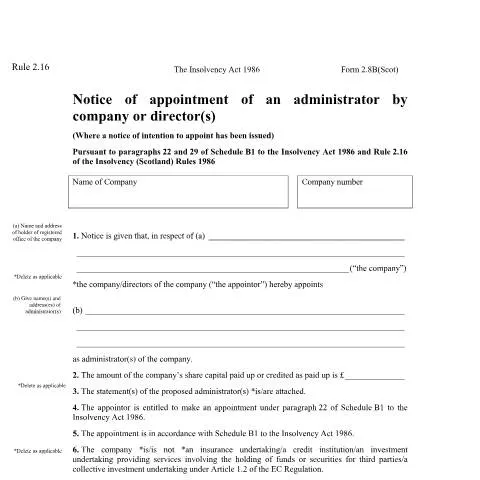
The Notice of Appointment of an Administrator, specifically Form 2.8B for Scotland, serves as a crucial document within the framework of insolvency proceedings. In situations where a company or its directors face financial distress, this form becomes an indispensable tool in the quest for administrative resolution. Navigating the intricacies of this notice requires a clear understanding of its purpose, the processes involved, and the implications for all parties concerned.
Key Components of the Notice
The Notice of Appointment of an Administrator comprises several vital components that fulfill specific legal requirements under the Insolvency Act 1986. Understanding these elements is critical for ensuring compliance and clarity throughout the administrative process.
- Name of Company: This section captures the official name of the company undergoing insolvency proceedings.
- Company Number: Identifying the company through its unique registration number helps to maintain accurate records.
- Appointment Details: The document stipulates who is appointed as the administrator, including their name and professional details.
- Share Capital Information: This indicates the amount of share capital that is either paid up or credited as paid up, providing a snapshot of the company’s financial health.
- Statement Attachments: Any supporting statements from the proposed administrator(s) must be included to provide context to the appointment.
- Regulatory Compliance: The appointor must confirm their entitlement to make the appointment and that it complies with the relevant schedules of the Insolvency Act.
The Process of Appointment: Step by Step
Filing a Notice of Appointment of an Administrator is a structured process that adheres to specific rules outlined in the Insolvency (Scotland) Rules. Here's how the procedure typically unfolds:
- Notice of Intention: The appointor must issue a notice of intention to appoint an administrator, which alerts relevant stakeholders, including creditors.
- Waiting Period: A minimum of five business days must be observed after issuing the notice of intention before the actual appointment can take place, allowing time for any objections to be raised.
- Documentation Preparation: During this waiting period, the necessary documentation, including Form 2.8B and any supporting statements, should be meticulously prepared.
- Lodging the Notice: The completed notice is then lodged with the court, officially marking the commencement of the appointment process.
- Confirmation and Administration: Upon lodging the notice, the appointment of the administrator becomes effective, and they assume responsibility for managing the company’s affairs.
Common Misinterpretations and Pitfalls
When dealing with the Notice of Appointment of an Administrator, misunderstandings can lead to significant complications. Here are some frequently misinterpreted aspects and potential pitfalls:
- Misunderstanding the Role of the Administrator: Many believe the administrator solely acts in the interests of the company, but their primary obligation is to secure the best outcome for all creditors.
- Neglecting the Waiting Period: Failing to observe the mandatory five business days can invalidate the appointment, complicating the insolvency proceedings.
- Incorrect Information: Providing inaccurate details, especially regarding share capital or company identity, can lead to legal repercussions and delays.
- Inadequate Documentation: Not attaching necessary statements from the administrator can result in the court rejecting the notice.
Scenarios Requiring the Notice
The necessity of filing a Notice of Appointment of an Administrator arises in various scenarios. Understanding these contexts can clarify when this document becomes essential:
- Financial Distress: Companies facing insolvency due to cash flow issues, excessive debts, or poor financial management often resort to this notice.
- Creditors’ Pressure: When creditors initiate legal proceedings or apply pressure for the recovery of debts, appointing an administrator can provide a buffer and facilitate negotiations.
- Business Restructuring: Companies looking to restructure their operations to remain viable may opt for administration as part of their turnaround strategy.
- Protection from Liquidation: Filing the notice can temporarily halt liquidation proceedings, granting the company a chance to reorganize its affairs.
Implications of the Appointment
Once the Notice of Appointment is filed and an administrator is in place, various implications arise that affect the company, its directors, and its creditors:
- Control Transition: The appointed administrator takes control of the company’s assets and operations, overriding the powers of the existing directors.
- Creditor Interactions: The administrator becomes the primary point of contact for creditors, responsible for assessing claims and determining payment outcomes.
- Legal Protections: The appointment can invoke legal protections for the company, shielding it from creditor actions and allowing time for recovery or asset liquidation.
- Employee Considerations: The administrator's actions may impact employees, leading to job security uncertainties, potential redundancies, or restructuring.
Legal Framework and Compliance
Operating within the framework of the Insolvency Act 1986, the appointment must comply with various legal stipulations. Understanding these requirements is essential for ensuring the legality and effectiveness of the appointment:
| Requirement | Description |
|---|---|
| Notice Period | At least five business days' notice must be given before the appointment can be confirmed. |
| Documentation | All relevant documentation, including supporting statements, must be accurately prepared and attached. |
| Court Lodgment | The completed notice must be lodged with the appropriate court to formalize the appointment. |
| Regulatory Compliance | The appointment must comply with specific provisions outlined in Schedule B1 of the Insolvency Act 1986. |
Final Thoughts on the Notice's Relevance
The Notice of Appointment of an Administrator is more than just a formality; it represents a vital step in navigating the complexities of insolvency. For directors and companies facing financial challenges, understanding the nuances of this document can mean the difference between recovery and further decline. Engaging with insolvency practitioners and legal advisors can provide crucial insights, ensuring the right steps are taken during this critical phase. In a landscape marked by uncertainty, clarity and adherence to procedure are paramount for the best possible outcomes.
Understanding the Role of an Administrator
The appointment of an administrator is a crucial step in managing a company facing financial difficulties in Scotland. An administrator's primary role is to rescue the company as a going concern, or if that is not possible, to achieve a better result for the company’s creditors than would be likely if the company were wound up. Under the Insolvency Act 1986, the administrator takes control of the company’s affairs and has the authority to make decisions about its operations, assets, and relationships with creditors.
It is essential to understand the implications of appointing an administrator. Firstly, the administrator will assess the company’s financial situation and will often work on a plan to either restructure the debt or to sell assets to generate funds. In this process, the administrator acts in the best interests of the creditors as a whole, which may sometimes lead to conflicts with the interests of company directors or shareholders. Furthermore, the administrator must adhere to the strict guidelines set forth in the Act and must act transparently, documenting all decisions and actions taken during the administration period.
Potential Challenges During the Administration Process
While the administrative process can be beneficial, it is not without challenges. One significant issue that may arise is the possible opposition from creditors. Creditors may not agree with the administrator’s proposed course of action, leading to disputes that could complicate the administration process. For instance, if the administrator proposes to sell assets that certain creditors believe are essential for repaying their debts, this could lead to conflict.
Another challenge is the legal obligations imposed on the administrator. Under the Data Protection Act 2018 and UK GDPR, all personal data handled during the administration process must be processed lawfully, fairly, and transparently. This adds a layer of complexity, especially when dealing with sensitive financial information. The administrator must ensure compliance with these regulations, which might require additional resources and time.
Additionally, the effectiveness of the administration procedure depends on the quality of the information provided by the company to the administrator. Inaccurate or incomplete financial statements can lead to misguided decision-making and ultimately impact the outcome of the administration. Therefore, it is crucial for directors to provide full disclosure of all information and to cooperate fully with the administrator.
Fill in your form directly online
No printing: type your details into the boxes of the official form, tick, then download the PDF ready to send.
- 1Type into the form boxes
- 2Tick in one click
- 3Save and download the PDF
The Process of Filing Form 2.8B: Detailed Steps
Filing Form 2.8B, the Notice of Appointment of an Administrator in Scotland, involves several key steps. This document is essential for officially registering the appointment and ensuring that all stakeholders are informed of the administration process.
Firstly, the company or the directors must complete the form accurately, providing essential details such as the names of the appointed administrators, their addresses, and a declaration confirming the decision to appoint them in accordance with the provisions of the Insolvency Act 1986. It is vital that all sections of the form are filled out thoroughly to avoid delays or complications in processing.
After filling out the form, it must be signed by the relevant parties, typically the directors or the company secretary. Once signed, the form needs to be submitted to the court or the appropriate authority, along with any required fees. It is advisable to send the form via recorded delivery or another trackable method to ensure proof of submission.
Upon receiving the form, the court will verify the information and, if everything is satisfactory, will register the appointment. This registration will trigger a series of notifications that must be sent to all known creditors, suppliers, and other relevant parties. The administrator is responsible for managing these communications to ensure that all parties are informed of the administration and their rights during this process.
Timelines can vary, but it is generally advisable to expect confirmation of the registration within a few days to a week. Once registered, the administrator can commence their duties, which may include conducting a detailed assessment of the company's finances, engaging with creditors, and formulating a strategy for the company's future.