Understanding the Role of the Rule 16.2 and 16.3 Proxy Form in Bankruptcy Proceedings
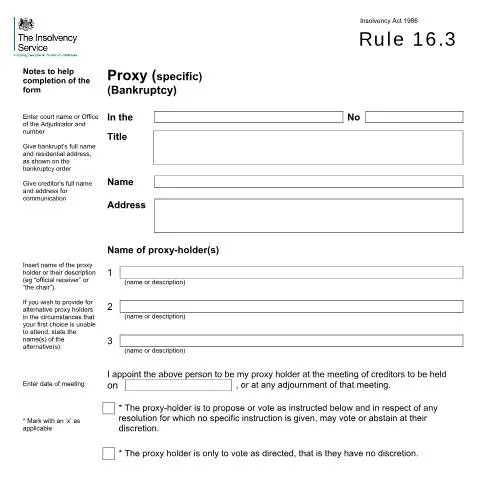
When facing bankruptcy, an often-overlooked yet critical aspect involves the power of representation at creditor meetings. The Rule 16.2 and 16.3 proxy (specific) form, administered by The Insolvency Service, enables creditors to appoint a proxy holder to voice their opinions and vote on resolutions on their behalf. This form serves as a vital instrument in ensuring that creditors' rights are preserved, particularly when they cannot personally attend these meetings.
Who Needs to Submit the Proxy Form?
Understanding who is required to complete and submit this form is essential for creditors involved in insolvency proceedings. The form is primarily intended for those who:
- Are creditors in a bankruptcy case and wish to delegate their voting rights.
- Are unable to attend the creditors' meeting due to personal reasons, such as health issues or geographical constraints.
- Wish to ensure their interests are represented in critical decisions affecting their claims, such as the appointment of a trustee or the removal of the official receiver.
In essence, if you are a creditor and do not plan to attend the meeting of creditors, this form is indispensable for safeguarding your interests.
A Step-by-Step Guide to Completing the Proxy Form
Completing the Rule 16.2 and 16.3 proxy form can seem daunting, but breaking it down into manageable sections can simplify the process. Below is a detailed walkthrough that can help avoid common pitfalls:
- Identifying the Court: Begin by entering the name of the court or the Office of the Adjudicator along with the relevant case number. This information is crucial for tracking your submission.
- Filling in Personal Details: Clearly provide the bankrupt's name and full residential address as stated in the bankruptcy order. This ensures the form links correctly to the case at hand.
- Designating the Proxy Holder: Enter the name(s) of the proxy holder(s) you wish to appoint. This could include an official receiver or the meeting chair. If you have alternative nominees, list them here as well.
- Meeting Details: Specify the date of the creditors’ meeting. It’s critical to ensure this aligns with scheduled proceedings to avoid confusion.
- Voting Instructions: One of the most vital sections, you will indicate how the proxy holder should vote on various resolutions. You can choose to give discretion to the proxy or instruct them to vote strictly as directed. Make sure to mark this clearly with an ‘X’.
- Resolution Details: Enter any specific resolutions for which you want to provide instructions. If further resolutions need to be proposed, these should be numbered sequentially.
- Signature and Authentication: Finally, ensure to sign and date the form. If you are submitting on behalf of a company, specify your relationship to the company. Email submissions are acceptable if the name is entered in block capitals. Be sure to send the form from an email address identified with you.
The Chronology of Proxy Submission: From Initiation to Decision
Understanding the timeline and processes involved in submitting the proxy form can enhance clarity and ensure timely action. Here is a chronological breakdown:
- Initiation of Bankruptcy Proceedings: Once bankruptcy proceedings commence, creditors will be informed of the upcoming creditors' meeting.
- Receiving the Proxy Form: Creditors must obtain the Rule 16.2 and 16.3 proxy form, typically through insolvency practitioners or directly via The Insolvency Service.
- Filling the Form: Creditors should complete the form with accurate information, following the instructions detailed previously.
- Submission Deadline: It’s essential to submit the completed form before the scheduled meeting, ensuring that it conforms to any stipulated deadlines by the insolvency practitioner.
- Meeting of Creditors: During the meeting, the proxy holder can represent the creditor, voicing opinions and casting votes based on the instructions provided.
- Post-Meeting Outcomes: Outcomes of the meeting, including decisions made regarding the appointed trustee or any other resolutions, will be communicated to creditors.
Methods of Submission: Choosing the Right Channel
When submitting the Rule 16.2 and 16.3 proxy form, creditors have several options regarding how to deliver their forms. Each method has distinct characteristics:
| Method | Description | Pros | Cons |
|---|---|---|---|
| Post | Sending the completed form via traditional mail. |
|
|
| Sending the form as an attachment from an identified email address. |
|
|
|
| In-Person | Delivering the form directly to the insolvency office. |
|
|
Decoding the Sections: What Each Part Means
The Rule 16.2 and 16.3 proxy form consists of various sections, each designed to collect specific information essential for the meeting's integrity. Here's a closer look at each component:
Proxy Holder Information
This section allows you to appoint one or multiple individuals as proxy holders. It is crucial to ensure that the individuals are trustworthy and capable of representing your interests effectively at the meeting.
Voting Instructions
This section is where the nuances of your voting preferences come into play. You can opt to provide specific instructions for how your proxy holder should vote. Failure to provide clear instructions may leave your proxy holder with discretion that does not align with your interests, potentially leading to outcomes that you do not support.
Resolution Details
Here, you can outline specific resolutions that your proxy holder will be tasked with either proposing or voting on. It is vital to articulate these clearly, as they guide the proxy’s actions during the meeting.
The Importance of Timeliness: What Happens If You Miss the Deadline?
Missing the deadline for submitting the Rule 16.2 and 16.3 proxy form can have significant repercussions for creditors. If the form is not submitted in time:
- You may lose your right to vote on key resolutions affecting your claim and the management of the bankrupt estate.
- Your interests might not be adequately represented, potentially leading to decisions that adversely impact your financial recovery.
- It could complicate your standing with the bankruptcy proceedings, leading to additional administrative hurdles.
Thus, adhering to submission timelines is not merely a procedural formality; it is an essential action that directly influences the potential outcomes of your situation.
Final Considerations and Tips for Effective Proxy Submission
In navigating the intricacies of the Rule 16.2 and 16.3 proxy form, there are several best practices that creditors should consider:
- Double-Check Details: Always verify the accuracy of the information entered in the form, including names, addresses, and meeting dates.
- Use Clear Language: Ensure that your voting instructions and resolutions are articulated clearly to avoid misinterpretation.
- Keep Copies: Maintain copies of submitted forms and any correspondence for your records, as these may be valuable in future discussions or disputes.
- Monitor Communication: Stay informed about any communications regarding the creditors’ meeting and outcomes to remain engaged in the process.
Being well-informed and prepared is your best strategy in ensuring that your voice is heard in the bankruptcy proceedings.
Understanding Rule 16.2 and 16.3 in Bankruptcy Proceedings
Rule 16.2 and 16.3 of the Insolvency Rules 2016 play crucial roles in the bankruptcy process within the UK. These rules specifically address the use of proxies in meetings of creditors, which are vital when it comes to making collective decisions regarding the financial affairs of an insolvent individual. Understanding these rules can empower creditors and stakeholders alike to navigate the often complex landscape of bankruptcy proceedings effectively.
Rule 16.2 allows a creditor to appoint a proxy to attend meetings on their behalf. This means that if a creditor cannot attend a meeting of creditors due to geographical constraints or other commitments, they can still participate in the decision-making process. The importance of notifying the appointed proxy in advance cannot be overstated, as it ensures they are adequately prepared to represent the interests of the creditor effectively.
Conversely, Rule 16.3 specifies how proxies must be appointed and the necessary formalities involved. A proxy's appointment must be made in writing, often requiring a specific form to be filled out and submitted to ensure validity. This rule further stipulates that notices regarding the proxy's appointment must be provided to both the insolvency practitioner and any other relevant parties. Understanding the nuances of these requirements can help creditors avoid potential pitfalls, such as the rejection of their proxy due to improperly filled documentation.
Practical Considerations for Creditors Using Proxies
When considering the use of proxies under Rule 16.2 and Rule 16.3, creditors must be aware of several practical considerations that can impact the effectiveness of their representation.
Firstly, timing is essential. Proxies must often be appointed well in advance of the meeting date. Creditors should review the notice of the meeting carefully, as it will contain deadlines for proxy appointments. Missing these deadlines can result in a loss of the opportunity to influence decisions made during the meeting.
Secondly, the choice of proxy is just as important as the act of appointing one. Creditors should consider selecting someone who is knowledgeable about the bankruptcy process, familiar with the creditor’s specific interests, and capable of articulating their position effectively. This could be a legal representative, a business partner, or even a trusted advisor. The effectiveness of the proxy relies heavily on their understanding of the case and the dynamics at play within the meeting.
Lastly, creditors should maintain open lines of communication with their proxies. Providing them with written materials and updates regarding the bankruptcy case can be instrumental in ensuring that they represent the creditor's interests accurately. Additionally, establishing a clear mandate outlining what the proxy should advocate for can further enhance the effectiveness of the representation.
Challenges and Common Pitfalls in Proxy Appointments
While the provisions for using proxies under Rule 16.2 and 16.3 provide creditors with a valuable opportunity to have their voices heard, several challenges and common pitfalls can obstruct this process.
One common issue is the submission of incomplete or incorrectly filled proxy forms. Creditors should be meticulous in filling out the required forms. Any mistakes, such as missing signatures or incorrect identification details, could render the proxy appointment invalid. Creditors are advised to seek guidance from the insolvency practitioner or other qualified advisors to ensure that their documentation is in order.
Another challenge arises from the communication barriers between creditors and their proxies. In situations where creditors appoint proxies without clear instructions or fail to provide necessary information about the case, proxies may find themselves ill-equipped to represent their interests effectively. To avoid this pitfall, creditors should take the time to prepare comprehensive notes and guidance for their proxies, including their desired outcomes and any key arguments to consider during the meeting.
Furthermore, creditors should be aware of the potential for conflicts of interest, especially if the appointed proxy has existing relationships with other creditors or parties involved in the bankruptcy proceedings. It’s crucial for creditors to assess whether their chosen proxy can remain impartial and focused solely on representing their interests, or if there may be competing interests that could affect the proxy's effectiveness.