Understanding Rule 15.18: How Creditors Can Request a Decision in Bankruptcy Proceedings
The insolvency process in England and Wales is governed by the Insolvency (England and Wales) Rules 2016, which provide detailed procedures for managing bankruptcy cases. One important aspect of this process involves the ability of creditors to request a formal decision from the court regarding the appointment or removal of an official receiver or trustee. Rule 15.18 specifically addresses how creditors can initiate a request for a decision concerning the trustee in a bankruptcy case.
The Purpose and Scope of Rule 15.18
Rule 15.18 enables creditors to formally request the court to make a decision about the appointment or removal of an official receiver acting as trustee in a bankruptcy estate. This mechanism is designed to ensure that creditors have a voice in the management of the bankruptcy estate, particularly in cases where there may be concerns about the conduct or suitability of the current trustee. The rule applies to proceedings where a creditor believes that a change in trustee is necessary for the proper administration of the estate.
Procedural Requirements for Making a Request
Submission of the Request
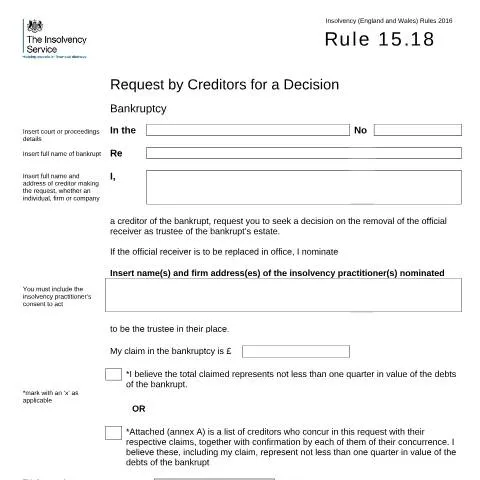
The request must be made using a specific form, which includes detailed information about the creditor, the bankruptcy case, and the proposed actions. The form requires the creditor to insert the full name of the bankrupt individual or company, details of the court or proceedings, and the full name and address of the creditor making the request. The creditor must also specify the amount of their claim and provide evidence that their claim represents at least one quarter of the total debts of the bankrupt.
Consent of the Insolvency Practitioner
It is mandatory to include the consent of the insolvency practitioner to act as trustee if a replacement is proposed. This ensures that any new trustee nominated by the creditor is willing and able to undertake the responsibilities involved.
Supporting Evidence and Concurrence
If the creditor believes that their claim, along with other creditors' claims, constitutes at least 25% of the total debts, they can either:
- State that their claim alone meets this threshold, or
- Attach an annex listing other creditors who concur with the request, including their claims and confirmation of their concurrence.
This process ensures that the request reflects a significant proportion of the creditors' interests, thereby justifying the court's consideration.
Form and Authentication
The form can be submitted either in hard copy or electronically via email. When submitting electronically, the creditor must include their name in capital letters and send the form as an attachment from an email address that clearly identifies them or has been notified to the official receiver. This method facilitates efficient processing while maintaining the integrity of the request.
Implications for Creditors and the Bankruptcy Process
By submitting a Rule 15.18 request, creditors can influence the administration of a bankrupt estate, potentially leading to the appointment of a different trustee if the court agrees with their request. This mechanism provides a formal avenue for creditors to address concerns about the management of the estate, especially in cases where the current trustee's conduct or suitability is questioned.
It is important for creditors to ensure that their claims and supporting documentation are accurate and complete, as these form the basis for the court's decision. The process underscores the collaborative nature of insolvency proceedings, where creditor input plays a vital role in safeguarding their interests and ensuring proper estate management.
Conclusion
Rule 15.18 of the Insolvency Rules 2016 offers a structured procedure for creditors to request a court decision regarding the appointment or removal of a trustee in bankruptcy cases. By adhering to the prescribed form and procedural requirements, creditors can effectively participate in the oversight of the bankruptcy process, ensuring that the estate is managed in a manner that reflects the collective interests of those owed money.