Understanding Rule 19.9: Application by Interested Parties for Decision on Disclaimer in Bankruptcy
The process outlined under Rule 19.9 of the Insolvency Rules provides a formal mechanism for interested parties to request a decision from the bankruptcy trustee regarding the disclaimer of property. This procedure is crucial for individuals or entities who have a vested interest in the property of a bankrupt estate and seek clarity on whether the trustee will disclaim certain assets. This article explains the purpose, scope, and procedural aspects of Rule 19.9 applications, offering guidance for interested parties navigating the UK bankruptcy framework.
Purpose and Scope of Rule 19.9 Applications
Rule 19.9 enables interested parties—such as creditors, landlords, or other stakeholders—to formally request that the trustee in bankruptcy makes a decision on whether to disclaim specific property belonging to the bankrupt estate. Disclaiming property means the trustee refuses to accept responsibility for it, often to facilitate the administration of the estate or to resolve potential legal or financial issues linked to the asset.
This application process is particularly relevant when there is uncertainty about the estate’s assets or liabilities, or when the interested party has a specific interest in the property—such as a landlord seeking clarity on whether the trustee will disclaim a leasehold interest. The mechanism ensures transparency and provides a structured way for interested parties to influence the administration of the bankruptcy estate.
Key Elements of the Application Process
Filing the Application
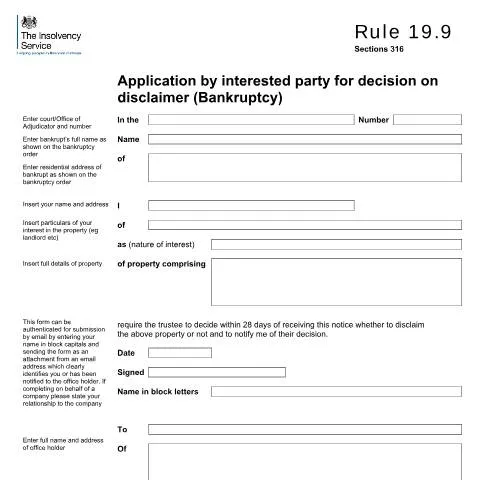
The applicant must complete a formal notice using the prescribed form, which includes details such as the applicant’s name, address, and nature of interest in the property. It is essential that the application is delivered directly to the trustee or office holder managing the bankruptcy. Proof of delivery may be requested in accordance with Rule 1.52, which ensures the application has been properly served.
The form requires specific information about the property in question, including a full description and the relevant court or Office of the Adjudicator case number. If the applicant is submitting the application via email, they must include their name in block capitals and send it from an email address that clearly identifies them or has been notified to the trustee.
Timeframe for Decision
Once the trustee receives the application, they are required to decide whether to disclaim the property within 28 days. The trustee must notify the applicant of their decision, which can either be to disclaim or to accept the property into the estate. This timeframe ensures that interested parties receive timely responses, facilitating effective estate management.
Implications for Interested Parties
By submitting a Rule 19.9 application, interested parties gain a formal avenue to influence the handling of property within a bankruptcy. If the trustee disclaims the property, the interested party may need to consider alternative legal or financial strategies, such as pursuing claims against the estate or adjusting their expectations regarding recovery.
Conversely, if the trustee refuses to disclaim, the property remains part of the estate and may be subject to further administration or sale, impacting the interests of creditors and other stakeholders. Understanding these procedural rights allows interested parties to better protect their interests during bankruptcy proceedings.
Legal and Procedural Considerations
Applicants must ensure that their application complies with the formal requirements, including proper delivery and accurate completion of the prescribed form. The process is governed by the Insolvency Rules and relevant legal provisions, ensuring transparency and fairness.
In cases where the applicant is acting on behalf of a company or other entity, they should clearly state their relationship to the entity and provide the necessary details for authentication.
Conclusion
Rule 19.9 offers a vital procedural tool for interested parties seeking clarity and influence over property in bankruptcy cases. By understanding the application process, relevant deadlines, and legal obligations, stakeholders can effectively participate in the estate’s administration, ensuring their rights are protected within the framework set out by UK insolvency law.