Understanding the Tailored Fixed Fee: Annual Claim Adjustment Pack
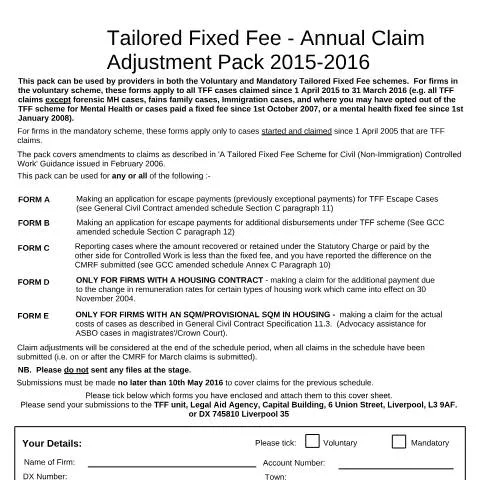
Imagine you’re a legal professional working tirelessly on cases under the Tailored Fixed Fee (TFF) scheme, ensuring your clients receive the legal aid they deserve. As part of your administrative responsibilities, it's crucial to accurately complete the Annual Claim Adjustment Pack. This document serves as a lifeline to ensure you are reimbursed adequately for your work. Grasping the nuances of this pack can mean the difference between a smooth financial process and potential complications down the line.
Who Should File This Adjustment Pack?
The adjustment pack is specifically designed for firms involved in the TFF scheme, which can either be voluntary or mandatory. Understanding your firm's classification is essential, as it determines which sections of the pack you must complete. Below is a breakdown of who is required to file:
- Voluntary Scheme Participants: Firms opting into the scheme can claim adjustments for all TFF cases from 1 April 2015 to 31 March 2016.
- Mandatory Scheme Participants: This applies to firms handling cases initiated from 1 April 2005 onward. Ensure you are up to date with any contractual obligations outlined in the General Civil Contract.
Knowing your status helps streamline the process and avoid unnecessary rejections.
Dissecting the Required Forms: What to Know
The annual claim adjustment pack includes several specific forms, each addressing distinct aspects of your claims. Familiarizing yourself with these forms not only ensures accuracy but also speeds up the processing time for your claims. Below are the main forms included:
| Form Code | Description | Notes |
|---|---|---|
| FORM A | Escape Payments for TFF Escape Cases | Applicable if costs exceed £2,500 or 3 times the TFF. |
| FORM B | Disbursements | Claim adjustments for additional costs incurred during the TFF scheme. |
| FORM C | Statutory Charge | For reporting cases with lower recoveries than the fixed fee. |
| FORM D | Housing Uplift | Claim adjustments due to changes in remuneration rates for housing work. |
| FORM E | ASBO Cases | For advocacy assistance in specific cases. |
Each form has its unique requirements and implications. It's imperative to carefully evaluate which forms are applicable to your cases and ensure all necessary information is accurately recorded.
The Timing of Your Submission: A Ticking Clock
When managing administrative duties, timing is everything. The adjustment pack must be submitted by a set deadline to ensure your claims are processed for reimbursement. Here's the timeline to keep in mind:
- The adjustment claims apply to the fiscal year from 1 April 2015 to 31 March 2016.
- All claims must be submitted no later than 10 May 2016.
- Post-deadline, your submitted claims are reviewed, and adjustments are made based on the financial outcomes of those claims.
Missing this deadline could result in your claims being invalidated, so maintaining awareness of the timeline is crucial.
Preparing Justifications: Supporting Documentation
Submitting the adjustment pack isn't merely about filling out forms; it also requires adequate justifications to substantiate your claims. Depending on the situation, different types of documentation will be necessary:
- Escape Cases: Detailed information about cases where the standard fixed fee does not cover your expenses.
- Disbursements: Evidence of additional costs incurred during your work, such as court fees or expert witness payments.
- Statutory Charge Claims: Documents proving that the amount recovered was less than the tailored fixed fee.
- Housing Uplift: Contracts and work descriptions aligned with the increased rates for housing work.
Being thorough in your documentation can significantly aid in smoother processing, reducing the risk of queries or rejections due to insufficient information.
Common Pitfalls and How to Avoid Them
Even seasoned legal professionals can make errors when completing the adjustment pack. Awareness of common pitfalls can help you navigate the process more effectively:
- Incomplete Forms: Ensure every section is filled out accurately and completely. Leaving out information can lead to delays or rejections.
- Incorrect Categorization: Misclassifying your cases or failing to submit the right forms can complicate your reimbursement.
- Missing Documentation: Double-check to ensure all necessary supporting documents are attached. Missing evidence can invalidate your claims.
- Late Submission: Stick to the deadlines. Using reminders or scheduling alerts can help you stay on track.
By staying vigilant, you can minimize the risk of administrative setbacks and ensure your claims are processed in a timely manner.
The Financial Stakes: Rights and Responsibilities
Completing the adjustment pack isn’t just a bureaucratic task—it directly impacts your financial health. Understanding your rights and responsibilities can empower you as a legal service provider:
- Rights: You are entitled to be reimbursed for work carried out under the TFF scheme if all requisite forms are filled out correctly.
- Responsibilities: You must ensure accuracy in your claims to avoid penalties or loss of reimbursement eligibility.
- Documentation: Retaining copies of submissions and correspondence with the Legal Aid Agency can provide a safeguard in case of disputes.
Knowing what you are entitled to and what your obligations are can help you navigate the system effectively and protect your interests as a legal practitioner.
Where to Send Your Submission: Navigating Channels
Finalizing and submitting the adjustment pack requires attention to detail, not just in filling out the forms, but also in choosing the correct submission channel. The options available are:
- Postal Submission: Send all materials to the TFF unit at the Legal Aid Agency, Capital Building, 6 Union Street, Liverpool, L3 9AF. This traditional route necessitates ensuring postage and adequate packaging of your forms.
- DX Submission: For those utilizing the Document Exchange service, send to DX 745810 Liverpool 35. This can expedite the process for firms registered with this service.
- Electronic Submission: Keep an eye out for electronic options provided by the Legal Aid Agency, which may be available in the future to streamline the process.
Choosing the right submission method can influence the speed of your claim's processing. Always confirm the latest submission protocols with the Legal Aid Agency to ensure compliance.
Final Thoughts on Preparing Your TFF Adjustment Pack
Completing the Tailored Fixed Fee: Annual Claim Adjustment Pack is a critical task that requires diligence, precision, and an understanding of the legal aid landscape. From knowing which forms to fill out based on your firm’s TFF status, to being mindful of deadlines and documentation requirements, each step is paramount to ensuring you secure the reimbursement you deserve.
As you navigate this essential process, remember that being meticulous in your approach will not only safeguard your firm’s financial interests but also contribute to the broader goal of providing adequate legal support to those in need.
Understanding Tailored Fixed Fees: When Are They Applicable?
In the context of the UK tax system, the concept of tailored fixed fees often comes into play when assessing specific circumstances related to annual claims and adjustments. These tailored fixed fees are particularly relevant for individuals or businesses who may not have standard tax situations, or whose financial circumstances have changed significantly over the course of the tax year.
For instance, if you have recently experienced a significant change in your income, such as a job loss, or if you have made substantial investments, you may find that a tailored fixed fee is more applicable than a traditional assessment. This is especially true for those registered under the Self Assessment regime. When applying for a tailored fixed fee, you typically need to provide detailed documentation concerning your financial history along with any relevant claims you wish to make.
Another important aspect to consider is that tailored fixed fees can also apply to businesses that have unique operational costs or revenue streams. For example, if a business underwent a merger or faced unexpected operational challenges, the tailored fixed fee can help streamline the adjustment process without causing undue financial strain. However, to benefit from this arrangement, businesses must provide robust evidence to substantiate their claims, which may involve additional paperwork and time spent liaising with HMRC.
The Role of the Annual Claim Adjustment Pack in Tailored Fixed Fees
The Annual Claim Adjustment Pack plays a crucial role for taxpayers opting for a tailored fixed fee. This pack is designed to assist individuals and businesses in submitting the necessary adjustments to their tax calculations accurately and efficiently. It serves as a comprehensive guide that outlines the types of documentation and information required for HMRC to process your claim effectively.
Within the Annual Claim Adjustment Pack, taxpayers will find various sections that cover particulars such as income sources, allowable expenses, and any relevant deductions. This structured approach not only simplifies the filing process but also ensures that all necessary information is presented in a format that HMRC can readily assess.
Moreover, one key benefit of using the Annual Claim Adjustment Pack is the opportunity it provides for a thorough review of your current financial situation in relation to your tax liabilities. If adjustments are necessary, this pack allows you to clearly outline your circumstances, thereby strengthening the justification of any claims made under the tailored fixed fee arrangement.
It's important to remember that omitting information or failing to submit the correct forms can lead to delays or even penalties. Therefore, thorough preparation when filling out the Annual Claim Adjustment Pack cannot be overstated. If you're uncertain about any specific section or have questions regarding your eligibility for tailored fixed fees, consulting a tax professional is highly advisable.
Common Challenges and Considerations
When navigating the process of applying for a tailored fixed fee under the Annual Claim Adjustment framework, several challenges can arise. Understanding these challenges can help taxpayers prepare better and streamline the process of claim adjustment.
One common issue is the complexity of tax legislation. The UK tax system is known for its intricate rules and regulations, which can often be overwhelming for individuals without a background in finance or tax law. It’s crucial to ensure that you fully understand the specific criteria that apply to your situation to avoid errors that could potentially lead to penalties. Consulting with a tax advisor who is familiar with the latest changes in tax legislation can provide valuable insights and assistance.
Another challenge is the requirement for comprehensive documentation. Tailored fixed fees generally require more extensive evidence than standard claims. This means gathering records such as bank statements, invoices, and receipts, as well as maintaining meticulous records throughout the tax year. Maintaining such documentation can be burdensome but is essential for ensuring the success of your claims.
Additionally, time constraints can be a significant factor. The deadline for submitting claims is usually set for 31 January following the end of the tax year, which can create urgency, especially if documentation is not readily available or if you encounter unforeseen circumstances affecting your ability to compile complete submissions. It is advisable to begin organizing your information well in advance of this deadline to avoid last-minute stress.
Finally, if your claim under the tailored fixed fee arrangement is denied, it may be necessary to undergo a further appeals process. Understanding the appeals process and being prepared for potential additional rounds of documentation or explanation can help mitigate any negative impacts on your financial standing. Keeping abreast of all correspondence from HMRC is essential, and timely responses can significantly influence the outcome of your appeal.