Navigating the CIV POA1 Form: Your Essential Guide
When it comes to civil legal aid applications, the CIV POA1: Payment on Account of Claim form stands as a crucial document. Understanding its significance within the broader context of civil law can make all the difference in ensuring that you receive the funding necessary for your case. This guide delves into the specifics of this form, from its purpose to the procedures surrounding its completion and submission.
Understanding the Distinction: CIV POA1 vs. Other Legal Aid Forms
The CIV POA1 form is often misunderstood, particularly when compared to the Civil Legal Aid Application Form or other payment request forms. While they all serve the overarching goal of facilitating access to legal aid, the CIV POA1 focuses specifically on interim funding during ongoing legal proceedings.
Key points of distinction include:
- Nature of Request: The CIV POA1 is intended for requesting payment on account, effectively allowing legal representatives to receive payments while a case is still in progress, whereas other forms might request reimbursement after the case has concluded.
- Applicable Regulations: Different regulations govern each type of form. The CIV POA1 must align with specific guidelines stipulated by the Legal Aid Agency (LAA), focusing on ongoing legal expenses.
- Submission Timing: The timing for submission of the CIV POA1 is also critical. It should be lodged at strategic points in the case to maintain cash flow for legal representation.
Timeline for Submission and After: Key Dates and What to Expect
Timing is everything when dealing with the CIV POA1 form. Claims made using this form must adhere to strict timelines to ensure funding is received without delay:
- Initial Submission: The CIV POA1 should be submitted at the earliest opportunity after costs arise. There is no formal deadline, but delays can hinder the legal process.
- Processing Duration: Typically, claims are processed within a few weeks, but this might vary depending on the complexity of the case and any additional documentation required.
- Follow-Up Actions: If a claim is rejected, the LAA will provide reasons, and it is essential to address these issues before resubmission. Key identifiers like the LAA reference number will be crucial in these communications.
Dissecting the Form: Understanding Each Section for Accurate Completion
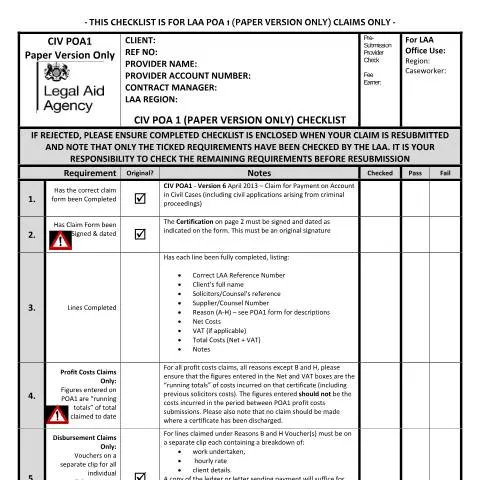
Completing the CIV POA1 form requires careful attention to detail. Each section serves a specific purpose, and inaccuracies can result in delays or rejections. Here’s a breakdown of the form's key components:
| Section | Description | Common Pitfalls |
|---|---|---|
| LAA Reference Number | Enter the specific reference number assigned by the LAA. | Leaving this blank or incorrect can lead to immediate rejection. |
| Client’s Full Name | Ensure the full name matches the details on the legal aid certificate. | Using initials or nicknames can cause identification issues. |
| Net Costs and VAT | Clearly state the net costs and applicable VAT. | Miscalculating costs or incorrectly applying VAT rates can lead to discrepancies. |
| Reason for Claim | Select the appropriate reason for the payment request. | Choosing an incorrect code can result in rejection or delays. |
| Signature and Date | Ensure that the document is signed and dated appropriately. | An unsigned or undated form will be deemed incomplete. |
How the CIV POA1 Integrates into the Legal Aid Process
The CIV POA1 form is not just a standalone document; it plays an integral role in the legal aid process. Understanding this integration helps to navigate the complexities of funding:
- Interim Funding: This form facilitates the interim funding necessary for legal representatives to continue providing services while waiting for a final determination.
- Link to Legal Aid Certificates: Each submission is tied to a specific legal aid certificate, making the accurate tracking of funding essential for case management.
- Reimbursement Dynamics: The form assists in maintaining a clear line of communication with the LAA regarding ongoing costs and any outstanding amounts.
Track Your Claim: Tips on Following Up with the Legal Aid Agency
Once the CIV POA1 form has been submitted, it’s vital to monitor the status of your claim. Here’s how you can effectively track your submission:
- Keep Records: Maintain detailed records of your submission, including dates, times, and any correspondence with the LAA.
- Direct Contact: If you haven’t received updates within a reasonable timeframe, consider reaching out directly to the LAA through the provided contact channels.
- Prepare for Queries: Be ready to respond to any queries that may arise regarding your claim. Having all necessary documentation at hand will facilitate a quicker resolution.
Consequences of Non-Compliance: Understanding Your Rights and Obligations
Filing the CIV POA1 form correctly is not only about securing funding but also about understanding the responsibilities that accompany legal aid. Here are some essential considerations:
- Obligation to Report Changes: Should there be any changes in your financial circumstances or the situation surrounding your case, these must be reported to the LAA immediately.
- Consequences of Errors: Failing to comply with the requirements can lead to rejection of your claim, resulting in delays in payment and potential financial strain.
- Rights Under Legal Aid: Remember that as a legal aid client, you have the right to receive information about your case and the funding process. If you feel your rights are being overlooked, do not hesitate to escalate your concerns.
Making the Most of the CIV POA1: Practical Tips for Successful Claims
To maximize the likelihood of a successful claim with the CIV POA1 form, consider the following practical tips:
- Double-Check Details: Before submission, ensure every detail is accurate and complete to avoid unnecessary delays.
- Utilize Checklists: Take advantage of provided checklists related to the CIV POA1 form. These can help verify that all necessary components are included before submission.
- Seek Guidance: If you are uncertain about any aspect of the form, do not hesitate to seek assistance from legal professionals or consult the LAA’s resources directly.
The CIV POA1: Payment on Account of Claim form may appear straightforward, but its successful completion is pivotal in securing the necessary funding for your legal proceedings. Approaching it with diligence and informed awareness of its implications will empower you to navigate the complexities of the legal aid system effectively.
Understanding the Payment on Account System
Payment on account is a crucial aspect of the UK's civil claim process, designed to ensure that claimants can receive timely payments while their claims are being processed. The CIV POA1 form is specifically used for this purpose, allowing claimants to request an interim payment from the defendant or their insurer. This system is particularly relevant in personal injury claims, where claimants may face immediate financial hardships as a result of their injuries.
It's essential to grasp the underlying principles of the payment on account system. Essentially, it allows a claimant to ask for a portion of the damages they believe they will be awarded before the claim has been fully resolved. This can be vital for covering immediate medical expenses, lost wages, or other urgent financial needs stemming from the incident that led to the claim.
To qualify for a payment on account, claimants must demonstrate that their case has merit and that there is a reasonable likelihood of success at trial. The court will also consider whether the defendant is financially capable of making such a payment. Therefore, it's advisable for claimants to gather substantial evidence supporting their claims, which can include medical reports, witness statements, and expert testimony.
In practice, when filling out the CIV POA1 form, claimants must provide detailed information about the claim, the anticipated damages, and any evidence that substantiates their request for an interim payment. The court will review the application and determine the appropriateness of the payment on account, often seeking to balance the needs of the claimant against the rights of the defendant.
Claimants should also be aware of the procedural aspects of the payment on account system, including deadlines for submission and potential hearings. Legal representation can be beneficial in navigating these complexities and ensuring that the request is presented effectively.
How to Complete the CIV POA1 Form Effectively
Completing the CIV POA1 form accurately is pivotal for the success of a payment on account application. The form, while straightforward, requires careful attention to detail and a thorough understanding of the case at hand. First and foremost, claimants need to clearly identify themselves, the defendant, and the nature of the claim. This introductory section should set the stage for the rest of the form, providing context that allows the court to understand the circumstances surrounding the request.
In the sections that follow, claimants should outline the specific circumstances leading to the claim. This narrative should include the date of the incident, the injuries sustained, and any immediate consequences that led to financial hardship. Claimants are encouraged to be as descriptive as possible, citing relevant medical treatments and how these have impacted their daily lives. The clearer the picture provided, the more likely the court is to view the application favourably.
Moreover, it is essential to detail the financial implications of the claim. Claimants should prepare a breakdown of the anticipated damages, including medical expenses, rehabilitation costs, loss of earnings, and any other financial burdens arising from the incident. Supporting documents such as medical receipts, payslips, and expert opinions can substantiate these claims, reinforcing the need for an interim payment.
Once the form is completed, it must be submitted to the appropriate court along with the necessary supporting documentation. Claimants should ensure that they comply with any specific court rules regarding submission formats or deadlines, as failure to adhere to these guidelines could delay the process or even result in a rejection of the application.
Lastly, it’s advisable for claimants to seek professional legal assistance when completing the CIV POA1 form. A solicitor can provide invaluable guidance, ensuring that the form is filled out correctly and that all necessary evidence is included to support the claim.
Common Challenges and Considerations in Payment on Account Claims
While the payment on account system provides essential support for claimants, navigating this process can be fraught with challenges. Understanding these potential pitfalls can significantly enhance a claimant's chances of success. One common issue arises when defendants dispute the claim’s merit. In such cases, the court may require additional evidence or even a hearing to assess the validity of the claim before granting an interim payment. It’s crucial for claimants to be prepared for this possibility and to ensure that they have all necessary evidence readily available.
Another challenge can be related to the amount requested. Claimants often face difficulties in determining a reasonable figure for the payment on account. It’s advisable to consult with legal professionals to establish a credible estimate based on past case precedents and expert evaluations. Overestimating can lead to a refusal by the court to grant the application, while underestimating might not cover the claimant's immediate needs effectively.
Moreover, claimants should also be cognizant of the timeframes involved in the payment on account process. While these payments are designed to expedite financial relief, delays can occur due to court schedules, the need for additional documentation, or disputes between involved parties. Being proactive in communication with the court and ensuring that all paperwork is submitted promptly can mitigate some of these delays.
Lastly, it’s worth noting that a successful payment on account does not guarantee the ultimate success of the claim. If the claimant loses their case, they may be required to repay the interim payment. Therefore, it’s essential to weigh the benefits of obtaining immediate financial relief against the risks associated with the overall claim. Claimants should assess their financial situation comprehensively and consider their long-term needs when deciding to pursue a payment on account.