Understanding the Significance of Form ADM10 in Admiralty Proceedings
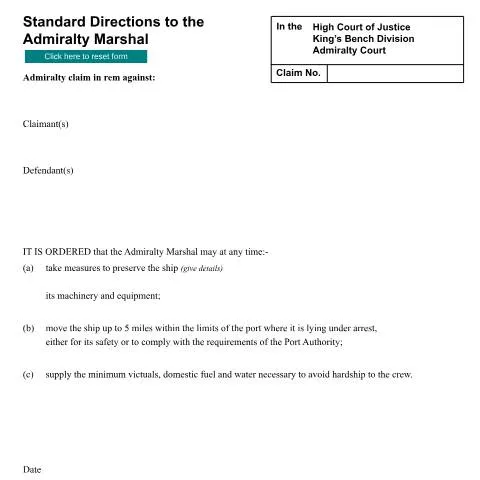
Within the realm of admiralty law, the intricacies of maritime claims often necessitate precise and timely documentation. Form ADM10, officially titled "Standard Directions to the Admiralty Marshal," plays a critical role in this legal framework. It governs actions that may be taken concerning a vessel that has been placed under arrest, ensuring that both the ship and its crew are adequately managed during legal proceedings. The form outlines the powers afforded to the Admiralty Marshal, who acts as a custodian of the vessel, safeguarding its well-being while adhering to the requirements of the court.
Who Is Involved in Submitting Form ADM10?
The submission of Form ADM10 typically involves multiple parties, depending on the specifics of the case at hand. The principal actors include:
- The Claimant: This is the party initiating the admiralty claim, seeking to enforce a maritime lien or other rights against the vessel.
- The Defendant: Usually the owner or operator of the vessel, who may contest the claim or seek to secure the release of the vessel.
- The Admiralty Marshal: An officer of the court responsible for executing the directions outlined in Form ADM10 concerning the management of the vessel under arrest.
Each of these roles carries specific responsibilities and obligations, with the Claimant typically being the party that requests the arrest of the vessel, while the Defendant seeks to protect their interests in the matter.
Practical Steps for Completing and Submitting Form ADM10
The process of correctly filling out and submitting Form ADM10 includes several detailed steps. It is crucial for all involved parties to ensure that the form is completed accurately to avoid potential delays or legal complications.
Filling Out the Form
Form ADM10 requires detailed information that must be provided clearly. Important sections that need attention include:
- Details of the Ship: Include the name of the vessel, its registration number, and other identifying features.
- Claim Details: Outline the nature of the claim, including the legal grounds for the arrest of the ship.
- Specific Directions: Specify any particular measures you would like the Admiralty Marshal to take regarding the ship’s management.
Where to Submit Form ADM10
Once completed, Form ADM10 can be submitted through various channels:
- Electronically: Using the online facilities provided by HM Courts & Tribunals Service.
- By Post: Mailing the completed form to the appropriate Admiralty court address. Ensure that you check the latest postal details to avoid delays.
- In Person: Visiting the court office to submit the form directly can expedite the process, allowing for immediate queries to be addressed.
Consequences of Incomplete or Incorrect Submission
Failure to properly complete and submit Form ADM10 can lead to significant repercussions. For instance:
- The court may reject the submission, resulting in delays in the proceedings.
- The directions requested may not be carried out, placing the ship or its crew at risk.
- Legal penalties could be imposed on the Claimant for failing to adhere to court protocols.
It is essential that all details are checked and verified before final submission to prevent such issues.
The Role of Form ADM10 within Broader Legal Proceedings
Form ADM10 does not exist in isolation; it is part of a larger system of legal documentation and procedures within admiralty law. Understanding how this form interacts with other filings is crucial for practitioners.
Connections to Other Forms and Filings
In many cases, Form ADM10 will accompany other forms, such as:
- Form ADM1: Initiating the claim against the vessel, outlining the claim details.
- Form ADM3: Requesting the arrest of the ship, demonstrating the necessity of such action.
Form ADM10 must align with these filings to ensure that all legal bases are covered and the court has a complete understanding of the situation.
Special Cases: Navigating Complex Situations with Form ADM10
Certain scenarios may complicate the submission of Form ADM10. It is imperative to be aware of these nuances to adequately prepare.
Scenarios Involving Foreign Vessels
When dealing with foreign vessels, additional considerations must be taken into account, including:
- Compliance with international maritime law.
- Understanding how the arrest of a foreign ship impacts jurisdiction.
Legal advice may be necessary to navigate these waters effectively.
Minors and Vulnerable Parties
In cases where minors or other vulnerable individuals are involved, it is critical that additional safeguards are implemented. This includes:
- Ensuring that appropriate legal representation is appointed.
- Considering the best interests of the minor or vulnerable party throughout the proceedings.
Document Preparation: Ensuring Everything is in Order
Successful submission of Form ADM10 requires careful preparation of several supporting documents. Knowing what to gather ahead of time can streamline the process.
Necessary Documentation
Common documents needed alongside Form ADM10 include:
- Proof of Claim: Any contracts, receipts, or other evidence supporting the claim against the ship.
- Legal Representation Details: Information on the solicitors or legal representatives involved in the case.
- Inspection Reports: Documentation regarding the condition of the vessel that may be required by the Admiralty Marshal.
Creating a Submission Checklist
Establishing a checklist can help ensure that no vital components are overlooked. Here is a simple structure:
| Document | Status (Complete/Incomplete) |
|---|---|
| Form ADM10 | ______ |
| Proof of Claim | ______ |
| Legal Representation Details | ______ |
| Inspection Reports | ______ |
Practical Examples and Case Studies
Understanding the application of Form ADM10 can be further illuminated through real-world scenarios. These examples illustrate the practical applications of the form.
Case Study: Handling the Arrest of a Cargo Ship
In a recent case involving the arrest of a cargo ship due to unpaid debts, the Claimant submitted Form ADM10, detailing specific directions for the management of the vessel. The directions included:
- Preservation of cargo and ship integrity while docked.
- Provision of essential supplies for the crew's basic needs.
The Admiralty Marshal executed these directions promptly, showcasing the form's role in effectively managing such situations.
Case Study: Navigating a Dispute with a Foreign Vessel
In another instance, a foreign vessel was arrested under contentious circumstances. The Claimant faced various jurisdictional challenges. Form ADM10 was crucial in detailing the necessary steps for managing the vessel while ensuring compliance with international protocols. Legal counsel was essential in drafting the form to address these complexities adequately.
Final Insights on Engaging with Form ADM10
Engaging with Form ADM10 is a nuanced process that requires attention to detail, a strong understanding of legal frameworks, and an ability to navigate complex maritime situations. Whether you are a Claimant or Defendant, familiarizing yourself with the specifics of this form is essential for effective participation in admiralty proceedings.
As you prepare to engage with HM Courts & Tribunals Service and the legal complexities surrounding maritime claims, remember that thorough preparation and appropriate legal guidance can make a significant difference in the outcome.
Understanding the Role and Responsibilities of the Admiralty Marshal
The Admiralty Marshal plays a crucial role within the judicial system of the UK, particularly within maritime law. This position is fundamental in ensuring that maritime claims are handled appropriately and that the interests of all parties involved are safeguarded. The Admiralty Marshal is typically responsible for managing the enforcement of court orders related to maritime disputes. This includes the seizure of vessels, managing the sale of ships, and ensuring compliance with legal processes.
The Admiralty Marshal operates under the auspices of HM Courts & Tribunals Service, which oversees various court functions including those related to maritime matters. Understanding the specific authority and responsibilities of the Admiralty Marshal is vital for individuals or organizations looking to navigate admiralty proceedings effectively.
When engaging with the Admiralty Marshal, it is essential to recognize that they act as an officer of the court, ensuring that all legal proceedings adhere to established maritime laws and the rules of the court. This may involve working closely with solicitors and other legal representatives to ensure that all necessary documentation, including Form ADM10, is correctly completed and submitted. Therefore, consultative support from legal professionals familiar with maritime law can be invaluable as you proceed with any claims.
Key Aspects of Completing Form ADM10
Form ADM10, known as the 'Standard Directions to the Admiralty Marshal', is an essential document that outlines the procedural directions that the Admiralty Marshal needs to follow. Completing this form accurately is critical, as it can significantly affect the outcomes of maritime claims. Here are some key aspects to consider when filling out Form ADM10:
- Title of Action: Clearly state the title of the action in relation to which the directions are being sought. This should be consistent with any other documentation submitted to the court.
- Details of the Claim: Provide a brief but comprehensive description of the claim that necessitates the directions. Include relevant dates and specific maritime laws or regulations that may apply.
- Parties Involved: List all parties involved in the claim, including their contact details. Be sure to specify which party is making the application for directions.
- Proposed Directions: Clearly outline the directions you are requesting from the Admiralty Marshal. It’s important to be precise about what you need the Marshal to do, as vague requests may lead to delays or refusals.
- Supporting Documents: Attach any supporting documents that could provide further context or justification for your request. This could include court orders, previous correspondence, or notices of intent.
- Signature and Date: Ensure the form is signed and dated. A failure to do so can result in the document being deemed invalid.
Additionally, be mindful of the required processing times and conditions set by the court when submitting Form ADM10. Regular communication with the Admiralty Marshal’s office can help you stay updated on the status of your application and any further requirements that may arise.
What to Expect After Submitting Form ADM10
Once you have submitted Form ADM10 to the Admiralty Marshal, it’s important to understand the next steps and what you can expect during the process. Here’s a breakdown of the typical post-submission timeline and actions:
- Acknowledgment of Receipt: After submitting the form, you should receive an acknowledgment from the Admiralty Marshal’s office. This acknowledgment serves as confirmation that your request has been received and is under consideration.
- Review Process: The Admiralty Marshal will review the submitted form and any accompanying documents. This review may take a few days, but the timeline can vary based on the complexity of the case and the volume of current submissions being processed.
- Communication of Directions: Following their review, the Admiralty Marshal will communicate the directions they have determined are necessary. This communication can occur through a formal letter or a court order, which will outline the actions to be taken or any additional requirements from the parties involved.
- Compliance Monitoring: The Admiralty Marshal may also outline specific timelines for compliance with their directions. It is crucial that all parties adhere to these timelines to avoid potential sanctions or penalties.
- Further Legal Action: Depending on how the proceedings unfold, additional legal actions may be required. This could involve further submissions to the court, additional claims, or compliance with other maritime regulations. It’s advisable to stay in close contact with your legal counsel to navigate these scenarios effectively.
Understanding this process can help set clear expectations and ensure that you are prepared for each step. Engaging proactively with the process will not only aid in expediting matters but also foster a more transparent interaction with the Admiralty Marshal’s office.