Understanding Rule 19.9 Application for a Decision on Disclaimer in Company Winding-Up
The process of winding up a company in the United Kingdom involves several legal procedures aimed at settling the company's affairs and distributing its assets. One specific aspect of this process is the application by interested parties for a formal decision on whether to disclaim certain property belonging to the company. This procedure is governed by Rule 19.9 of the Insolvency (England and Wales) Rules 2016, which provides a clear framework for such applications. This guide aims to clarify the purpose, scope, and procedural requirements of Rule 19.9 applications, targeting individuals or entities involved or interested in the winding-up process.
Scope and Purpose of the Rule 19.9 Application
The primary objective of a Rule 19.9 application is to enable interested parties—such as creditors, landlords, or other stakeholders—to request a formal decision from the liquidator regarding whether certain property of the company should be disclaimed. Disclaiming property effectively means that the company ceases any legal interests or liabilities associated with that property, which can be crucial in resolving the winding-up efficiently and fairly.
This application process is particularly relevant when the property in question is either burdensome, uncertain, or no longer beneficial to the estate. By seeking a decision from the liquidator, interested parties can clarify their legal position and avoid potential disputes or liabilities that might arise if the property remains in the estate.
Who Can Submit a Rule 19.9 Application?
Any interested party involved in the winding-up process can submit an application under Rule 19.9. Common applicants include:
- Creditors seeking to limit their liabilities
- Landlords or tenants with interests in property owned by the company
- Other stakeholders, such as secured creditors or guarantors
The applicant must demonstrate a relevant interest in the property, such as ownership, leasehold rights, or other legal interests. It is essential for applicants to clearly specify their relationship to the property and their interest in the application to ensure the liquidator considers their request appropriately.
Procedural Steps and Requirements
Submitting the Application
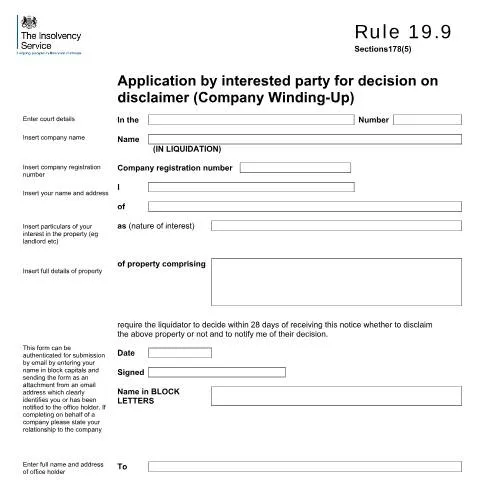
The application must be made in writing, using the specified form, which includes details such as the applicant's name, address, and the nature of their interest, along with comprehensive particulars of the property involved. The form can be authenticated for submission via email, provided that the applicant's name is clearly printed in block capitals, and the email originates from an identifiable address.
Delivery and Proof of Service
The applicant is required to deliver the completed application to the office holder, typically the liquidator, and must provide proof of delivery if requested, in accordance with rule 1.52 of the Insolvency Rules. This ensures that the liquidator receives the application officially and can process it within the statutory timeframe.
Timeframe for Decision
Once the application is received, the liquidator is obliged to make a decision within 28 days. The decision will either approve or refuse the disclaimer of the property in question. The liquidator must notify the applicant of this decision in writing, ensuring transparency and clarity in the winding-up process.
Legal and Official References
This procedure is grounded in the legal framework provided by the Insolvency (England and Wales) Rules 2016, specifically Rule 19.9, which aligns with the broader legal provisions under Sections 178(5) of the Insolvency Act 1986. The process aims to facilitate a fair and efficient winding-up by allowing interested parties to seek authoritative decisions regarding property disclaimers.
Conclusion
Rule 19.9 applications serve an important function in the winding-up of companies, providing a structured process for interested parties to request a formal decision on property disclaimers. By understanding the procedural requirements and legal context, stakeholders can effectively engage with the insolvency process, helping to resolve estate matters efficiently and in accordance with UK insolvency law.